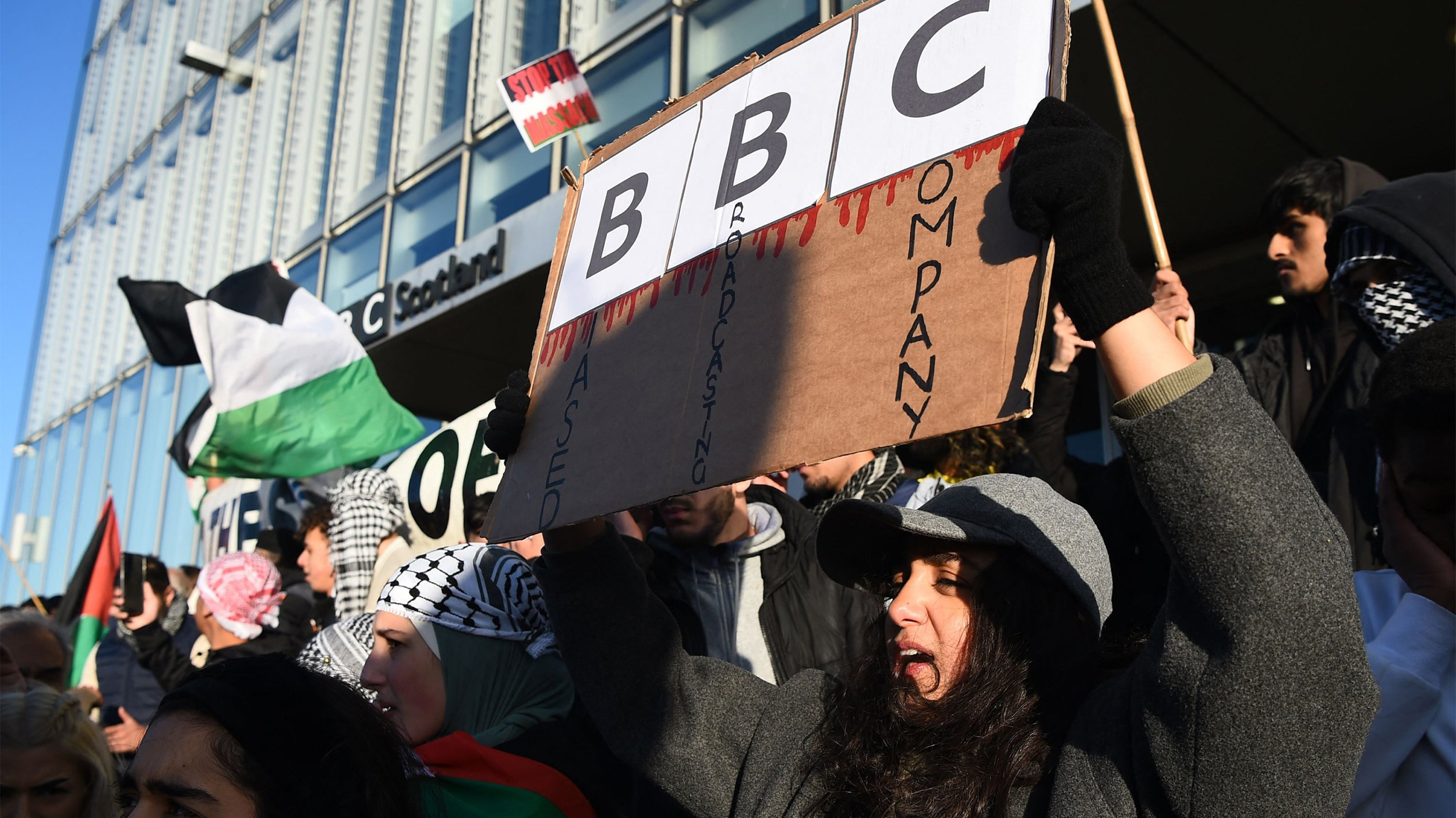
The struggle over Palestine has long extended beyond the battlefield into the realm of narrative power. For decades, Western legacy news media have played a decisive role in shaping global understandings of the conflict, exercising disproportionate influence over how violence, accountability and legitimacy are defined. A substantial body of research has shown that this coverage has produced a relatively stable “representational framework” that favours Israeli state perspectives, detaches military violence from its historical and structural context, and marginalises Palestinian political agency. (1) Palestinian resistance is routinely filtered through security-driven and racialised discourse, while Palestinian suffering is acknowledged largely as humanitarian tragedy rather than as the outcome of sustained occupation, siege and political exclusion.
Yet the media environment that once sustained this dominance is no longer intact. The erosion of traditional gatekeeping and the rise of digital platforms have fragmented authority over political meaning and reconfigured the public sphere. Long-form interviews, podcasts and personality-driven digital programmes now function as influential arenas of debate, often reaching audiences comparable to or larger than those of legacy broadcasters. Operating with fewer institutional constraints, these platformed spaces have allowed perspectives that have been marginalised in mainstream coverage, including Palestinian voices and critical analyses of Western policy, to circulate more visibly. At the same time, they remain shaped by the commercial and algorithmic pressures of ‘platform capitalism’, which reward affective engagement, controversy and personality-driven framing. (2)
This paper investigates whether the fragmentation of the contemporary media environment has meaningfully transformed representations of Palestine, or whether dominant narratives continue to be reproduced through new media forms. Drawing on a comparative discourse analysis of Western legacy news coverage and influential platformed commentary programmes during the 2023–2025 war on Gaza, the study examines how Palestinian visibility, agency and legitimacy are constructed across these distinct media environments. It hypothesises that while platformed spaces have expanded the circulation of Palestinian voices and facilitated more explicit critiques of Western policy, they often rearticulate core discursive logics, such as the securitisation of Palestinian resistance, the depoliticisation of Palestinian suffering, and the favouring of Western and Israeli interpretive frames, rather than fundamentally challenging them. As a result, platformed commentary both broadens the boundaries of debate and reproduces entrenched power asymmetries, pointing to a reconfiguration of media power rather than a rupture with established narrative hierarchies.
Theoretical Framework
This article draws on critical media studies and political communication to examine how meanings about Palestine are produced, normalised and contested across different media systems. It is anchored in framing theory, which highlights how news discourse prioritises certain interpretations of events, assigns responsibility, and defines the limits of moral and political debate. (3) The analysis is further informed by Stuart Hall’s theory of representation, which treats media language as a site where power operates through the construction of identity and difference. This perspective is particularly relevant for understanding how Palestinians are racialised and positioned within Western media narratives that historically associate Arab and Muslim actors with security threats, while naturalising Israeli state authority. Narrative analysis complements this framework by examining storytelling practices, especially in digital commentary formats, where extended testimony, affective appeal and personalisation shape how Palestinians are cast as victims, resisters or moral subjects. (4)
Methodologically, the study employs Critical Discourse Analysis within a qualitative comparative design combining lexical analysis and transitivity analysis to systematically examine patterns of agency, responsibility, and moral positioning of the media coverage during moments of acute crisis. It focuses on a targeted corpus drawn from Western legacy broadcasting, CBS and BBC, and two influential platformed programmes, Piers Morgan Uncensored and Breaking Points, selected for their agenda-setting influence, transnational reach, and contrasting institutional logics.
Temporal Phases of Media Coverage
To capture how media narratives evolved alongside shifts in the conflict itself, this study organises its analysis into three distinct temporal phases: the acute crisis following 7 October 2023, the period of protracted warfare and discursive stabilisation, and the aftermath marked by normalisation and narrative consolidation. For each phase, a video segment from each selected outlet was randomly sampled for close analysis, ensuring comparability across time and media environments while avoiding event-specific overdetermination. This periodisation enables a longitudinal examination of how lexical choices, agency attribution and framing strategies shift as violence becomes routinised, humanitarian suffering persists, and political justifications harden within public discourse, moving beyond static assessments of media bias toward an analysis of narrative evolution. (5)
Phase 1: Acute Crisis (7 October – 31 December 2023)
British Broadcasting Corporation (BBC)
The BBC coverage in this phase adopts a dual humanitarian and operational frame, foregrounding Palestinian suffering while embedding it within a securitised institutional logic. Lexical markers such as “total siege”, “hospitals close to collapse” and “humanitarian crisis” convey moral urgency, yet Hamas is consistently labelled a “terror organisation”, anchoring the narrative within Western geopolitical consensus. Israeli military action is rendered through procedural language (“preparing for a ground offensive”, “targeting Hamas infrastructure”), presenting violence as strategic rather than punitive.
In transitivity patterns, Israel is positioned as the primary agent in material processes, while Palestinians largely appear as affected participants. Civilian suffering is frequently expressed through existential constructions (“there is a humanitarian crisis”), foregrounding conditions while softening attribution of responsibility. Hamas agency is often mediated through Israeli claims, allowing official narratives to circulate with limited scrutiny.
Columbia Broadcasting System (CBS)
The CBS reporting during the acute phase is structured around a securitized moral frame that privileges Israeli military authority. Lexical choices such as “terror group,” “human shields,” and “destroy the infrastructure” depict Hamas as an existential threat while casting Israeli violence as necessary and restrained. Palestinian suffering is acknowledged visually and emotionally but is consistently reattributed to Hamas responsibility through the refrain that Israel is “at war with Hamas, not Gaza.”
Transitivity analysis reveals a stark imbalance: Israeli actors are active, intentional agents (“we must destroy,” “we will do anything”), Hamas is granted agency only through criminalised acts, and Palestinian civilians are overwhelmingly passive recipients (“used,” “taken hostage,” “in the rubble”). Civilian harm is grammatically detached from Israeli action, appearing as tragedy rather than consequence.
Piers Morgan Uncensored
During the acute crisis phase, Piers Morgan Uncensored deployed a heavily securitised and moralised discourse that foregrounds Israeli victimhood while systematically delegitimising Palestinian political subjectivity. Lexical choices such as “terror group”, “monsters”, “barbaric” and “death cult” construct Hamas, and by extension Palestinian resistance, as inherently criminal and irrational, foreclosing political interpretation. Israeli military action, by contrast, is framed through justificatory and defensive language (“duty to defend”, “proportionate response”, “security responsibility”), while Palestinian civilian suffering is rendered as tragic but incidental, detached from structural conditions such as occupation or siege. Palestinian terms like “blockade” or “concentration camp” are consistently challenged or reframed as extremist rhetoric, reinforcing a hierarchy of discursive legitimacy.
Similarly, transitivity patterns intensify this asymmetry. Israel is positioned as a deliberate and controlled actor in material processes (“Israel warned civilians”, “Israel left Gaza”), while Palestinian civilians appear primarily as affected recipients (“killed”, “displaced”). Palestinian violence is individualised and criminalised through active verbs (“butchered”, “stabbed”), whereas Israeli violence is frequently abstracted through nominalisation (“the bombing”, “the campaign”), diffusing responsibility and normalising force.
Breaking Points
Breaking Points diverges sharply from broadcast media by advancing a counter-hegemonic investigative frame centred on state failure and elite accountability. Lexically, the segment emphasises exposure and negligence (“ignored warnings”, “bombshell report”, “looked the other way”), redirecting securitised language away from moral justification and toward institutional critique. Hamas violence is contextualised within Israeli intelligence failures rather than mobilised to legitimise military escalation.
Transitivity patterns assign clear agency to Israeli institutions through verbs of omission and decision-making (“officials monitored”, “they allowed it to continue”), while Hamas agency is subordinated to prior state actions. Palestinian civilians appear only indirectly, reflecting the programme’s focus on political responsibility rather than humanitarian spectacle.
Phase 2: Protracted War and Discursive Stabilisation (January – June 2024)
BBC
BBC reporting maintains a humanitarian-operational balance, foregrounding deprivation through emotive language (“desperate for water”, “heartbreaking”) while rendering military violence through procedural terms (“strikes”, “launching”). Palestinian voices are humanised through testimony but individualised, with structural causes largely absent. Grammatically, Israel remains the principal actor, Palestinians the affected subjects. Existential constructions foreground devastation while obscuring direct responsibility, sustaining institutional neutrality.
CBS
CBS increasingly frames Gaza through a logistical humanitarian lens, emphasising aid delivery challenges over political causation. Lexical emphasis on “critical aid” and “diversion” introduces Hamas as an obstacle while normalising Israeli control as operational necessity. Whereas, transitivity patterns privilege Israeli and institutional agency, with Palestinians positioned as recipients of aid or deprivation. Responsibility is diffused through nominalisation and complexity framing.
Piers Morgan Uncensored
As the war protracts, Morgan’s framing hardens into a securitised moral absolutism. Lexical choices such as “eradicate Hamas”, “collateral damage” and repeated Nazi analogies normalise total military victory as both necessary and inevitable. Palestinian civilians are framed as ideologically compromised or morally suspect, while Israeli actions are consistently justified as reluctant but unavoidable. On the other hand, transitivity analysis shows Israeli actors as dominant agents shaping outcomes, while Palestinians are depicted either as passive victims or morally delegitimised collectives. Verbal processes privilege Israeli testimony and expertise, reinforcing epistemic authority.
Breaking Points
Breaking Points centres Israeli policy, infrastructure and political calculation. Lexical emphasis on control (“no-man’s land”, “bifurcation”) situates Palestinian suffering as the outcome of deliberate state strategy rather than battlefield chaos. Agency is consistently assigned to Israeli actors, while Palestinians appear as constrained subjects. Verbal processes favour Israeli rationale, foregrounding power asymmetries over humanitarian immediacy.
Phase 3: Aftermath and Normalisation (July 2024 – January 2026)
BBC
BBC coverage foregrounds casualty figures, infrastructure destruction and civilian testimony, balancing human impact with official claims and diplomatic context. While the human toll is vividly rendered, responsibility remains institutionally mediated. Agency is split between Israeli operational claims and Palestinian suffering articulated through testimony, sustaining BBC’s calibrated neutrality.
CBS
CBS emphasises humanitarian devastation through affective storytelling while minimising political and military agency. Palestinian suffering is personalised, while Israeli action is largely backgrounded. Grammatically, Palestinians dominate as recipients of action, aid actors as purposeful agents, and Israeli military agency is largely absent, framing the conflict as tragedy rather than power struggle.
Piers Morgan Uncensored
Morgan’s discourse stabilises into a pro-Israel/anti-Hamas narrative that assigns moral and causal responsibility for civilian suffering almost exclusively to Hamas. Lexical demonisation (“terrorist state”, “propaganda campaign”) coexists with language emphasising Israeli restraint and procedural caution. Transitivity patterns reinforce this logic: Hamas is the active moral culprit; Palestinians are passive victims; and Israel is a constrained but justified responder. Structural responsibility is largely erased
Breaking Points
Breaking Points continues to foreground Israeli agency and strategic calculation, framing Palestinian casualties as outcomes of deliberate decisions and contested pretexts. Lexical and grammatical abstraction diffuses responsibility while privileging state rationality. Israeli actors remain sovereign agents; Palestinians are recipients of force; Hamas agency appears fragmented and contingent, reinforcing asymmetries of control.
|
Aspect |
Piers Morgan |
BBC |
CBS |
Breaking Points |
|---|---|---|---|---|
|
Lexical framing |
Moralised, securitised; Israel morally justified, Hamas demonised |
Balanced humanitarian + operational, civilians foregrounded, Israel procedural |
Securitised moral frame; civilians as collateral; Hamas threat emphasised |
Investigative, state accountability; Israeli actions scrutinised, Hamas agency subordinate |
|
Palestinian representation |
Passive, victims of Hamas, collateralised |
Victims with personal testimony; structural context limited |
Passive recipients of aid or casualties; political agency absent |
Passive subjects; casualties mediated, focus on state mismanagement |
|
Israeli representation |
Active, morally justified, restrained |
Active, strategic, procedural |
Active, authoritative, operational |
Active, calculating, accountable; decision-making foregrounded |
|
Hamas representation |
Criminalised, existential threat |
Terror organisation; agency acknowledged procedurally |
Terror group, moral threat |
Tactical, decentralised, contingent; subordinate to Israeli elite action |
|
Transitivity & agency |
Strong asymmetry favouring Israel; Palestinians passive |
Israel agentive; Palestinians affected participants |
Israel agentive; Palestinians passive; humanitarian actors active |
Israel agentive; Palestinians passive; Hamas contingent |
|
Narrative focus over time |
Moral securitisation maintained across phases; historical analogies reinforce military imperative |
Humanitarian framing persists; structural context limited |
Humanitarian and operational lens; limited political context |
Strategic-political focus, elite accountability, operational decisions central; Palestinian suffering secondary |
|
Digital vs legacy difference |
Commentary amplifies securitised moral framing; personalised and rhetorically assertive |
Institutional, multi-source, human-centred |
Humanitarian, operational, simplified narrative for accessibility |
Investigative, counter-hegemonic, politically analytic; emphasises elite accountability and decision-making |
Evolving Narratives Across Media Platforms: The Gaza Conflict Through a Theoretical Lens
Temporal Evolution and Framing Dynamics
Across the three phases of the Gaza conflict, media outlets display distinct framing strategies shaped by institutional norms, audience expectations and political economy. During the acute crisis (October–December 2023), Piers Morgan employed heavily securitised and moralised frames, foregrounding Israeli victimhood and demonising Hamas, while Palestinian civilians were largely collateralised, a clear example of Entman and Goffman’s dominant framing. (6) CBS echoed this moralised securitisation, whereas BBC balanced humanitarian concern with operational proceduralism. Breaking Points, however, offered a negotiated or oppositional frame, emphasising the Israeli elite’s mismanagement and structural responsibility, positioning Palestinian suffering as a cause of political decision-making rather than inherent criminality. (7)
As the war protracted (January–June 2024), Morgan’s commentary intensified securitised and moralised storytelling, normalising large-scale Israeli military action through historical analogies, whereas BBC and CBS maintained humanitarian-operational balances, centring Palestinian suffering yet depoliticising structural causality. Breaking Points shifted to strategic-political analysis, foregrounding Israeli decision-making and infrastructure projects as central determinants, with Palestinians depicted as affected stakeholders and Hamas actors as contingent. By the aftermath and normalisation phase (July 2024–January 2026), Morgan stabilised a pro-Israel/anti-Hamas “moral narrative”; BBC integrated human impact with institutional and procedural context; CBS emphasised deprivation and humanitarian loss; and Breaking Points consistently centred the Israeli’s elite agency, framing Palestinian casualties as contingent outcomes of operational and political decisions. (8)
Representation, Agency and Narrative Construction
Across platforms, the politics of representation (Hall) and transitivity patterns reveal striking asymmetries. Legacy media, while balancing humanitarian concern with procedural reporting, largely mediate Palestinian agency through passive or victimised positions, legitimising Israeli action as controlled, strategic and morally constrained. (9) Platformed commentary exhibits more flexible narrative construction: Morgan amplifies securitised moral hierarchies, foregrounding Israeli justification and delegitimising Palestinian agency, whereas Breaking Points emphasises systemic causality, elite accountability and structural critique, positioning Palestinian actors as stakeholders within broader political processes. Narrative inquiry highlights how storytelling devices – plot, character and closure – are mobilised differently: affective and morally charged in Morgan, investigative and analytic in Breaking Points.
Political Economy and Public Sphere Considerations
These patterns are deeply shaped by political economy. Legacy media are constrained by ownership, charter obligations, subscriptions, and geopolitical alignment, prioritising credibility, elite sourcing and procedural neutrality. (10) Platformed commentary operates under platform capitalism, patronage incentives and audience-driven metrics, which encourage both provocative moral storytelling (Morgan) and long-form investigative analysis (Breaking Points). (11) Consequently, the digital ecosystem produces fragmented counter-publics that amplifies marginalised Palestinian voices while simultaneously creating ideologically homogenous audiences, reflecting both opportunities for counter-hegemonic discourse and structural reproduction of attention hierarchies. (12)
Taken together, this comparative analysis illustrates that Palestinian representation is neither fixed nor uniform. Legacy media reproduce state-centric frames that constrain interpretation through lexical, grammatical and structural mechanisms, while platformed commentary enables alternative narratives, foregrounding elite accountability, systemic critique, and conditional Palestinian agency. Applying framing theory, representation, narrative inquiry, political economy and public sphere theory illuminates how micro-level discourse strategies (lexical choice, moral positioning, transitivity) interact with macro-level structures (ownership, platform incentives, audience composition) to shape the evolution of narratives in real time.
Factors Driving Narrative Change across Phases
Event Progression and Temporal Framing
Narrative change throughout the conflict closely followed the temporal logic of war. Initial coverage was shaped by shock and urgency, favouring securitised and moralised framing that emphasised immediacy, blame and threat, with limited historical or structural context. As the conflict became protracted, attention shifted toward operational continuity and humanitarian conditions, including infrastructure destruction and aid constraints. In the normalisation phase, the routinisation of violence reduced crisis immediacy, enabling greater engagement with long-term consequences, structural causation and questions of accountability. (13)
Media Ecology and Institutional Logics
Narrative trajectories diverged across media environments. Legacy media adjusted gradually within institutional norms of verification, procedural balance and credibility, producing incremental shifts in emphasis rather than abrupt reframing. Platformed commentary, shaped by personality-driven formats and fewer institutional constraints, demonstrated greater narrative flexibility, moving more rapidly toward interpretation, moral positioning and critique. These contrasting logics explain why narrative evolution was uneven, with platformed spaces recalibrating faster and more visibly than legacy news systems. (14)
Audience Incentives, Sources and Political Context
Audience engagement and platform incentives further shaped narrative change. Attention-driven environments rewarded emotive or counter-hegemonic storytelling, while institutionally accountable outlets prioritised measured and humanitarian framing. Over time, expanded access to sources, such as investigative reporting, policy analysis and first-hand testimony, enabled more complex representations, including increased recognition of Palestinian agency and structural dynamics. These shifts unfolded within broader political and ideological contexts that constrained or enabled critique, reinforcing how narrative change reflects not only events on the ground but the political economy and epistemic limits of different media systems. (15)
Conclusion
Narratives of the war on Gaza are neither static nor uniform, but evolve in response to shifting events, institutional norms and platform-specific incentives. Across legacy and platformed media, framing, representation and agency are dynamically negotiated: legacy outlets like BBC and CBS maintain humanitarian-operational and procedural frames that foreground Israeli agency and mediate Palestinian suffering, while platformed commentary oscillates between securitised moralisation, as in Piers Morgan Uncensored, and counter-hegemonic structural critique, as in Breaking Points. Lexical and transitivity analyses reveal consistent patterns of asymmetrical agency, yet the availability of sources, narrative formats and platform economics allow digital media to interrogate elite decision-making, highlight Palestinian perspectives, and reconfigure public discourse. Integrating framing theory, Hall’s representation framework, narrative inquiry, and political economy perspectives, the analysis underscores that media narratives are co-produced within complex structural, ideological and temporal contexts. Ultimately, the evolution of coverage across three phases illustrates how public understanding of conflict is continuously reshaped: immediate crises trigger securitised and moralised framing; protracted violence shifts attention to operational and humanitarian realities; and normalisation produces reflection on accountability and structural causation, highlighting the intertwined roles of media, ideology and audience in the construction of meaning.
- Ahmad Hamad Kareem and Yaseen Mahmood Najm, “A Critical Discourse Analysis of the Biased Role of Western Media in the Israeli-Palestinian Conflict”, Journal of Language Studies, Vol. 8, Issue 6, June 2024, pp. 200–215, https://doi.org/10.25130/lang.8.6.12 (accessed 7 January 2026).
- Sara Nasereddin, “The Role of Podcasts in Public Opinion Formation in Jordan and the Arab World”, Journal of Posthumanism, Vol. 5, Issue 9, 15 September 2025, pp. 445–459, https://doi.org/10.63332/joph.v5i9.3351 (accessed 29 December 2025).
- Mohammed H. Alaqad Hashim Sani, Fatma Benelhadj and Haida Umiera Hashim, “Framing Resistance: Western Discourse, Double Standards, and the Dehumanization of Palestinians”, The International Journal of Palestine Studies, Vol. 1, Issue 1, 2 July 2025, https://ejournal.um.edu.my/index.php/IJPS-UM/article/view/62623 (accessed 18 February 2026).
- Lisbeth Morlandstø and Birgit Røe Mathisen, “Podcast – Commentary Journalism in a Digital Public”, Journalistica, Vol. 16, Issue 1, 2022, https://doi.org/10.7146/journalistica.v16i1.128840 (accessed 2 January 2026).
- Pablo López‑Rabadán, “Framing Studies Evolution in the Social Media Era. Digital Advancement and Reorientation of the Research Agenda”, Social Sciences, Vol. 11, Issue 1, 27 December 2021, https://doi.org/10.3390/socsci11010009 (accessed 3 January 2026).
- Robert Entman, “Framing: Toward Clarification of a Fractured Paradigm”, Journal of Communication, Vol. 43, Issue 4, 1993, pp. 51–58, https://doi.org/10.1111/j.1460-2466.1993.tb01304.x (accessed 27 December 2025).
- Kareem El Damanhoury, Faisal Saleh and Madeleine Lebovic, “Covering the Israeli–Palestinian Conflict: A Critical Discourse Analysis of Al Jazeera English and BBC’s Online Reporting on the 2023 Gaza War”, Journal. Media, Vol. 6, Issue 1, 16 January 2025, https://doi.org/10.3390/journalmedia6010009 (accessed 4 January 2026).
- Ibid.
- Stuart Hall, Representation: Cultural Representations and Signifying Practices (London: Sage Publications, 1997).
- Jürgen Habermas, The Structural Transformation of the Public Sphere: An Inquiry into a Category of Bourgeois Society, trans. Thomas Burger and Frederick Lawrence (Cambridge, MA: MIT Press, 1989).
- Zizi Papacharissi, Affective Publics: Sentiment, Technology, and Politics (Oxford: Oxford University Press, 2014).
- Nancy Fraser, “Rethinking the Public Sphere: A Contribution to the Critique of Actually Existing Democracy”, in Habermas and the Public Sphere, ed. Craig J. Calhoun (Cambridge, MA: MIT Press, 1992).
- Avneet Kaur and Arnav Arora, “Beyond the Battlefield: Framing Analysis of Media Coverage in Conflict Reporting,” arXiv, 2025, https://arxiv.org/abs/2506.10421 (accessed 7 January 2026).
- Pamela J. Shoemaker and Timothy Vos, Gatekeeping Theory, 2nd ed. (New York: Routledge, 2009).
- Yochai Benkler, Robert Faris and Hal Roberts, Network Propaganda: Manipulation, Disinformation, and Radicalization in American Politics (Oxford: Oxford University Press, 2018).