
In the early hours of 28 February 2026, Israel launched the opening strikes of the second US–Israeli war on Iran in less than nine months. The first wave targeted the highest political and military leadership of the Islamic Republic, including Supreme Leader Ali Khamenei and senior national security and Revolutionary Guard commanders. Khamenei and other top officials were killed. Within hours, US forces deployed across the region joined the campaign, widening the scope of attacks across Iranian territory.
Iran responded as expected, firing medium-range missiles and deploying drones against targets in Israel, Jordan and US military sites in Iraq and across Gulf states. Oman was struck the following day. By the evening of the first day, commercial vessels reportedly received Iranian warnings not to transit the Strait of Hormuz, signalling Tehran’s readiness to escalate the conflict economically.
The war erupted only two days after a third round of indirect US–Iran negotiations in Geneva, mediated by Oman. Omani statements described the talks as positive and marked by significant progress. Iranian officials expressed optimism, announced upcoming expert-level meetings in Vienna under the International Atomic Energy Agency (IAEA), and signalled readiness for a fourth round. Throughout February, Tehran maintained that it sought a negotiated settlement while remaining prepared for war if imposed.
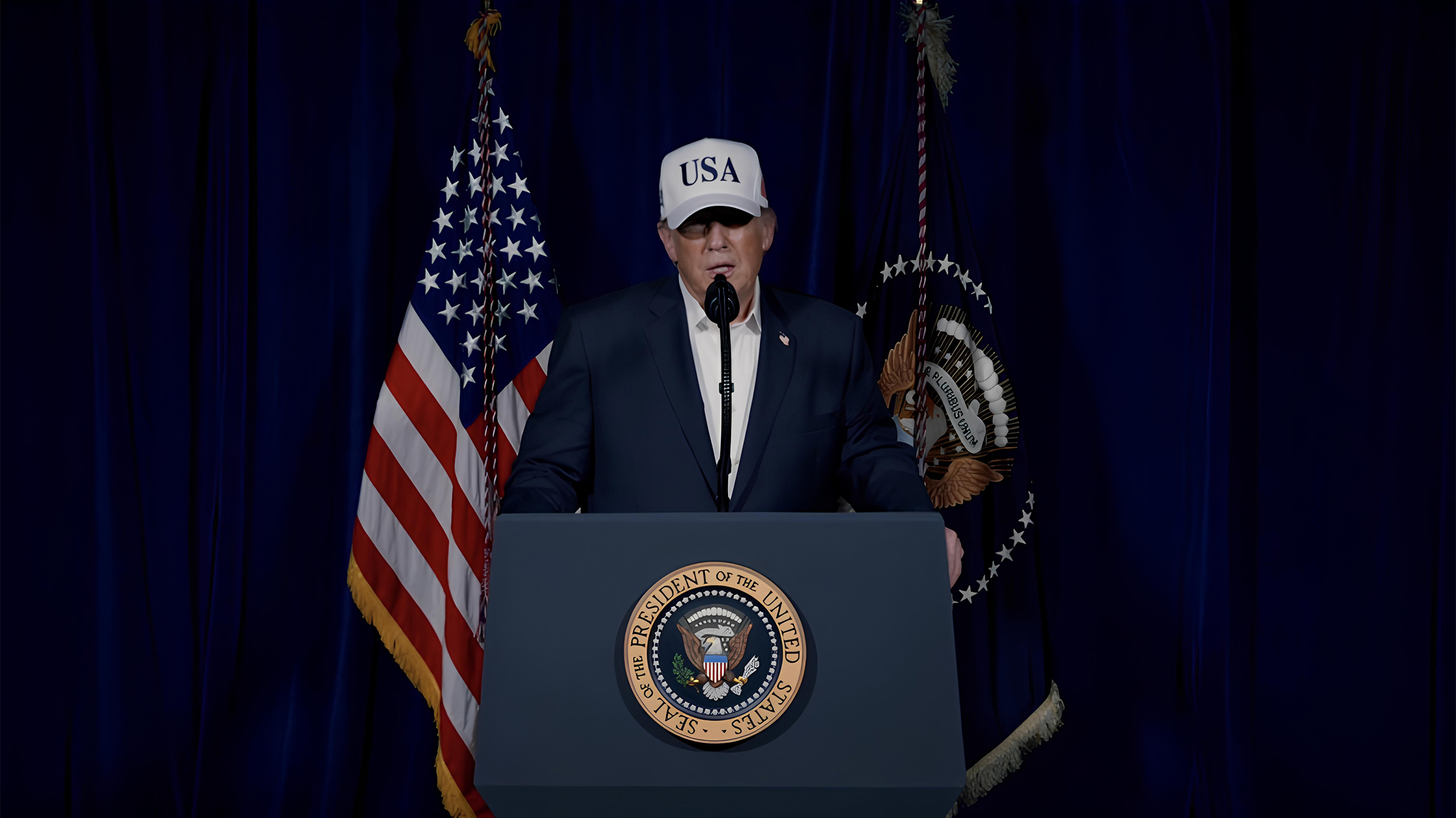
During the same period, US President Donald Trump signalled a shift toward force. In his 24 February address before Congress, he asserted that Iran had resumed elements of its nuclear programme after earlier strikes in 2025 and, for the first time, characterised Iran’s missile arsenal as a threat extending beyond the region. He demanded a complete halt to uranium enrichment and inclusion of ballistic missiles in negotiations – conditions Tehran rejects. Mixed signals emerged from Washington, as some officials hinted at flexibility on limited enrichment while others reiterated maximalist demands.
On 27 February, Trump publicly expressed dissatisfaction with negotiations, though he stated he preferred to avoid force. That same day, the IAEA reported uncertainty about the location of more than 9,000 kilograms of enriched uranium at varying levels, including over 400 kilograms enriched above 60 percent. Meanwhile, US force mobilisation around Iran intensified.
When announcing the strikes, Trump devoted only limited attention to the nuclear issue. Most of his speech emphasised five decades of hostility between Washington and the Islamic Republic and declared that his administration could no longer coexist with the current regime. He concluded by addressing Iranians directly, urging them to seize what he described as a historic opportunity to free themselves from their rulers. Israeli rhetoric aligned with this orientation, openly appealing to minority communities and opposition forces. The early assassination of senior leadership confirmed that the war’s central objective extends beyond the nuclear file. It concerns the existence, direction and future of the Islamic Republic itself.
Two military paths are conceivable. A short war, lasting days to a week, would concentrate on degrading air defences, missile launch sites, drone infrastructure, ports, naval assets, command-and-control systems and remaining nuclear facilities, while continuing leadership targeting where possible. Its aim would be to weaken and disorient the regime, open space for opposition forces, and compel surrender in subsequent negotiations.
A longer war, stretching weeks or more, would expand to economic infrastructure, governance centres, and possibly cultural and media institutions, seeking to shatter the structural pillars of the regime and render it vulnerable to collapse amid widespread unrest. This option aligns more closely with Israeli strategic preferences.
Iran’s response strategy rests on raising the cost of war. Acknowledging the imbalance of power, Tehran seeks to sustain missile and drone strikes to impose economic paralysis on Israel and the Gulf, particularly Bahrain and the United Arab Emirates. Disruption of the Strait of Hormuz would have severe global economic consequences. If regime survival becomes existentially threatened, Iran could encourage allied actors in Lebanon, Iraq and Yemen to open additional fronts, including maritime chokepoints, though the constraints facing these allies complicate escalation.
Regardless of duration, Iran will emerge from this war exhausted. Yet collapse through aerial bombardment alone remains unlikely. The Islamic Republic is institutionally diffuse, with authority distributed across multiple governing bodies and security forces, including the regular army, Revolutionary Guard, internal security services and the Basij. Despite growing social discontent since 2008, the regime retains a significant base across regions and communities. Severe damage is more likely to produce internal contention than immediate regime implosion. Without ground invasion and sustained external control, a decisive overthrow remains improbable.
Nor is a complete destruction of Iran’s nuclear and missile capabilities assured. Enriched uranium stocks are dispersed and not fully accounted for, and missile infrastructure spans the country’s vast geography. The technological foundations of both programmes are domestically developed and cannot be erased by airstrikes alone.
The war’s consequences will nevertheless be profound. Iran’s regional influence may contract as the regime turns inward. If it survives with cohesion, it will confront a stark choice: accommodation with Washington involving structural and regional recalibration, or endurance and reconstruction while preserving strategic independence, potentially including pursuit of a nuclear deterrent. In either case, the central target of this war is not merely Iran’s nuclear programme, but the Islamic Republic itself.
*This is a summary of a policy brief originally written in Arabic available here.