
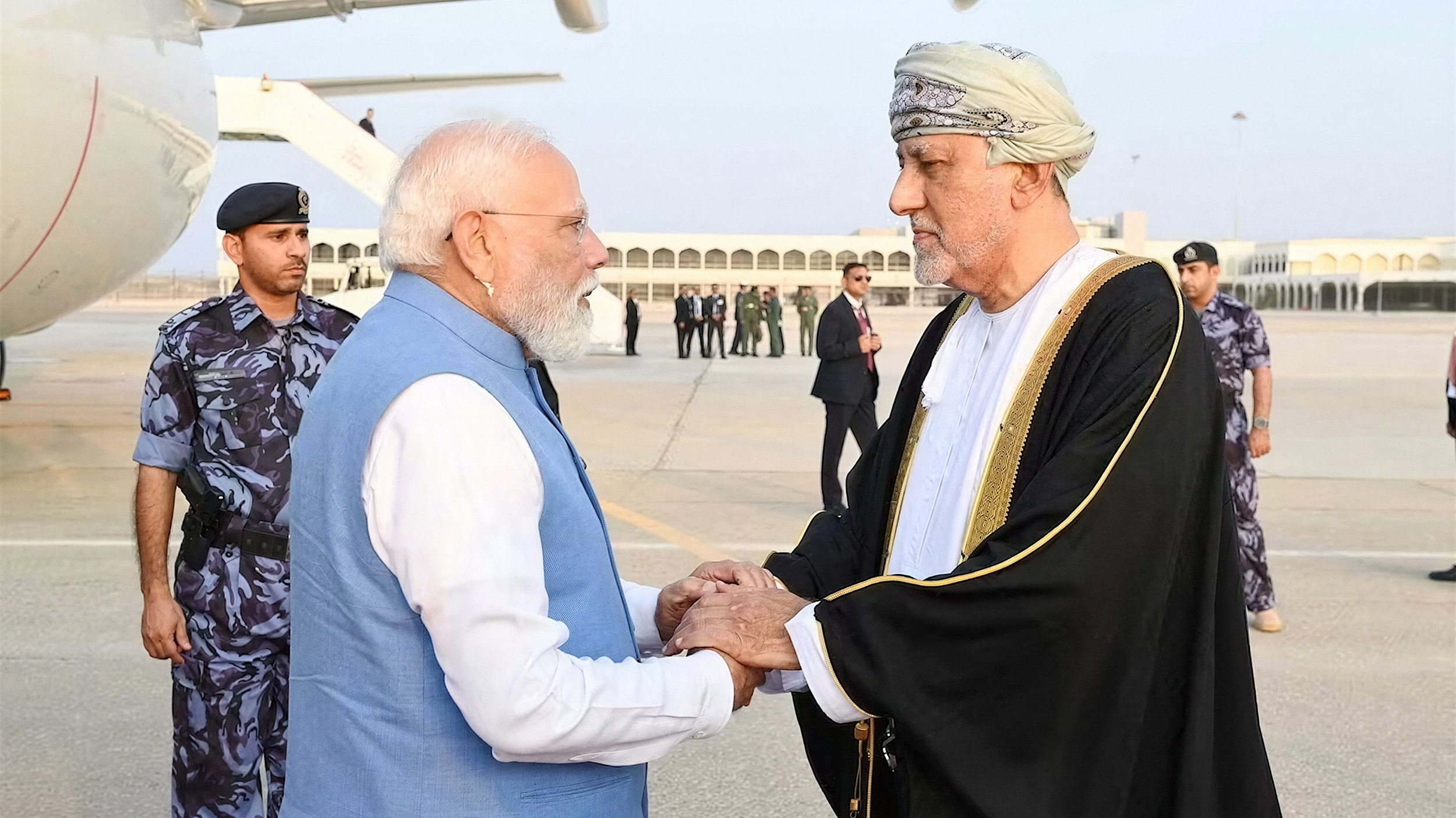
India and Oman share a long history and 70 years of formal diplomatic ties, a partnership now underpinned by significant contemporary alignment. The durability of this partnership was highlighted by Indian Prime Minister Narendra Modi’s official visit to Muscat on 17-18 December 2025, an event that aimed to strengthen bilateral cooperation and reaffirm India’s ongoing involvement in the strategically significant Gulf region. Today, this cooperation is reflected in well-developed economic relations, cooperation on energy issues, defence partnerships, and joint investments in connectivity and technology, all rooted in a long-standing historical past. This modern framework finds its roots in ancient interactions, where maritime trade and cultural exchanges first established the lasting ties between the two peoples.
Historically, the coasts controlled by Oman, which ruled over a vast geographical area from the Arabian Peninsula to the East African shores, served as a strategic gateway passage for Indian traders. These interactions were highly instrumental for the establishment of strong ties between the peoples of the two countries. Consequently, an Indian diaspora has maintained its presence in Oman from those times to the present day. In the period following the establishment of modern diplomatic relations in 1955, the Indian diaspora in Oman strengthened its presence in social and economic life and strongly contributed to the formation of modern Omani state.
Spanning centuries and sustained into the present, these social interactions bind the Omani and Indian peoples more closely than the traditional notion of diaspora allows. Indeed, there are people of Indian origin who came to Oman hundreds of years ago and became citizens of the country, as well as Indians who have received exceptional citizenship in the modern era due to their success in the business world or their contributions to the country. Owing to its traditionally liberal and inclusive policies, Oman hosts one of the largest communities of Indian-origin citizens in the Gulf. An estimated 10,000 Omani citizens are of Indian origin. In addition, approximately 686,635 Indian nationals reside in the country, playing a central role in the workforce and reinforcing bilateral economic and cultural ties. (1)
Omani families of Indian origin have become major players in the country’s economy by establishing large companies. One such family, the Khimjis, arrived in Oman from India in the 1870s and has maintained its presence in the country to this day. Besides contributing to the national economy, the Khimji family has also made significant investments in promoting cricket, a major socio-cultural activity in India, in Oman. (2) Another influential Indian-origin family in Oman’s economic landscape is the Menon family. Puthan Menon, born in Kerala, India, came to Oman in 1976 and began operating primarily in the construction and real estate sectors. According to Forbes magazine, Menon, the richest person in Oman, has a fortune of $4.6 billion. Alongside leading businessmen, the Indian diaspora in Oman also contributes significantly to the skilled workforce. (3)
Human-centred cooperation between the two countries forms the foundation of their economic and strategic partnership. Indian labour is particularly prominent in sectors such as education, finance, and healthcare. The healthcare sector, in particular, has seen significant Indian participation, both through skilled professionals and through investment. Indian investors own some of Oman’s largest hospital networks, including Badr Al Sama, as well as several of the country’s leading private healthcare institutions, such as Aster Al Raffah, (4) Apollo Hospitals, (5) and KIMSHEALTH. (6) These investments aim to strengthen Oman’s healthcare infrastructure while also transforming the country into a regional healthcare tourism hub. Meanwhile, while Indian doctors and nurses continue to be employed in Oman, the Comprehensive Economic Partnership Agreement (CEPA) is poised to stimulate new investments in select strategic sectors, notably the healthcare industry. Under CEPA’s professional mobility provisions, the ceiling for intra-company transferees (ICTs) employed by Indian companies operating in Oman has been raised from 20% to 50%, enabling greater deployment of managerial and specialist staff. (7) Furthermore, the agreement facilitates the potential for Indian enterprises to engage in 100% foreign direct investment within key service sectors in Oman through commercial presence. (8)
The Strategic Importance of Modi’s Visit to Oman
These areas of cooperation and the potential for further collaboration formed the basis of the Indian Prime Minister’s visit. In this regard, Modi’s visit aimed to strengthen and modernise the existing strategic partnership between the two countries, adapting it to the requirements of a new era marked by growing regional and global uncertainty. Above all, Oman is of paramount importance due to its strategic geographic position. It plays a critical role in the security of the Strait of Hormuz, through which a substantial share of global oil trade and India’s energy imports pass. In a region marked by conflict and instability, Oman remains an indispensable and reliable partner for India’s energy security.
Oman’s strategic value strengthens India’s presence in the Western Indian Ocean and supports its broader ambitions to expand trade and transit corridors toward Iran and Central Asia. As a gateway to East Africa and Southeast Asia via the Indian Ocean, Oman also provides access to Iran and the Central Asian republics through maritime routes linking the Strait of Hormuz and the Gulf of Oman to onward overland corridors. (9) For India, Oman is a dependable ally that safeguards its commercial and security interests in these regions and can act as a counterweight to China’s expanding role in the area.
Indeed, India also seeks to strengthen its relations with Oman in order to counterbalance China, which it views as a strategic rival in the Indian Ocean. In recent years, China has adopted a more assertive regional policy and has deepened its engagement with Oman. (10) For instance, Oman’s participation in the Belt and Road Initiative – China’s modern Silk Road project – has been a sign of Beijing’s growing influence in Muscat. This has encouraged India to re-examine its relations with Oman and implement a stronger cooperation agenda. At this point, Modi’s visit can also be seen as a new step in the process of defining a role for Oman in the India-Middle East-Europe Economic Corridor project, also known as IMEC, proposed by India during the G20 summit in 2023. A report published on 9 July 2025 by the National Maritime Foundation, based in New Delhi and supported by both the Ministry of Defence and the Indian Navy, emphasised the strategic importance of Oman’s participation in the IMEC project and stated that such a development would significantly strengthen the project, particularly the Eastern Corridor. (11)
Within the wider geopolitical landscape of the Gulf, Oman’s neutral and mediating foreign policy gives it a particular role. By maintaining close relations with Saudi Arabia and the United Arab Emirates while sustaining open channels with Iran, Oman plays a bridging and mediating role amid regional tensions. This position enables India to leverage its partnership with Oman in managing relations with other regional actors, including Iran and Saudi Arabia. This makes Oman a secure and stable anchor point at the heart of India’s multifaceted regional diplomacy.
The strategic significance of the relationship is reciprocal. For Oman, India represents a reliable and economically significant partner, particularly in supporting diversification beyond hydrocarbon trade. This growing alignment is reflected in rising bilateral trade, which reached $10.61 billion in fiscal year 2024–25, up from $8.95 billion the previous year. The increase was driven largely by expanded energy trade and the growth of non-oil commercial activity.
Oman ranked as India’s 29th largest export destination and 25th largest source of imports in 2024–25. Conversely, India was Oman’s fourth largest supplier of non-oil imports and its third largest market for non-oil exports during the same period. (12) Within the framework of Oman’s national development strategy, Vision 2040, expanding partnerships with India aligns closely with Muscat’s economic priorities, particularly in technology, renewable energy, healthcare, education, and small and medium-sized enterprise (SME) development. Given the long-standing presence of a large Indian community, Oman is likely to sustain and further institutionalise cooperation with India in addressing its demand for skilled human capital.
Free Trade Agreement and Economic Integration
Against this backdrop, the visit led to the finalisation of agreements in numerous areas aimed at strengthening relations between the two countries. The India-Oman Comprehensive Economic Partnership Agreement (CEPA), intended to enhance economic ties, seeks to reduce trade barriers, facilitate investment flows, and expand cooperation in various critical sectors that matter to both parties.
Negotiations for the CEPA began in November 2023 and continued for nearly two years. Prior to Modi’s visit, Oman’s Shura Council approved the agreement – an essential step for its entry into force – followed by approval from the Indian cabinet. (14) The agreement was formally signed by the leaders of both countries during the visit, making Oman the second Gulf state, after the UAE, to conclude a Free Trade Agreement with India. (15) Therefore, this agreement places Oman in an important position in India’s economic diplomacy and lays the groundwork for the development of trade relations between the two countries on an institutional and sustainable basis.
From this perspective, the India-Oman Comprehensive Economic Partnership Agreement is expected to elevate the trade relations between the two countries to another level. The agreement’s significant reduction in customs tariffs and the elimination of technical barriers to unlock trade potential is expected to have a positive effect on India’s exports to Oman, particularly in the sectors such as textile, pharmaceuticals, automotive parts and ready-made clothing. In addition, areas such as the digital economy and tourism emerge as new avenues of cooperation. It is anticipated that Indian technology firms will play a role in Oman’s digital infrastructure transformation, while Oman will revitalise its health and cultural tourism sectors, which are significant markets in India.
The positive momentum generated by the CEPA will also further develop ongoing investment projects. In this context, India’s presence in Oman’s strategic Duqm Port and Special Economic Zone is of great importance. Adani Group and other Indian consortia are involved in infrastructure investments related to the port. These projects have the potential to secure India’s energy logistics while transforming Oman into a re-export and manufacturing hub in the Indian Ocean.
Defence Cooperation and Strategic Partnership
Military cooperation and the defence industry represent another key pillar of the India–Oman strategic partnership. Defence and security cooperation between India and Oman is vital, especially for the stability of the western side of the Indian Ocean. (16) The signing of a defence industry cooperation agreement during Sultan Haitham bin Tariq’s visit to India in 2023 marked a significant step forward in bilateral security relations. Since then, interactions between the two countries’ naval forces have intensified noticeably. In particular, the joint naval exercises, Naseem al-Bahr, have gained greater strategic relevance as maritime cooperation deepens. These exercises include search and rescue, anti-piracy operations, encounter procedures and joint patrol activities in critical areas. (17) The main objective of the exercises is to maximise operational compatibility and interoperability between the two navies, thereby guaranteeing the security and free navigation of critical maritime trade routes, including the Strait of Hormuz.
There is also significant potential for partnership between India and Oman in maritime security and port access. Particularly in recent years, heightened risk in the Strait of Hormuz – along with sanctions imposed on Iran’s energy exports and maritime logistics that have affected shipping, insurance and regional supply chains – has made Duqm, Oman’s Indian Ocean port, a far more strategic node for India. India, intensifying its efforts in this area, began operations at the Duqm port following a defence pact between the two countries in 2018. (18)
Cooperation in the defence industry has moved beyond framework agreements to include concrete joint initiatives. Current efforts focus on maritime surveillance systems, coastal patrol vessels, and the development of maintenance and repair facilities. In addition, Indian defence firms are negotiating joint production and R&D agreements with Oman in areas such as medium-range air defence systems, unmanned aerial vehicle (UAV) technology transfer and cybersecurity. (19) This strengthens Oman’s domestic defence capabilities while enabling India to gain a regional partner in a strategic sector.
Another aspect of security cooperation security is counter-terrorism and intelligence sharing. The security institutions of both countries maintain ongoing information sharing, particularly in illicit security-related areas. (20) Shared concerns such as instability in Yemen and the threat of piracy in the Horn of Africa make this cooperation even more necessary. Institutionalised security engagement between Omani and Indian official institutions contribute proactively to regional security by coordinating threat assessments. (21) This multifaceted military-security partnership is transforming India and Oman’s relationship from one of shared interests into a deeper strategic alignment rooted in mutual trust and regional security cooperation.
Energy Security as an Area for Sustainable Partnerships
Energy security is a cornerstone of the India-Oman strategic partnership. Oman remains a significant and reliable supplier of crude oil and liquified natural gas (LNG) to India. Long-term supply agreements between the two countries provide stability, particularly in the face of fluctuations in energy markets. These agreements typically include flexible pricing mechanisms, increasing the predictability of India’s energy import costs. Furthermore, Indian energy giants strengthen resource supply by participating in upstream projects in Oman through joint investments. Of India’s annual imports from Oman – valued at $6 billion – approximately $1 billion accounts for crude oil and another $1 billion accounts for LNG.
During Modi’s visit, both sides discussed prospective collaboration in green hydrogen and renewable energy. Moving beyond traditional hydrocarbon cooperation, the two countries aim to develop strategic partnerships in the energy transition space. (22)
Oman’s excellent solar and wind potential, reflecting its geographical and climatic characteristics, and India’s renewable energy technologies create a complementary synergy. Indian companies provide technology, financing and expertise to develop large-scale solar power plants and wind farms in Oman to consolidate an investment aspect of the relations. At the heart of this cooperation is Oman’s ambition to emerge as a global hub for green hydrogen production by 2040, a goal that aligns closely with India’s broader energy transition strategy.
The proposed green hydrogen corridor represents a tangible manifestation of this vision. Under this framework, India would contribute its expertise in electrolyser technology and renewable energy integration, while Oman would provide extensive land resources and supporting infrastructure for large-scale production. The project aims to export green hydrogen and its derivatives from Oman to India and other international markets via Duqm Port. (23) This initiative will contribute to transforming Oman’s economy, consolidating Oman as a critical player in the global green energy trade. This comprehensive energy cooperation offers a forward-looking model that addresses both traditional security needs and shared responsibilities in combating climate change.
Conclusion
Modi’s visit to Oman deepened New Delhi’s strategic footprint in the Western Indian Ocean and the Gulf. It elevated bilateral ties into a more comprehensive strategic and economic partnership. The signing of CEPA provides an institutional foundation for this relationship, underscoring India’s recognition of Oman as a pivotal node in its regional logistics and trade networks.
From a geopolitical perspective, the visit can be interpreted as a successful expression of India’s multi-aligned foreign policy approach. Oman’s neutral and mediation-oriented diplomacy allows Muscat to navigate regional tensions while maintaining open channels with competing actors. This posture, in turn, provides India with strategic flexibility in balancing its relations with key regional powers, including Saudi Arabia, the UAE and Iran.
Modi’s visit can also be interpreted as part of India’s broader effort to recalibrate its partnership with Oman amid growing regional competition. In fact, New Delhi appears to be pursuing a subtle balancing strategy against China’s expanding presence under the Belt and Road Initiative by incorporating Oman into its own connectivity and logistics initiatives. At the same time, closer ties with Muscat serve to offset Pakistan’s longstanding influence in parts of the Gulf.
The expansion of military-security cooperation, the diversification of energy ties, and the emergence of partnerships in future-oriented sectors such as green hydrogen demonstrate that the relationship is being structured with a long-term strategic horizon. The vibrant Indian diaspora provides social legitimacy and a foundation of trust underpinning these collaborations. India is recalibrating its engagement with Oman to align with contemporary geopolitical realities while continuing to build on their longstanding socio-cultural connections.
Ultimately, Modi’s visit signals India’s intention to elevate its partnership with Oman from a historically rooted relationship into a dynamic and forward-looking strategic alignment shaped by economic interests and geostrategic considerations. As both countries deepen cooperation, they are contributing to a framework that may influence the broader security and prosperity architecture of the Indian Ocean region.

1. "Population of Overseas Indians", Ministry of External Affairs, https://bit.ly/3YAfn66 (accessed 1 January 2026).
2. Tristan Lavalette, "The Wealthy And Influential Family Fueling Oman's Cricket Rise", Forbes, 20 February 2021, https://bit.ly/49Cw5GU (accessed 1 January 2026).
3. Nivetha Dayanand, "From $7 to a billionaire: How PNC Menon built Sobha's global real estate empire", Gulf News, 3 December 2025, https://bit.ly/4aZ1WUK (accessed 1 January 2026).
4. "'I will work to support expat biz community': Abdul Latheef, OCCI's new board member, tells TAS", The Arabian Stories, 27 November 2022, https://tinyurl.com/vdp2vj5r (accessed 2 January 2026).
5. Naini Thaker, "We have committed Rs 2,500 crore to build 2,600+ hospital beds: Dr Azad Moopen", Forbes India, 3 September 2025, https://tinyurl.com/366c6unr (accessed 2 January 2026).
6. "The Background", KIMSHEALTH Hospital Oman, https://tinyurl.com/3jb9tnt7 (accessed 2 January 2026).
7. Anjum Khan, "Oman raises cap on Indian workforce to 50% under landmark trade pact", People Matters, 23 December 2025, https://tinyurl.com/pss8urxh (accessed 2 January 2026).
8. "Companies can employ up to 50% Indian staff in Oman office under trade pact", HR World, 19 December 2025, https://tinyurl.com/mttp64cn (accessed 2 January 2026).
9. Christian Koch, "Oman's Strategic Role: Indian and Pakistani Perspectives", in The Gulf and South Asia: Cultural, Strategic, and Economic Ties, (ed). D. M. Malone et al. (Washington, D.C.: Brookings Institution Press, 2021).
10. Muhammad Jawad Akhter, "Chinese Investments in Maritime Sectors of Oman and UAE: Transitioning Realities", Policy Perspectives, Vol. 20, Issue 1, June 2023, pp. 77-91.
11. Naga Bindhu Madhuri Annem, "Oman's Integration into IMEC: Strategic Imperatives for Enhancement of the IMEC Eastern Corridor", National Maritime Foundation, 9 July 2025, https://tinyurl.com/n8yxyyzy (accessed 5 January 2026).
12. "Oman, India deepen economic ties with new trade, maritime deals", Arab News, 18 December 2025, https://tinyurl.com/3dh6avtb (accessed 6 January 2026).
13. "Shura approves Oman-India economic partnership agreement", Zawya, 15 December 2025, https://tinyurl.com/mtmj6ata (accessed 6 January 2026).
14. "Cabinet approves India-Oman trade pact; may be signed during PM's Oman visit on Dec 17-18", Economic Times, 12 December 2025, https://tinyurl.com/yvcj27w8 (accessed 6 January 2026).
15. T.C.A. Sharad Raghavan, "India signs FTA with Oman, receives zero duty access on 99% of its exports", The Hindu, 18 December 2025, https://tinyurl.com/4kpxrvh6 (accessed 6 January 2026).
16. Mehmet Rakipoglu and Gokhan Ereli, "Oman's Relations with Pakistan and India", in Regional Security in South Asia and the Gulf, (ed.) Umer Kerim and Saloni Kapur (London: Routledge, 2023).
17. "India, Oman conduct joint naval exercise Naseem Al Bahr off Goa' coast", The Economic Times, 20 October 2024, https://tinyurl.com/4hap7e3n (accessed 7 January 2026).
18. Ankit Panda, "India Gains Access to Oman's Duqm Port, Putting the Indian Ocean Geopolitical Contest in the Spotlight", The Diplomat, 14 February 2018, https://tinyurl.com/3zjhn4xj (accessed 7 January 2026).
19. "India, Oman ink pact for collaboration in defence sector", The Economic Times, 31 January 2024, https://tinyurl.com/48sk9fa3 (accessed 7 January 2026); "Oman, India strengthen defence ties; focus on logistics complex", Times of Oman, 26 November 2025, https://tinyurl.com/mpcz7en5 (accessed 7 January 2026).
20. Rishi Suri, "India-Oman ties: A strategic partnership strengthening in a multipolar World", Global Order, 16 February 2025, https://tinyurl.com/5n8m36w5 (accessed 7 January 2025).
21. "Indian Navy & Royal Navy of Oman discuss operational collaboration, information sharing", India News Network, 7 June 2024, https://tinyurl.com/mr46k2m9 (Accessed 7 January 2026).
22. "India Inc sees India-Oman CEPA powering energy trade and green collaboration", Energy World, 18 December 2025, https://shorturl.at/xYUy5 (Accessed 9 January 2026).
23. Alban Kacher and Bart Meijer, "Industry groups in Oman, Netherlands, Germany strike green hydrogen deal", Reuters, 16 April 2025, https://tinyurl.com/42hzzyz8 (accessed 9 January 2026).