
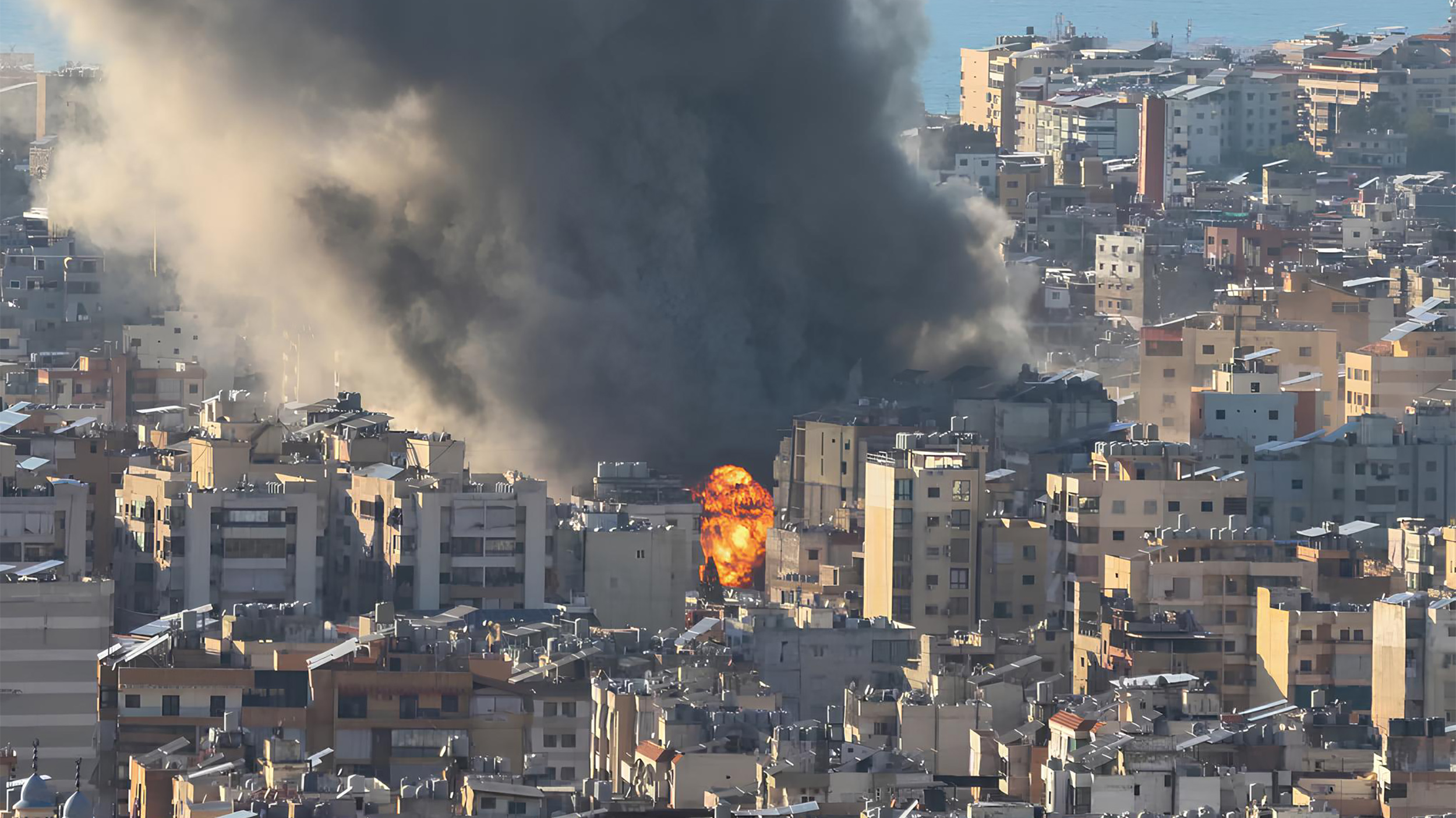
The shattering of the Iranian regime risks triggering a catastrophic horizontal war and vertical political collapse, as Israel remains the primary existential threat to the region's stability—a crisis forcing the Middle East back into 19th-century power politics. This regression, driven by a US policy that is dismantling the very system it once established, effectively ends the region's brief 'Dengist era' and the economic spirit that once fuelled its connectivity projects.
The Israeli genocide in Gaza has dramatically escalated tensions across the region. What began as a devastating war in Gaza has gradually transformed into a broader geopolitical confrontation particularly between the Israeli-US coalition and Iran.
The positions of many Middle Eastern states have become increasingly clear: they refuse to be party to Israeli aggression, which has lost all moral legitimacy as its genocidal policies extend into Lebanon. It has become politically untenable for Muslim-majority countries to align with Israel, even amidst their own long-standing competition and proxy conflicts with Tehran. This shift remains firm despite current Iranian strikes against US bases located on regional soil; the capitals of the region now view these escalations not as a direct war against themselves, but as an inevitable consequence of the Israel-US confrontation from which they seek to distance themselves.
The Erosion of Israeli Legitimacy and the End of the Middle East’s ‘Dengist’ Era
The question may begin with whether Israel has historical legitimacy in the region at all. Beyond the settler-colonial character of Israel and the massacres associated with its expansion, before 7 October 2023, the region had entered a period of rapprochement. Gulf countries, Türkiye, Egypt, and even Israel had begun improving relations.
Even during the G20 meeting in New Delhi in September 2023, just one month before 7 October, the India-Middle East-Europe Economic Corridor (IMEC) was announced (1) and presented as a project that could bring prosperity through transportation, energy and digital connectivity to the region. (2) The vision of the Middle East as a "New Europe", a deeply integrated economic hub linking Asian economies, the Gulf and Israel to Africa and Europe, has become a central pillar of global political discourse.
Türkiye, simultaneously and alternatively, announced the Development Road Project, signalling a deepening strategic alignment with Iraq. This route is increasingly highlighted as a more feasible alternative due to its lower cost and its inclusive approach toward Iran, which continues to play a vital role in the security of the Strait of Hormuz.
In addition to trade route divergence, tensions in the Eastern Mediterranean decreased, and rapprochement processes began between Türkiye, Egypt and Israel. The Qatar blockade ended. At the same time, there were also ongoing developments aimed at further integrating Israel into the region. Therefore, there was a visible diplomatic thaw in the region and a quest for the Gulfication of the greater Middle East.
Beyond these developments, Azizi and Halabi (3) predicted in 2025 that the Middle East is undergoing a fundamental shift as revolutionary ideologies and transnational nonstate armed actors give way to a state-centric model focused on economic development. With the "Axis of Resistance" in decline and regional powers like Saudi Arabia and Türkiye prioritising stability along with the global engagements, a ‘Dengist’ spirit has emerged. This new era emphasises sovereign statehood, digital infrastructure and integrated trade corridors over ideological conflict, positioning the region as a pragmatic economic hub rather than a theater for proxy warfare. This is not wishful thinking: the stabilisation of Syria after Assad and the disarmament of the Kurdistan Workers' Party (PKK) demonstrate a tangible move toward a state-centric regional order.
In the wake of 7 October, regional countries initially sought to mediate the crisis, even under Israeli genocidal policies, regional and global players pressured Israel to end the conflict, leading to critical summits in Egypt and the subsequent establishment of a Board of Peace.
However, Israeli military operations have not stopped with the genocide in Gaza. Threats have expanded far beyond Gaza, extending to Syria, Lebanon, Yemen and Iran. Yet despite the scale of the conflict, there has been almost no direct military confrontation between regional states and Israel with the notable exception of Iran’s brief but intense 12-day confrontation with Israel.
Most regional governments remained reluctant to engage Israel directly, including Iran, largely because of the overwhelming security umbrella provided by the United States.
Today, however, we are witnessing a broader Israeli war with the region, even including Iranian attacks on American bases located in the countries of the region. These attacks are widely perceived as part of the Israeli confrontation with Iran rather than as a direct Iranian war against those regional states themselves.
Self-Sufficiency (Khod-Kafai) vs. Isolation: The Sustainability of the Regime
To understand Iran’s behaviour in this confrontation, one must begin with a concept that has shaped the Islamic Republic since its founding revolutionary slogan: Khod Kafaye (Farsi: self-sufficiency). (4)
Since the 1979 revolution, Iranian political doctrine has been built around the idea of strategic autonomy. The regime has consistently sought to minimise vulnerability to external pressure by developing internal capacity across several critical domains.
First is ideological self-sufficiency. The Iranian political system is built upon a revolutionary narrative emphasising resistance, sovereignty and independence from both Western and Eastern domination. The famous revolutionary slogan, “Neither East nor West, only the Islamic Republic”, reflects this worldview. In the face of ongoing US-Israeli aggression, the opposition is weakened as the pressure effectively serves to validate and reinforce these revolutionary ideals.
Second is economic resilience. Iran’s economic capacity is far from limitless, and sanctions have imposed enormous costs on Iranian society. Yet decades of sanctions have also forced Iran to develop alternative supply chains, domestic production systems and parallel financial mechanisms, alongside the growing dominance of the Islamic Revolutionary Guard Corps (IRGC) within the economy. The sanctions regime has weakened Iran’s economy but has also encouraged a model of adaptive survival that makes rapid regime collapse far less likely than many observers assume.
Third is military self-reliance. This strategy dates back to the earliest days of the revolution and was reinforced during the Iran-Iraq War. Over time, Iran has invested heavily in asymmetric warfare capabilities, including ballistic missiles, drone technologies and networks of regional allies and militias. These capabilities allow Tehran to project influence without relying on conventional military parity.
Yet a critical question remains: Can Iran truly be self-sufficient within the international system?
Unlike Israel, which operates within a robust US-led alliance network, Iran lacks a comparable security architecture. Although Tehran maintains strategic cooperation with Russia and China, these relationships do not constitute formal security guarantees. In a prolonged confrontation with Israel and its Western partners, Iran could find itself strategically isolated. This is also result of Iranian proxy policies in the region as the central governments has a reservation against the Iranian regime.
And yet, ironically, such isolation may produce consequences far more dangerous than many policymakers in Washington or Tel Aviv appear willing to consider: more fronts, higher costs and no clear path to defeat.
Horizontal Escalation and Vertical Failure of Regional and Global Politics
The greatest danger lies not only in interstate escalation but in the reactivation of internal conflicts across the Middle East.
Several countries in the region remain deeply fragile after decades of war and institutional collapse. Iraq, Lebanon and Yemen already host armed networks with transnational loyalties and ideological alignments which could once again become arenas for overlapping regional conflicts and have a potential to spread Syria.
The aftermath of the US invasion of Iraq in 2003 and the post-Arab Spring transitions demonstrated how quickly regional political divisions and polarisations can spiral into prolonged civil war including the proxy strategies. The current geopolitical climate carries similar risks. But the Iranian case presents a different calculation for Israel.
A possible collapse of Iranian central control could generate a landscape in which decentralised militias and ideological movements operate across multiple states, making the security of Israel, US allies in the region (such as Gulf countries), Iraq, Lebanon and Syria, far more precarious than before.
In his recent analysis, Robert A. Pape cites the conflicts in Vietnam and Kosovo to highlight the inherent risks of horizontal escalation, arguing that US-Israeli aerial dominance alone cannot secure a clear victory. (5) He posits that a prolonged, widening war ultimately favours Iran, as Tehran can leverage regional instability and economic disruption.
The consequences will not remain confined to the Middle East. Sectarian and political divisions within the region can easily resonate within diaspora communities in Europe and North America, as well as Asian countries particularly where Shia political networks feel directly implicated in the conflict.
If Israel believes that the collapse of the Iranian regime would secure its future, it is a miscalculation of the situation, because such an outcome could pose the greatest long-term threat to Israel itself who also became the central threat to regional states already.
Back to the 19th Century: The Architect’s Exit and the Death of Global Consent
The conflict is often interpreted through familiar frameworks: deterrence, nuclear proliferation, regional power balance and the possibility of cascading civil wars across Iran and beyond by the mobilisation of decentralised Shia networks across multiple continents.
Besides, for decades, the United States campaigned for a global order rooted in Western-style governance, liberal institutions and collective security guarantees. However, US Secretary of State Marco Rubio’s recent speech at the Munich Security Conference signalled a historic departure from this role. By arguing that the current international system no longer serves American interests and asserting that the United States will maintain its hegemonic status regardless of the cost. Washington has clearly signalled the end of the "liberal" era.
This raises a troubling paradox: who is going to intervene against the United States—the primary architect of our global institutions and a state that has intervened against so-called ‘rogue states’ in the name of these values—now that it is ready to abandon them? The answer, clearly, is no one.
Today, the non-Western world increasingly views American power not as a stabilising force, but through a lens that resembles the imperial and colonial dominance of the past, as illustrated by recent developments in Venezuela and Greenland. As morality and shared values are stripped from the international order, we are witnessing a "Great Regression". The world is retreating from the promise of global cooperation and spiraling toward the raw, realist power politics of the 19th century—an era defined by spheres of influence, colonial-style interventions and the belief that might makes right.
Across Asia, Africa and parts of the Middle East, political elites and intellectuals are increasingly questioning whether the current international system still rests on genuine global consent.
A prolonged confrontation with Iran is going to fuelling anti-American sentiment globally, as military dominance alone cannot sustain an international order once its hegemonic legitimacy has eroded. Because the global community invests heavily in the 'American Dream' and the US-guaranteed 'rules-based order' through human capital, financial markets and political alignment, the collapse of that soft power would be more catastrophic for the United States than any tactical defeat on the battlefield. While the lack of clear objectives, narration of success from both parties, currently offers both sides a potential path to de-escalate and satisfy their domestic audiences, but this exit remains blocked by continued Israeli aggression, a destabilising force that the United States must now actively restrain to prevent a systemic collapse.
The Iranian case therefore carries implications far beyond the Middle East.
It could destabilise the entire region and, in doing so, produce the greatest long-term threat not only to Israel’s future security but also to the very idea of the Western world.
- About the India-Middle East-Europe Economic Corridor (IMEC)”, IMEC, https://shorturl.at/Cph6c (accessed 25 March 2026).
- Afaq Hussain and Nicholas Shafer, “The India-Middle East-Europe Economic Corridor: Connectivity in an era of geopolitical uncertainty”, The Atlantic Council, 27 August 2025, https://shorturl.at/cQP6R (accessed 25 March 2026).
- Arash Azizi and Bachar Halabi, “The Middle East’s End of Ideology”, 1 July 2025, https://shorturl.at/EMtnr (accessed 25 March 2026).
- Anoushiravan Ehteshami, “The Foreign Policy of Iran” in The Foreign Policies of Middle East States, (eds.) Raymond Hinnebusch and Anoushiravan Ehteshami (Boulder: Lynne Rienner Publishers, 2002), pp. 283-309, https://shorturl.at/KH0TU (accessed 25 March 2026).
- Robert A. Pape, “Why Escalation Favors Iran”, Foreign Affairs, 9 March 2026, https://shorturl.at/JFa9X (accessed 25 March 2026).