
Introduction
As the direct military confrontation between the Islamic Republic of Iran and the United States enters its sixth month, questions are mounting over how the conflict might ultimately end. With neither side appearing willing to retreat and both moving toward a complete deadlock, several broad strategic trajectories can be identified that may shape the conflict’s course. The precise contours of what lies ahead, however, remain uncertain.
Why Did the United States Go to War with Iran?
Much of the analysis of the current situation hinges on a fundamental question: why did the United States decide to enter into direct military confrontation with Iran? Was the decision, as some critics have argued, primarily driven by the personal preferences of US President Donald Trump and pursued without a clearly defined strategy, (1) or should it instead be understood within the broader framework of U.S. foreign policy? (2) And how should the apparent contradiction between Trump’s electoral promises to reject “endless wars” and his current conduct be understood? Answering these questions is important because they shed light on the extent to which Washington is committed to the conflict and prepared to bear its political, economic, and military costs.
For a significant segment of the US foreign policy establishment, containing Iran has been a strategic priority for Washington for several decades, demonstrating considerable continuity across changes in power between Republicans and Democrats. (3) As Iran expanded its regional influence across West Asia through a network of proxy forces challenging the regional order favoured by the United States, this priority assumed increasing importance. Washington pursued it through political and economic pressure, particularly by expanding sanctions and seeking to constrain Iran’s nuclear programme, missile capabilities and regional military capacity. (4)
The significance of this issue becomes even clearer when considered in the context of the United States’ long-term competition with China, which Washington regards as the most important strategic challenge of the 21st century. (5) From the perspective of US defence strategy, while China is identified as the principal long-term challenge, Iran remains one of the regional challenges that Washington must manage. (6)
Accordingly, containing Iran is an important consideration in US regional security policy, both because Iran represents an asymmetric military power capable of striking US interests beyond the immediate front lines and because Washington seeks to prevent long-term disruptions to critical energy transit routes. (7)
It can therefore be argued that the United States viewed the post-7 October 2023 environment as a particularly favourable opportunity to strike Iran. During this period, Iran’s network of regional allies was severely weakened, initially through the degradation of much of the military capabilities of Palestinian armed groups, including Hamas, (8) followed by the fall of the Assad regime in Syria (9) and significant blows to Hezbollah in Lebanon. (10) These developments substantially weakened Iran’s regional network of allies. (11)
At the same time, Tehran was confronted with a series of domestic challenges, including internal protests, economic difficulties and declining social capital. (12) (13) (14) In some cases, these challenges were accompanied by efforts by external actors to exert informational or political influence. (15) Political infighting was also increasingly visible, particularly following the suspicious death of former President Ebrahim Raisi. (16)
Against this backdrop, and with encouragement from Israel, Trump pursued bolder measures, (17) perhaps in the hope of securing a political legacy for himself while finally resolving one of the longstanding challenges facing US foreign policy—before Iran had an opportunity to rebuild its capabilities. As US Secretary of State Marco Rubio has repeatedly argued, “If we had not attacked Iran, they would have built such a conventional arsenal that attacking Iran would no longer have been possible.” (18)
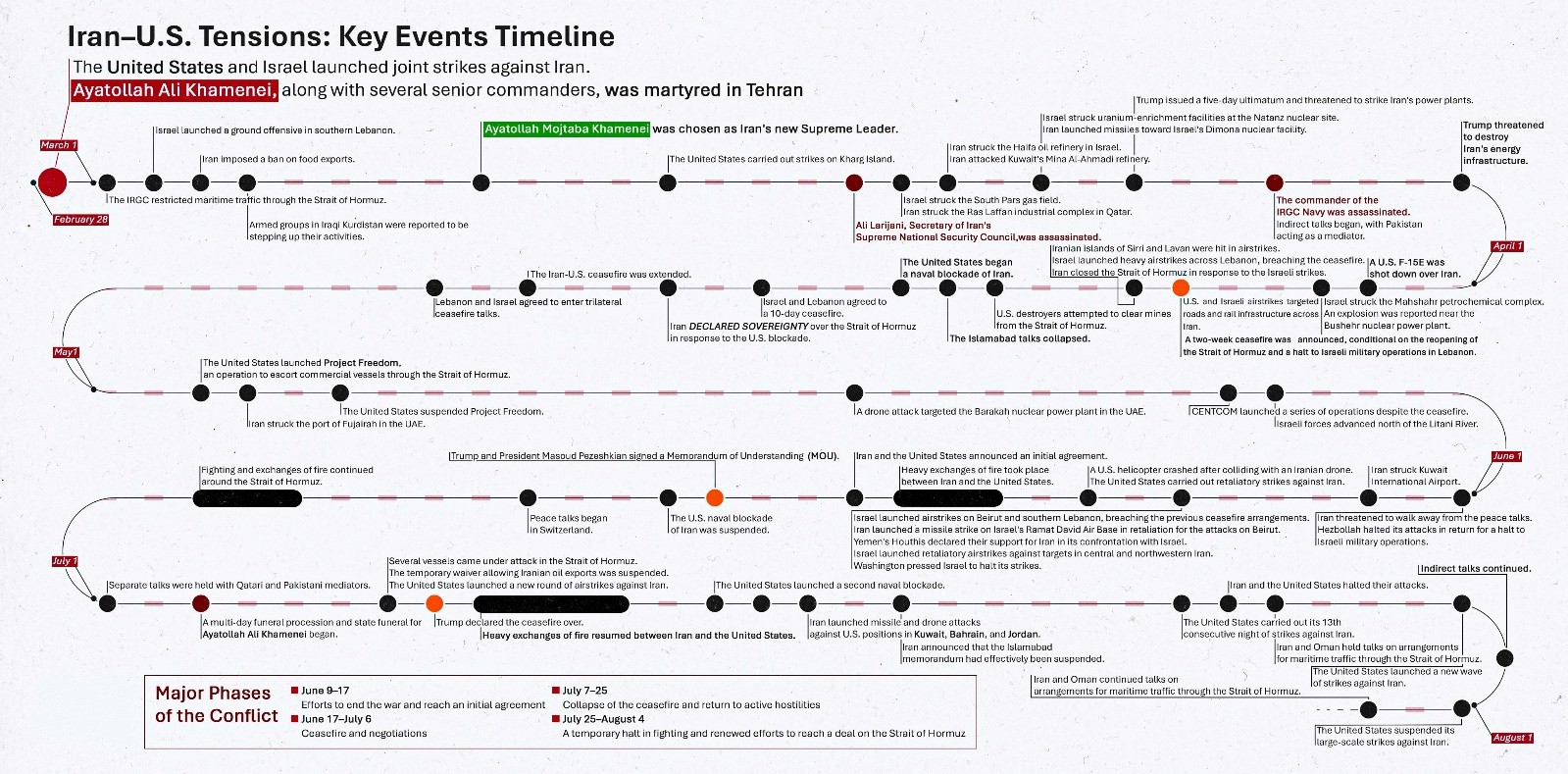
Taken together, these developments ultimately culminated in the outbreak of war on 28 February 2026. The US government stated that its primary objectives were to degrade and destroy Iran’s military and missile capabilities, eliminate its weapons-production infrastructure, and prevent Tehran from acquiring nuclear weapons. (19) At the same time, Trump and some political currents in the United States also raised the possibility of political change in Iran. (20)
Six months later, however, the situation is markedly different. Although neither side can be considered the victor, Iran has, at a minimum, managed to withstand the conflict despite suffering heavy losses. (21) The United States has achieved some of its tactical objectives, but it has yet to secure the strategic gains necessary to disengage from the conflict, particularly given the continued resilience of Iran’s nuclear programme, the uncertain fate of its stockpile of enriched uranium, and restrictions on maritime traffic through the Strait of Hormuz. (22)
The question, therefore, is how the conflict’s future trajectory can now be mapped out.
The Iranian Perspective on the War and Negotiations
Beyond the long and contentious history of relations between Iran and the United States, a significant degree of mistrust currently exists between Tehran and the administration in Washington. This mistrust is reflected in the official positions and statements of Iranian officials, who view the prospects for meaningful negotiations with the current US administration as highly limited. (22)
One example of this position can be found in recent remarks by Majid Shakeri, an adviser close to Mohammad Bagher Ghalibaf, Speaker of the Iranian Parliament and head of Iran’s negotiating delegation. In an interview, Shakeri was asked why Iran was taking actions that provoked the United States to such an extent, while countries such as Turkey, Pakistan and Oman had engaged in dialogue with Washington. The interviewer also pointed to Pakistan’s ability to maintain relatively stable relations with the United States despite possessing nuclear weapons.
In response, Shakeri framed the situation around three factors: “First, Iran’s domestic considerations and circumstances; second, the country’s specific circumstances and strategic imperatives; and third, the characteristics of the US administration. The situation in Washington is such that it is impossible to conduct effective negotiations with the Donald Trump administration. During Trump’s two presidential terms, the political team in the White House has failed to reach a lasting agreement with any country. The only example that can be cited is the trade negotiations with Canada and Mexico during Trump’s first term, and even that agreement was subsequently altered and violated during his second term. The United States has failed to reach lasting agreements with China, the United Kingdom, the European Union or Japan, and it will not reach an agreement with Iran either. As a result, many countries prefer to defer serious negotiations until the end of Trump’s presidency.” (23)
A similar position is expressed explicitly in the statements of Ghalibaf himself. On 17 June 2026, following the Islamabad negotiations, he stated in a televised interview: “I am the person who has the least trust in the United States.” (24) Ghalibaf reiterated this position on 21 June 2026, following the talks in Switzerland, stating: “We did not trust the Americans, we do not trust them now, and it is only rational to remain distrustful of them in the future as well.” (25) He repeated the same position on 10 July 2026, during a meeting with the Speaker of the Indonesian Parliament, stating: “Only those who are prepared for war can negotiate with the United States.” (26)
Taken together, these statements indicate that, within the discourse of a significant segment of Iranian policymakers, distrust of the United States has become a fundamental assumption underlying any negotiations with the current US administration. The roots of this distrust can be traced to the unilateral withdrawal of the Trump administration from the Joint Comprehensive Plan of Action (JCPOA) in 2018. The subsequent activation of the snapback mechanism by the European troika with US support, followed by the reimposition of UN Security Council sanctions against Iran in late September 2025, (27) further reinforced this perception in Tehran. Similarly, Israel’s attacks on Iran on 13 June 2025, and US participation in strikes against Iranian nuclear facilities, (28) at a time when the sixth round of negotiations between the two sides was scheduled for 15 June 2025, (29) were interpreted as evidence that Washington was not genuinely committed to negotiations.
This perception has persisted throughout the current crisis. From the perspective of Iranian officials, repeated violations of the ceasefire in April 2026, (30) US attacks on Iran’s coastal areas and military facilities, (31) and, ultimately, the collapse of the Islamabad memorandum of understanding (32) have collectively provided a series of practical examples that feature prominently in the Islamic Republic’s official narrative as evidence of the unreliability of US commitments and the difficulty of reaching a durable agreement with Washington.
In the author’s assessment, the United States currently has no intention of ending hostilities. Its present and previous actions can instead be interpreted as efforts to buy time while constraining Iran’s economic and political leverage. (33)
How Is Iran Responding?
Iran’s approach to the ongoing tensions, however, differs significantly from that of the United States. At the heart of this divergence is the two sides’ differing perceptions of the role of “time”. (34) While Washington appears to operate under pressure to achieve tangible operational results within a medium-term timeframe, Tehran does not necessarily view the passage of time as detrimental to its interests. (35)
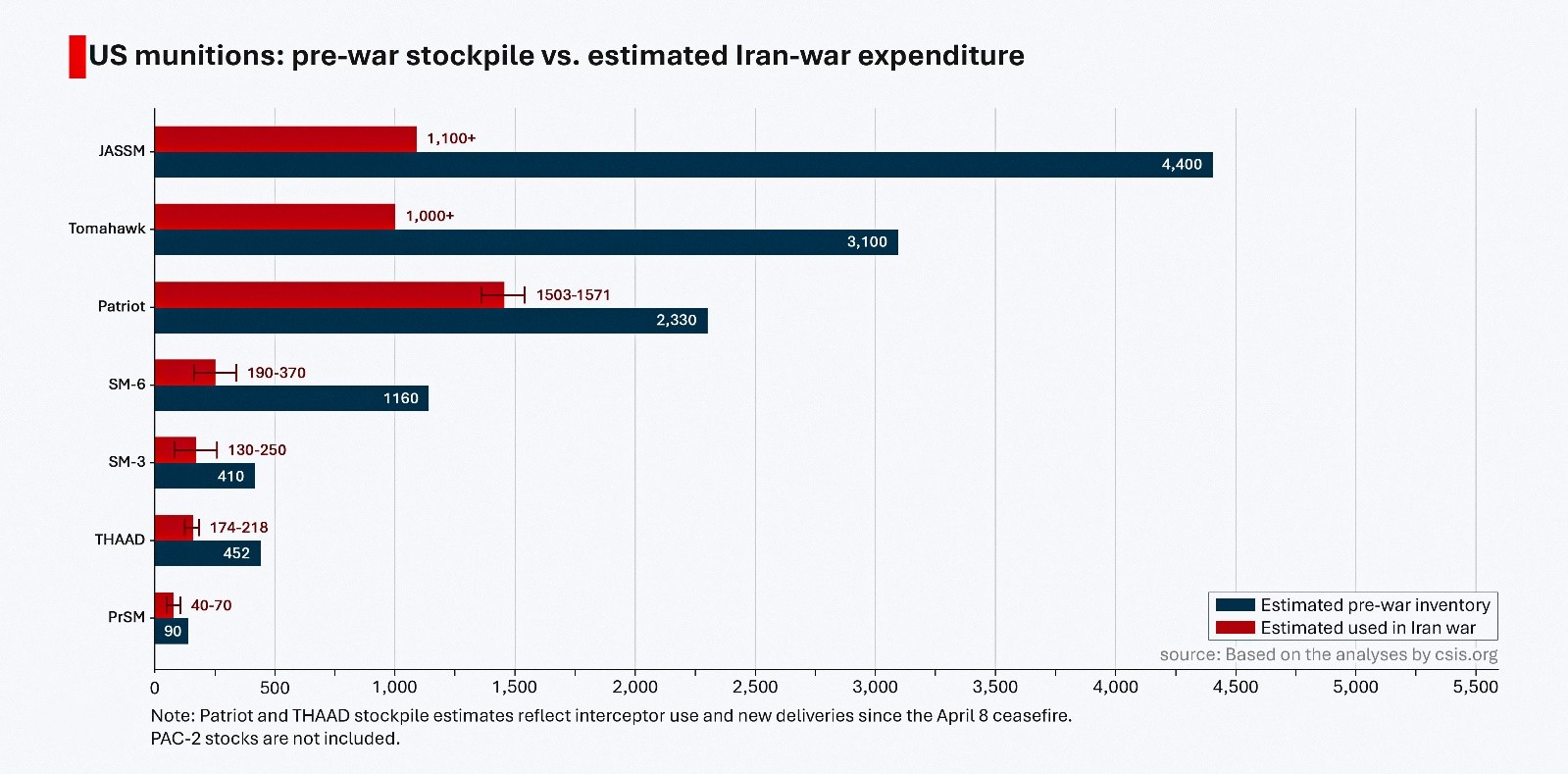
Iran appears to perceive four key sources of leverage. The first is the potential for an increase in global energy prices, which will be discussed in greater detail below. The second is the rising cost of sustaining the US military presence in the region, coupled with the gradual depletion of precision-guided munitions held by the US military and its allies. The third is the war’s indirect economic cost, which has placed additional pressure on America’s East Asian allies while ultimately shifting much of the burden onto Washington. Finally, if the conflict expands further, the ability to impose economic pressure on the Arab states would constitute Iran’s fourth major source of leverage.
The Oil and Petroleum Products Challenge: Perhaps one of Iran’s sources of leverage that has so far underperformed expectations is the energy market, particularly oil. The closure of the Strait of Hormuz, restrictions on shipping through the Bab el-Mandeb Strait, and limited attacks on oil infrastructure are all factors that directly affect global oil prices.
Despite the fact that shipping through the Strait of Hormuz has never returned to pre-war levels, global oil prices have nevertheless remained below $100 per barrel. According to the International Energy Agency’s (IEA) monthly Oil Market Report, global oil supply fell to 98.8 million barrels per day in June 2026, approximately 9.4 million barrels per day below the February 2026 level, representing a disruption equivalent to roughly 9 percent of global supply. (36) The most important factor preventing a sharper price spike was China’s reduction in oil imports and use of strategic reserves, which compensated for a significant portion of the supply shortfall. At the same time, Western countries also released strategic reserves to mitigate the impact of reduced supply. (37) From Iran’s perspective, however, the continuation of the war will gradually deplete these reserves, leaving the global oil market increasingly vulnerable to subsequent shocks.
By contrast, one of the United States’ principal priorities has been to maintain the flow of oil exports from the Gulf. Although tanker traffic through the southern approaches to the Strait of Hormuz and the waters of Oman has declined significantly compared with pre-war levels, approximately 3–5 million barrels of oil per day—equivalent to nearly 25 percent of the previous volume—continue to pass through the route. This has been made possible primarily by US military operations against Iranian military facilities on the islands and along the coastline, as well as the use of alternative pipeline routes through the United Arab Emirates and Saudi Arabia. These routes have offset more than 35 percent of the Strait of Hormuz’s previous oil-transit capacity. (38) (39)
Alongside these measures, lower Chinese import demand, releases from strategic reserves and increased exports by some producers—particularly the United States, in both the oil and liquefied natural gas (LNG) markets—have helped prevent a severe price shock. (40) As a result, market reactions to supply disruptions have become increasingly muted following each round of hostilities, with oil prices gradually moving closer to pre-war levels. This trend has reduced the economic cost to Washington of sustaining its strategy of containing Iran.
This situation, however, has its limits. According to data from the US Energy Information Administration (EIA), the country’s Strategic Petroleum Reserve (SPR) has fallen to approximately 300 million barrels, its lowest level since 1983. The reserve, which stood at around 650 million barrels before the war in Ukraine, was drawn down to approximately 350 million barrels by mid-2023 as part of efforts to contain oil prices.
By the outbreak of the war with Iran, only part of the reserve had been replenished, reaching roughly 400 million barrels. Since the beginning of the current war, Washington has once again resorted to releases from the reserve in an effort to contain global oil prices. (41)
Estimates suggest that, even if the UAE and Saudi pipeline routes remain operational, US strategic reserves could approach the critical threshold of 150 million barrels by October this year if the current rate of withdrawals continues. The significance of this threshold extends beyond the sheer reduction in reserve volumes. At such a level, the reserve would provide only a few months of emergency coverage, while replenishing it would require considerable time. Further depletion could therefore weaken the United States’ energy-security buffer and constrain Washington’s freedom of action in managing or responding to new crises. (42) (43)
Additionally, an escalation of the war—particularly if oil infrastructure were targeted or the alternative pipeline routes through the UAE and Saudi Arabia were taken offline—would accelerate the depletion of strategic reserves in the United States and other consuming countries, bringing the global oil market closer to serious supply constraints.
According to the CEO of Saudi Aramco, the war with Iran has so far removed approximately 2.6 billion barrels of crude oil from global supply. As long as the Strait of Hormuz remains closed, more than 100 million barrels of oil per week will remain outside the global transportation system. Even if the Strait were reopened today, rebuilding global oil inventories could take as long as 18 months. (44) It is therefore reasonable to expect that higher oil and natural gas prices would feed directly into the prices of other commodities across the industrial, mining and agricultural sectors. (45) (46)
Alongside the Strait of Hormuz, restrictions on shipping through the Bab el-Mandeb Strait have once again attracted attention. In support of the ongoing campaign, Yemen’s Ansar Allah has announced a form of shipping blockade targeting Saudi vessels in the Bab el-Mandeb. (47) If the conflict continues or intensifies, this measure could potentially be expanded. Under an escalation scenario, Ansar Allah’s operations could extend to the commercial fleets of other countries aligned with the United States, shipping routes leading to the Suez Canal, and Saudi ports and oil facilities, potentially having a significant impact on oil prices. A complete closure of the Bab el-Mandeb could affect approximately 7 percent of global oil supplies. (48)
Recent missile and drone attacks by Yemen on Saudi oil facilities in Yanbu and Jizan (49) demonstrate some of the capabilities available for exerting additional pressure on the energy market. (50) In the same context, reports have also emerged of at least two drone attacks against US vessels in waters off the coast of Egypt. (51)
Another issue that has received comparatively less attention is the market for refined petroleum products, which is now facing an unprecedented level of stress. Disruptions to supplies of gasoline, diesel and jet fuel have reached critical levels. What distinguishes the current crisis from previous episodes is the simultaneous disruption of three vital energy corridors: the Strait of Hormuz, the Red Sea and the Black Sea.
Russia, the world’s second-largest exporter of diesel, has faced serious disruptions to its supply chain following Ukrainian attacks on its oil infrastructure. By July 2026, Russian refinery throughput had fallen to approximately 3.8 million barrels per day, its lowest level in more than two decades. (52) Moscow responded first by banning gasoline exports in April, followed by jet-fuel exports in June, and finally by imposing a complete ban on diesel exports on 9 July 2026. (53)
At the same time, disruptions at the port of Novorossiysk, through which roughly one-third of Russia’s crude oil exports are shipped, have reduced export flows. During the final week of July 2026, only four tankers were loaded at the port, compared with a pre-disruption weekly average of seven to eight vessels. (54) The disruption also spread to Kazakhstan, where an attack on infrastructure associated with the Caspian Pipeline Consortium (CPC) effectively halted operations along the route and reduced Kazakhstan’s oil production by approximately half, to around 406000 barrels per day. (55)
In Asia, China, another important source of marginal refined-product supply, has also restricted its exports. (56) As a result, the global market has experienced a significant reduction in the availability of Chinese refined products. The simultaneous decline in Russian refining capacity and disruptions to maritime shipping routes have further intensified pressure on the gasoline, diesel and jet-fuel markets.
The East Asian Dimension: Another relatively overlooked dimension of the Iran-US war is its impact beyond the military domain and on the international financial system. Although a combination of measures by consuming and producing countries, the use of strategic reserves, reduced demand in some major economies, and increased alternative supply has helped absorb part of the disruption to energy flows, the longer the current situation persists, the more strategic reserves held by consuming countries will be depleted. This will, in turn, further constrain policymakers’ ability to contain subsequent shocks.
The significance of this issue becomes clearer when Japan’s position in the global economy is taken into account. Japan is highly dependent on energy imports, particularly oil and gas from the Middle East. (57) (58) Any sustained increase in energy prices would therefore directly raise the country’s import costs.
A further depreciation of the yen beyond certain thresholds could, in turn, compel the Japanese government to intervene more extensively in the foreign-exchange market. (59)
By late July and early August 2026, mounting pressure on the Japanese yen and its decline to its lowest levels in several decades led first to direct intervention by the Japanese government in the foreign-exchange market and subsequently to US involvement. According to published reports, Japan allocated approximately $53 billion to one of its largest foreign-exchange interventions, purchasing yen and selling foreign currencies. (60) The United States subsequently became involved through the Treasury Department, with the Federal Reserve Bank of New York executing the transactions. Rather than selling dollars directly, the US Treasury sold part of its euro-denominated reserves and used the proceeds to purchase yen. These transactions were executed through the Federal Reserve Bank of New York with the participation of major investment banks. (61)
Japan is one of the world’s largest holders of foreign assets and US Treasury securities. (62) Therefore, had Tokyo been forced to intervene independently and on a much larger scale to support the yen, the likelihood of it selling part of its dollar-denominated assets would have increased. (63) Large-scale Treasury sales could have pushed bond prices lower and yields higher, (64) an issue of particular importance for the US economy under current conditions, since higher Treasury yields directly affect government and private-sector borrowing costs, mortgage rates and corporate financing costs. (65) (66)
The Iran war can therefore affect one of the most important mechanisms underpinning global liquidity indirectly through the energy market. The transmission mechanism can be outlined as follows: an escalation of the war and increased risks around the Strait of Hormuz drive up energy prices; higher energy prices increase inflationary pressures in major economies; higher inflation makes it more difficult for the United States to lower interest rates; higher interest rates increase the attractiveness of the dollar and US assets; this places additional pressure on the yen; and, ultimately, intensified pressure on the yen could trigger further Japanese intervention and increase the risk of instability in the US Treasury market.
This does not, however, mean that US and Japanese intervention should be attributed directly to the Iran war. The yen’s depreciation is the result of a combination of structural factors, including interest-rate differentials, Japanese monetary policy, capital flows and speculative market positions. The Iran war should instead be viewed primarily as an exacerbating factor that, through the energy market and heightened economic uncertainty, has intensified existing pressures on the Japanese economy and financial markets.
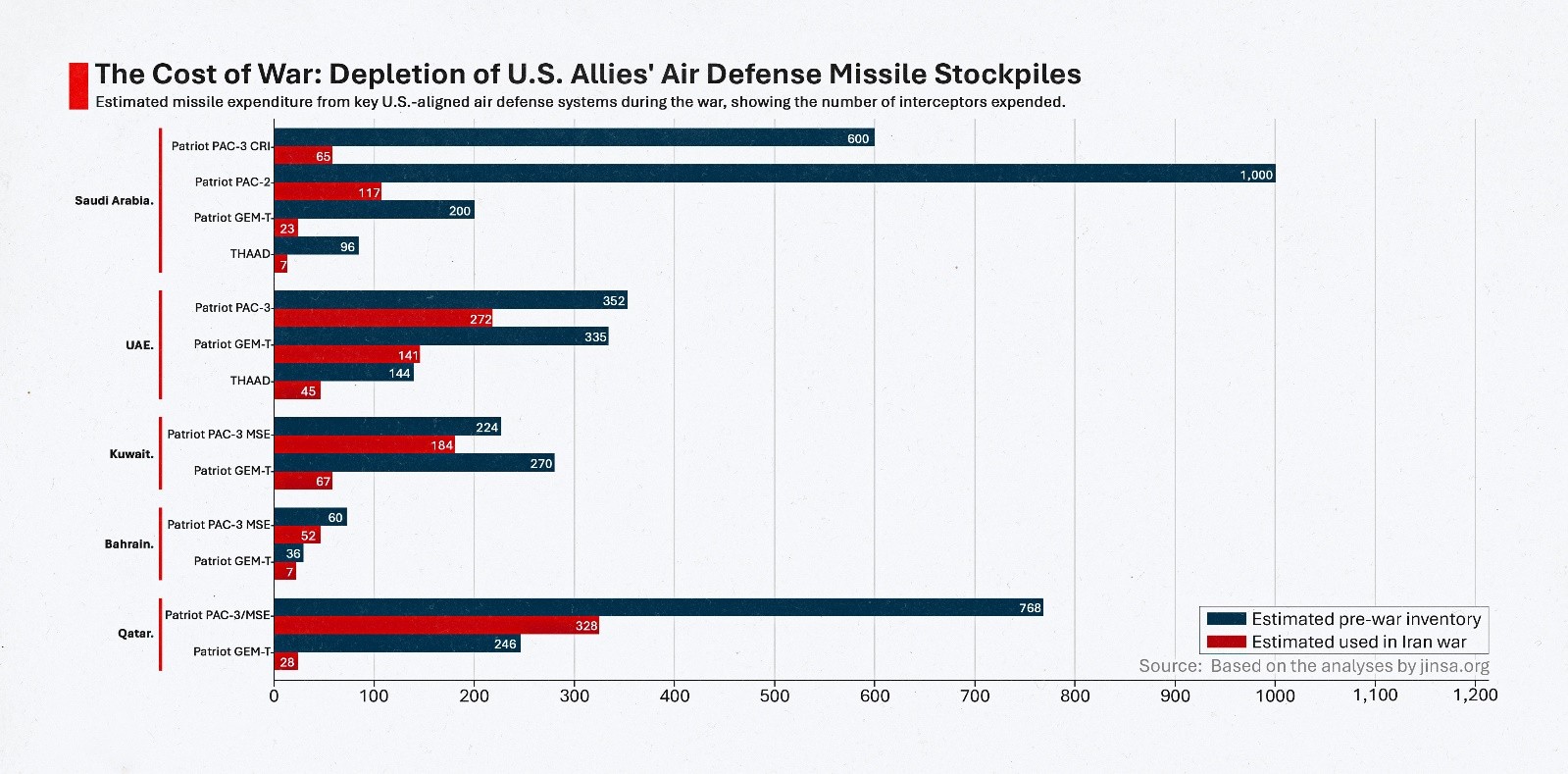
Military Costs and Precision-Guided Munitions Constraints: The United States is incurring significant daily costs as a result of its extensive deployment of forces and the maintenance of a high state of combat readiness in the region. (67) At the same time, stocks of long-range precision-guided munitions (68) and air-defence interceptors (69) are also declining. Consequently, if Washington were to launch another military campaign similar to the 28 February 2026 operation, the likelihood of the conflict entering an attritional phase would increase. In such a scenario, shortages of air-defence interceptors—particularly in the Arab countries hosting US forces—could become one of the principal challenges. Available estimates suggest that Bahrain, Kuwait and the United Arab Emirates would come under greater pressure than other countries in the region. (70)
Bahrain has a total of 60 PAC-3 MSE and 36 PAC-2 GEM-T missiles. At the beginning of 2026, it also submitted a request to purchase an additional 50 PAC-3 and 150 PAC-2 missiles, although it remains unclear how much of this order was delivered on an emergency basis. Given the high volume of attacks against Bahrain, it can be inferred that a substantial portion of the country’s Patriot interceptor stocks has been expended, with its PAC-3 MSE inventory in particular facing serious constraints.
Kuwait had 224 PAC-3 MSE and 270 PAC-2 GEM-T missiles. According to official statements, Kuwaiti air defences engaged approximately 1500 Iranian projectiles. Given the scale of these engagements, the country’s Patriot interceptor stocks have come under considerable pressure.
The United Arab Emirates has also expended a significant portion of its interceptor stocks during the 40-day war. Estimates indicate that, before the outbreak of the war, the UAE possessed 352 PAC-3 and 335 PAC-2 GEM-T missiles. During the conflict, approximately 77 percent of its PAC-3 inventory and 42 percent of its PAC-2 GEM-T inventory were expended. As a result, a recurrence of attacks at a similar intensity could place considerable pressure on the UAE’s remaining interceptor stocks, although part of its Patriot inventory remains intact.
By contrast, the situation in Qatar and Saudi Arabia appears relatively more favourable. Qatar had 768 PAC-3/MSE and 246 PAC-2 GEM-T missiles and continues to retain more than half of its PAC-3/MSE inventory and a substantial portion of its PAC-2 GEM-T stock.
Saudi Arabia, meanwhile, is considered one of the world’s largest Patriot operators after the United States. The country had 600 PAC-3 CRI, 1000 PAC-2 and 200 PAC-2 GEM-T missiles. According to available estimates, Saudi Arabia’s expenditure of Patriot interceptors has so far been relatively limited, although some of its arsenal was expended during the war with Yemen. Nevertheless, Saudi Arabia continues to maintain substantial stocks and, compared with other Arab Gulf states, is better positioned to withstand another large-scale conflict.
Taken together, these factors appear to have given Iran greater confidence in pursuing a strategy of controlled but pre-emptive strikes, allowing it to gain a degree of operational initiative. Within this framework, Iran has carried out a series of ballistic missile strikes against air bases in Jordan. (71) The base hosting US forces in Erbil, Iraq, as well as several military facilities in Kuwait, (72) have also been subjected to more intense attacks.
At the strategic level, Tehran appears to have concluded that, provided it can continue to protect its new leadership, which has so far avoided public appearances for security reasons, it can gradually increase the level of pressure on the United States (73) and ultimately enter any potential agreement with greater leverage to secure its political and economic interests. Another indication of this approach is Tehran’s increased emphasis on preparing to manage the long-term consequences of the crisis. Tehran has reportedly announced the development of a two-year plan for managing economic conditions and ensuring the supply of essential goods. (74)
Tehran’s calculation is essentially that it can either deter Trump from launching another large-scale military operation by demonstrating its ability to escalate the conflict or outlast the United States in a prolonged war of attrition. (75)
Options Available to the United States
Given the range of issues discussed above, it can be concluded that, overall, US actions will be aimed at compelling Tehran to reconsider its current approach. Accordingly, it is difficult to envisage optimistic scenarios in which the United States unilaterally reduces the level of pressure. Washington is instead likely to pursue a combination of measures designed to turn “time” against Tehran by increasing the costs Iran incurs for maintaining the status quo. (76)
Within this framework, the first US action following the collapse of the Islamabad memorandum of understanding (MOU) was the reimposition of a maritime blockade. Once again, the measure was intended to constrain the Iranian government’s ability to generate revenue, secure essential goods and maintain oil exports. Ultimately, the objective was to turn time into a source of pressure on Tehran by intensifying its economic constraints. (77) If a new agreement cannot be reached, these restrictions could potentially be extended to Iranian vessels operating along other maritime routes.
Nevertheless, how US pressure will be sustained, and which instruments Washington will employ to achieve this objective, remain uncertain.
Campaign of Coercion: Since early July, Donald Trump has repeatedly threatened Iran with large-scale military operations. (78) (79) This approach can be understood as a coercive campaign that, if implemented, could focus on concentrated strikes conducted over a short period against power and energy infrastructure, industrial facilities, manufacturing centres and transportation networks. The aim would be to alter Tehran’s political calculations by generating economic and infrastructural shocks. Elements of this approach were previously tested during the 40-day war and again in the period following the collapse of the MOU.
During this period, Israeli strikes against Iran’s refining and industrial infrastructure (80) resulted in the complete destruction of all four distillation units serving Phases 17 and 18 of the South Pars Gas-Condensate Refinery in Jam, the complete destruction of the olefin project at the Jam Petrochemical Complex, the destruction of the electrical substation at Damavand Petrochemical, and damage to Kavian Petrochemical. Khuzestan Steel and Mobarakeh Steel, as well as the AzarAb Industrial Machinery plant, were also targeted.
Within the same framework, the Islamic Revolutionary Guard Corps (IRGC), as part of the “100th Wave” of Operation True Promise 4, announced that it had targeted more than 25 strategic sites using ballistic missiles, cruise missiles and attack drones. According to the IRGC’s statement, these targets included 13 energy complexes, oil and gas facilities and related transmission infrastructure linked to the United States and Israel, alongside a range of military, security, technological and logistical targets.
In the energy sector, the IRGC reported strikes against oil and gas facilities in Saudi Arabia, Qatar, the United Arab Emirates, Bahrain and Kuwait. In Saudi Arabia, the announced targets included facilities associated with US companies at Ras al-Juaymah, the Jubail oil and petrochemical complexes, the Yanbu oil facilities, and facilities associated with Saudi Aramco Total Refining and Petrochemical Company (SATORP) and Manifa. In Qatar, facilities associated with ExxonMobil at Ras Laffan and Dolphin Gas were reportedly targeted. Other announced targets included Bahrain Petroleum Company (BAPCO) facilities in Bahrain, Das Refinery and oil-storage and petroleum infrastructure in Fujairah and Habshan in the UAE, Al-Ahmadi Refinery and other oil facilities in Kuwait, and Zirku Island. (81)
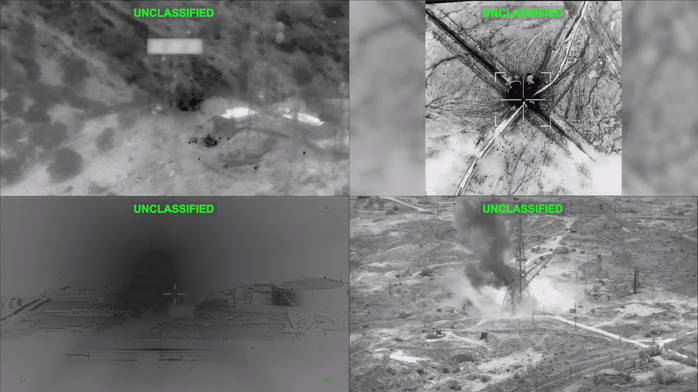
Another round of these attacks occurred alongside US strikes on Iran’s coastline and attacks on several transportation bridges in the south of the country. Between 16 and 18 July, in addition to military targets, at least six bridges along the Bandar Abbas–Lar corridor and in the Bandar Khamir area were targeted. According to available reports, the attacks resulted in civilian fatalities. (82) Iran responded with a series of operations known as “Nasr-2”, targeting a power plant and a desalination facility in Kuwait. (83)
This pattern suggests that, unless the United States can effectively suppress Iran’s offensive capabilities, intensifying airstrikes will not necessarily compel Tehran to surrender. In fact, broader attacks could trigger Iranian retaliation, ultimately producing an attritional cycle and a “lose-lose” scenario for both sides.
Continued Economic Pressure and A Limited Agreement: Under the current conditions, one of the more plausible scenarios is that the United States will seek some form of limited agreement that would first and foremost reduce pressure on the energy market and its associated consequences by reopening the Strait of Hormuz. Within such a framework, Washington could even offer Tehran temporary economic concessions, such as reinstating limited exemptions for oil sales.
Nonetheless, it may still undertake a series of military actions either before entering such an agreement or during the negotiations in order to strengthen its bargaining position. But even if the United States temporarily sets aside some disputed issues in the short term—including the question of Iran’s stockpile of enriched uranium—it is unlikely to facilitate Iran’s economic and military reconstruction by granting extensive economic concessions. In practice, the broad removal of economic restrictions and the provision of substantial financial resources to Tehran could constitute red lines for Washington in any such agreement.
Therefore, even if a new agreement is reached, some degree of continued economic pressure is likely to be maintained. Some American and Israeli policymakers have argued that maintaining economic pressure could weaken Iran’s capabilities over the long term and create the conditions for another return to the military option. In this context, Israel’s finance minister has argued that the best way to bring down the Iranian government is to economically crush it. (84) Thus, Tehran’s insistence on receiving specific, immediate and verifiable economic concessions is understandable, since promises whose fulfillment is deferred to the future may not provide sufficient confidence for Iran to accept the restrictions sought by the other side.
Additional Leverage Options: Alongside these options, a range of measures could serve as complementary instruments for increasing pressure on Tehran, even if they would not, on their own, be capable of ending the war. These could include disrupting Iran’s border crossings with Pakistan, Iraq and Afghanistan, or placing pressure on the country’s northern ports in an effort to disrupt the import of essential goods.
Targeting senior political and military officials is another potential option. Such actions could be intended to create a vacuum within the decision-making structure, weaken political cohesion, or create greater space for pro-Western political currents. With regards to infrastructure, sabotage or attacks against oil-storage facilities, gas transmission networks, and urban infrastructure are among the other options that could be considered as part of a broader strategy to increase pressure.
At a higher-risk level, Washington could also consider options such as the use of tactical nuclear weapons against underground nuclear facilities or missile bases, attempts to seize certain Iranian islands in the Gulf, or the initiation of ground operations. Each of these options, however, would entail exceptionally broad military, political and international consequences and would therefore require a separate and more rigorous assessment.
- Tom Nichols, “Iran, Not Trump, Is in Control of This War”, The Atlantic, 8 July 2026, https://tinyurl.com/mynumaur (accessed 17 August 2026).
- “President Donald J. Trump’s New Strategy on Iran”, The White House, 13 October 2017, https://tinyurl.com/yxh8j69z (accessed 17 August 2026).
- “Iran: Background and U.S. Policy”, Congressional Research Service, 6 September 2024, https://tinyurl.com/bddkppre (accessed 17 August 2026).
- “Iran Sanctions”, Congressional Research Service, 2 February 2022, https://tinyurl.com/mryh2ezj (accessed 17 August 2026).
- “National Security Strategy”, The White House, October 2022, https://tinyurl.com/3jeb8j6z (accessed 17 August 2026).
- “2022 National Defense Strategy”, U.S. Department of Defense, 27 October 2022, https://tinyurl.com/3utj3htt (accessed 17 August 2026).
- “World Oil Transit Chokepoints”, U.S. Energy Information Administration, 3 March 2026, https://tinyurl.com/bdt9aebh (accessed 17 August 2026).
- “Israel’s position a year after the Hamas-led attacks of 7 October”, International Institute for Strategic Studies, https://tinyurl.com/3uyn2twm (accessed 17 August 2026).
- Steven Heydemann and Fred Dews, “What’s next for Syria and the region after Assad’s fall?”, Brookings Institution, 9 December 2024, https://tinyurl.com/yc4tsd77 (accessed 17 August 2026).
- Ibid.
- Herb Keinon, “Collapsing proxies, accelerating threats: How Netanyahu methodically moved toward striking Iran”, The Jerusalem Post, 20 June 2026, https://tinyurl.com/jnuktnup (accessed 17 August 2026).
- “Islamic Republic of Iran”, World Bank Group, https://tinyurl.com/yfaw2snz (accessed 17 August 2026).
- Matin Mirramezani, Mohsen Amiri and Mohsen B. Mesgaran, “Protests in Tehran 2009–2024”, Stanford University, February 2026, https://tinyurl.com/4d5msm5t (accessed 17 August 2026).
- “Iran: Events of 2025”, Human Rights Watch, https://tinyurl.com/3vtyj5ua (accessed 17 August 2026).
- “Iran: Eight with CIA links arrested for inciting deadly protests”, Al Jazeera, 27 November 2019, https://tinyurl.com/ks3n4yrm (accessed 17 August 2026).
- “Iran: The Riddle of Raisi”, International Crisis Group, 5 August 2021, https://tinyurl.com/2x2ea4e3 (accessed 17 August 2026).
- Mark Mazzetti et al., “How Trump Decided to Go to War”, The New York Times, 2 March 2026, https://tinyurl.com/399nfnk3 (accessed 17 August 2026).
- “White House deploys Marco Rubio to clarify messaging about Iran conflict”, Washington Examiner, 1 April 2026, https://tinyurl.com/v6x58kdz (accessed 17 August 2026).
- “Operation Epic Fury: Decisive American Power to Crush Iran’s Terror Regime”, The White House, 12 March 2026, https://tinyurl.com/svmm6ffj (accessed 17 August 2026).
- Matt Spetalnick, Andrea Shalal and Idrees Ali, “Trump's Iran strikes mark his biggest foreign policy gamble”, Reuters, 28 February 2026, https://tinyurl.com/y3n228j6 (accessed 17 August 2026).
- Nate Swanson, “Iran Won the War but May Lose the Peace”, Foreign Affairs, 18 June 2026, https://tinyurl.com/4avwdsfs (accessed 17 August 2026).
- “بیانیه مجلس خبرگان رهبری: امید به توافق با آمریکا راه به جایی نمیبرد [Statement by the Assembly of Experts: Hope for an Agreement with the United States Will Lead Nowhere]”, Etemad Online, 3 August 2026, https://tinyurl.com/3f9w85nu (accessed 17 August 2026).
- Espresso Talk Show, “Espresso | Majid Shakeri [Economist and Negotiating Team Member] | Episode 11”, YouTube, 26 July 2026, https://tinyurl.com/2bksp3zd (accessed 17 August 2026).
- “قالیباف: من بیاعتمادترین فرد به آمریکا هستم/ در مذاکره وادادگی و شعارزدگی وجود ندارد [Ghalibaf: I Am the Person Who Distrusts the United States Most / There Is Neither Capitulation nor Slogan-Mongering in Negotiations]”, Borna News, 18 June 2026, https://tinyurl.com/47yx58jr (accessed 17 August 2026).
- “ببینید|توضیحات مشروح قالیباف از مذاکرات چهارجانبه سوئیس [Watch: Ghalibaf’s Detailed Explanation of the Four-Way Negotiations in Switzerland]”, Tasnim News, 22 June 2026, https://tinyurl.com/4dk7ch5m (accessed 17 August 2026).
- “قالیباف: کسی میتواند با آمریکا مذاکره کند که آماده جنگ باشد [Ghalibaf: Anyone Who Negotiates with the United States Must Be Prepared for War]”, Tasnim News, 10 July 2026, https://tinyurl.com/yx95r4a9 (accessed 17 August 2026).
- Paul K. Kerr, “Iran’s Nuclear Program and 2025 UN Sanctions Reimposition”, Congressional Research Service, 7 July 2026, https://tinyurl.com/jett8yyh (accessed 17 August 2026).
- Claire Mills and John Curtis, “Israel-Iran 2025: Developments in Iran’s nuclear programme and military action”, House of Commons Library, 24 June 2025, https://tinyurl.com/58kzec2r (accessed 17 August 2026).
- The Associated Press, “Oman foreign minister says there will be sixth round of negotiations between Iran and U.S. on Sunday”, NBC News, 12 June 2025, https://tinyurl.com/uezw8fne (accessed 17 August 2026).
- “Statement of the Ministry of Foreign Affairs regarding the blatant ceasefire violation by the United States”, Islamic Republic of Iran Ministry of Foreign Affairs, 26 May 2026, https://tinyurl.com/yr3xcwk5 (accessed 17 August 2026).
- Fadah Jassem and Thomas Harding, “Why is the US now targeting Iranian fishing harbours?”, The National, 15 July 2026, https://tinyurl.com/bdh6czfn (accessed 17 August 2026).
- “Iran halts MoU commitments over US violations”, Tehran Times, 18 July 2026, https://tinyurl.com/sffb5fa8 (accessed 17 August 2026).
- Sanam Vakil, “Will the US–Iran ceasefire hold?”, Chatham House, 22 June 2026, https://tinyurl.com/23vusbvw (accessed 17 August 2026).
- David A. Deptula, “Iran Is Betting It Can Outlast The U.S. Here’s Why Time Matters”, Forbes, 8 August 2026, https://tinyurl.com/2s3su7at (accessed 17 August 2026).
- Alex Raufoglu, “Former CENTCOM Deputy Robert Harward: Iran Is Playing For Time”, Radio Free Europe/Radio Liberty, 3 August 2026, https://tinyurl.com/yptnej6h (accessed 17 August 2026).
- “Oil Market Report - July 2026”, International Energy Agency, 10 July 2026, https://tinyurl.com/ya2jtb33 (accessed 17 August 2026).
- Ravi Agrawal, “Why Energy Prices Didn’t Soar Higher This Year”, Foreign Policy, 30 July 2026, https://tinyurl.com/3dteca4t (accessed 18 August 2026).
- Jennifer Gnana, “UAE’s Hormuz oil exports more than halve in July as shipments bypass strait”, The National, 3 August 2026, https://tinyurl.com/2sa5wymt (accessed 18 August 2026).
- Brett H. McGurk, “Iran weaponized the Strait of Hormuz. Now its neighbors are building around it”, CNN, 24 July 2026, https://tinyurl.com/yckxbcuj (accessed 18 August 2026).
- Sumit Ritolia, “Why a 20 mbd supply shock is no longer moving oil prices”, Kpler, https://tinyurl.com/3mvrzzx6 (accessed 18 August 2026).
- “US strategic oil reserve falls to lowest level since 1983”, Hellenic Shipping News, 17 July 2026, https://tinyurl.com/yc4bhkxs (accessed 18 August 2026).
- Mariam Al-Shamma and Benjamin McNulty, “How the U.S. Strategic Petroleum Reserve Works”, Bipartisan Policy Center, 30 July 2026, https://tinyurl.com/msj6hhmw (accessed 18 August 2026).
- “ENERGY SECURITY: Congress and DOE Need a Unified Plan to Align Priorities and Investments for the Strategic Petroleum Reserve”, U.S. Government Accountability Office, 29 May 2026, https://tinyurl.com/snruhtmj (accessed 18 August 2026).
- Maha El Dahan and Sarah El Safty, “Aramco says US-Iran war has cost the global market 2.6 billion barrels of oil”, Reuters, 4 August 2026, https://tinyurl.com/4twfb567 (accessed 18 August 2026).
- Özgür Bor and Burçhan Sakarya, “Nonlinear trends in energy and agriculture price links: a Fourier-based time series analysis”, Cambridge University Press, 3 March 2026, https://tinyurl.com/2s3r79tm (accessed 18 August 2026).
- Henry Hoenig, “Oil Inflation: From Gas to Groceries”, Charles Schwab, 6 April 2026, https://tinyurl.com/yfwy55xd (accessed 18 August 2026).
- Nayera Abdallah and Timour Azhari, “Yemen's Houthis declare naval blockade against Saudi Arabia”, Reuters, 20 July 2026, https://tinyurl.com/mufs9tx (accessed 18 August 2026).
- Nayera Abdallah, Eman Abouhassira and Timour Azhari, “Houthis announce Saudi naval blockade, threatening new front in US-Iran war”, Reuters, 20 July 2026, https://tinyurl.com/3sk5ptx3 (accessed 18 August 2026).
- “Houthis claim strikes on Saudi Aramco facilities in Saudi cities of Jizan and Yanbu”, TASS Russian News Agency, 25 July 2026, https://tinyurl.com/ux9ncznp (accessed 18 August 2026).
- Nitya Labh and Farea al-Muslimi, “The Houthi Red Sea blockade: Will collective maritime security be defended, or break down?”, Chatham House, 24 July 2026, https://tinyurl.com/2s8ybpt8 (accessed 18 August 2026).
- Paul Iddon, “How a widening Iran war puts Egypt's Suez Canal at risk”, The New Arab, 3 August 2026, https://tinyurl.com/y2k3y55j (accessed 18 August 2026).
- Sumit Ritolia, “Ukraine's drone campaign pushes Russian refinery runs to 21-year lows”, Kpler, https://tinyurl.com/4x99vm7r (accessed 18 August 2026).
- “Gasoline, diesel export ban needed to stabilize fuel situation — Deputy PM Novak”, TASS Russian News Agency, 10 July 2026, https://tinyurl.com/3h22kzj4 (accessed 18 August 2026).
- “Russia’s main Black Sea port suspends loading operations due to drone attacks”, Ukrinform, 25 July 2026, https://tinyurl.com/2vp8wsfw (accessed 18 August 2026).
- “Kazakhstan’s oil output plummets after drone attacks forced exporting terminal closure, sources say”, BOE Report, 23 July 2026, https://tinyurl.com/4723j4hr (accessed 18 August 2026).
- Emma Ma, “As Iran war drags on, China keeps tight grip on fuel exports despite eased curbs”, South China Morning Post, 21 July 2026, https://tinyurl.com/uuv5eyxc (accessed 18 August 2026).
- Khaldon Azhari, “Japan’s Arab oil imports drop to 62% in June as U.S. oil surges to 32%”, Arab News Japan, 1 August 2026, https://tinyurl.com/48ck447a (accessed 18 August 2026).
- Ben Cahill, “How Japan is managing the energy shock”, Atlantic Council, 22 July 2026, https://tinyurl.com/2z7mhba3 (accessed 18 August 2026).
- Chibuike Oguh, “Yen holds most gains as intervention keeps speculators on edge”, Reuters, 4 August 2026, https://tinyurl.com/mrzmyf74 (accessed 18 August 2026).
- Erica Yokoyama and Toru Fujioka, “BOJ Data Point to Yen Intervention of Around $53 Billion”, Bloomberg, 31 July 2026, https://tinyurl.com/55pm6ejw (accessed 18 August 2026).
- Leika Kihara, Makiko Yamazaki and Tamiyuki Kihara, “How a US-Japan pact to hit yen speculators came together”, 3 August 2026, https://tinyurl.com/yc6c76zy (accessed 18 August 2026).
- “Table 5: Major Foreign Holders of Treasury Securities”, U.S. Department of the Treasury, https://tinyurl.com/54a7fbdk (accessed 18 August 2026).
- Huileng Tan, “The US-Japan yen intervention is drawing attention to another challenge for Treasurys”, Business Insider, 4 August 2026, https://tinyurl.com/485mww8s (accessed 18 August 2026).
- Ibid.
- Aimee Picchi, “Bond prices are down, yields are up and investors are on edge. Here's what that means for the economy.”, CBS News, 20 May 2026, https://tinyurl.com/2jaap3e8 (accessed 18 August 2026).
- “What Rising Bond Yields Mean for Banks”, ProSight, 16 January 2025, https://tinyurl.com/yyynwm66 (accessed 18 August 2026).
- Linda J. Bilmes, “Costs of United States Military Activities in the Wider Middle East Since October 7, 2023”, The Watson School of International and Public Affairs, 7 October 2025, https://tinyurl.com/4vrbtwm8 (accessed 18 August 2026).
- Erin Banco, Mike Stone and Jonathan Landay, “US has used 'virtually all' of its long-range precision missiles during Iran war, sources say”, Reuters, 4 August 2026, https://tinyurl.com/2n3fzp6n (accessed 18 August 2026).
- Mark F. Cancian and Chris H. Park, “Renewed Iran War Would Test Diminished Interceptor Inventories”, Center for Strategic & International Studies, 27 July 2026, https://tinyurl.com/2tvdn5pt (accessed 18 August 2026).
- Ari Cicurel, “The Eroding Shield: Air Defenses Against Iran”, Jewish Institute for National Security of America, March 2026, https://tinyurl.com/429trz2w (accessed 18 August 2026).
- Greg Jaffe, Julian E. Barnes and Jonathan Swan, “Jordan Is Becoming a New Focus in the U.S.-Iran War”, The New York Times, 18 July 2026, https://tinyurl.com/2rpctyz4 (accessed 18 August 2026).
- “Iran targets three US military camps in Kuwait with drones — army”, TASS Russian News Agency, 24 July 2026, https://tinyurl.com/sckfzf48 (accessed 18 August 2026).
- Báo Đại biểu Nhân dân, “Is Iran testing the limits of President Trump?”, Vietnam.vn, 3 August 2026, https://tinyurl.com/3scuj3xe (accessed 18 August 2026).
- “Iran’s economy minister says Iran has two-year economic resilience plan”, Middle East Eye, 3 August 2026, https://tinyurl.com/53dvu7ty (accessed 18 August 2026).
- “Iran sets pace in war with Donald Trump”, Financial Times, 1 August 2026, https://tinyurl.com/jx4zv86u (accessed 18 August 2026).
- “US has shifted tactics in war with Iran, betting on internal destabilization — expert”, TASS Russian News Agency, 4 August 2026, https://tinyurl.com/t6s7vdac (accessed 18 August 2026).
- Maziar Motamedi, “What to expect after the US reimposes naval blockade on Iran’s ports?”, Al Jazeera, 18 July 2026, https://tinyurl.com/yps7h26z (accessed 18 August 2026).
- Barak Ravid, “Trump vows to bomb Iran's bridges and power plants for each ship attack”, Axios, 22 July 2026, https://www.axios.com/2026/07/22/trump-iran-bridges-power-plants-hormuz (accessed 18 August 2026).
- “Trump threatens strikes on Iran power plants, bridges, energy sites”, Reuters, 15 July 2026, https://tinyurl.com/2e2f8e79 (accessed 18 August 2026).
- Dov Lieber, “Israel Strikes Iran’s Largest Petrochemical Facility, Defense Minister Says”, The Wall Street Journal, 6 April 2026, https://tinyurl.com/yc3um9db (accessed 18 August 2026).
- “سپاه در خصوص جزئیات صدمین موج عملیات وعده صادق ۴ بیانیه صادر کرد [IRGC issues statement on details of the 100th wave of Operation True Promise 4]”, EcoIran, 8 April 2026, https://tinyurl.com/5n94r2vj (accessed 18 August 2026).
- “US Attacks on Iran’s Hormozgan Leave 8 Dead, 19 Injured; Six Bridges Damaged”, Tasnim News, 17 July 2026, https://tinyurl.com/23js7ark (accessed 18 August 2026).
- “Statement No. (21) from the Ministry of Electricity, Water and Renewable Energy: A power and water desalination plant was attacked.”, Kuwaiti Ministry of Electricity, Water & Renewable Energy, 19 July 2026, https://tinyurl.com/4bw27rh7 (accessed 18 August 2026).
- Tal Shalev, “On sidelines of Iran war, Israel is readying plans in case of escalation”, CNN, 21 July 2026, https://tinyurl.com/bdf8n57e (accessed 18 August 2026).