
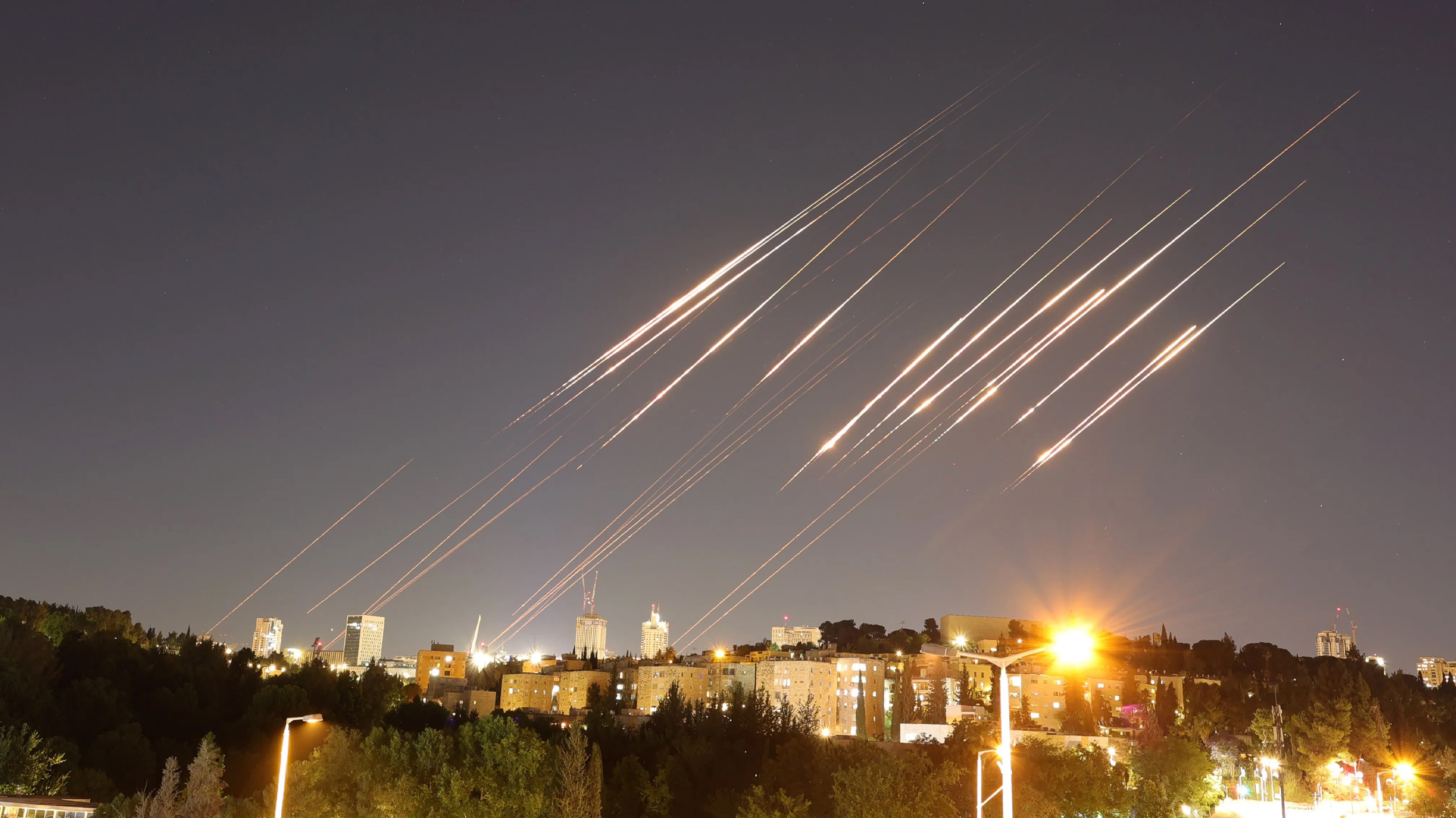
More than a month into the US-Israeli war on Iran, official narratives of victory contrast sharply with the ambiguity of outcomes on the ground and the absence of a clear end-state. The 2 April address by US President Donald Trump, delivered on the 33rd day of the war, largely reiterated prior statements without offering strategic clarity. Intended in part to stabilise financial and energy markets, the speech instead prompted negative reactions, reflecting scepticism about both the trajectory of the conflict and Washington’s ability to bring it to a decisive close.
In his address, Trump sought, belatedly, to justify the war while projecting an image of success. He denied that regime change in Iran was an objective, even as he claimed that core strategic goals had been achieved, particularly the degradation of Iran’s nuclear programme, conventional military capabilities and defence industries. At the same time, he signalled that military operations would continue for several more weeks and threatened escalation, including expanded targeting of Iran’s energy infrastructure, should Tehran refuse U.S. terms in ongoing but largely stagnant negotiations.
A similar effort to construct a narrative of victory emerged in Israel. Prime Minister Benjamin Netanyahu, who had framed the conflict as existential, declared that Iran no longer posed such a threat—an assertion that implicitly contradicted earlier justifications for the war. These parallel claims of success invite closer scrutiny of what the principal actors—the United States, Israel and Iran—have actually achieved, and what they have failed to accomplish.
Militarily, the US–Israeli campaign has produced tangible results. Conducted almost entirely as an air war, it has relied on intensive bombardment using aircraft, guided missiles and drones, while avoiding ground engagement. Thousands of targets across Iran have been struck, including military bases, missile platforms, industrial sites and research facilities. Senior Iranian leadership figures—among them top political, military, and security officials—have been assassinated, and significant damage has been inflicted on air defence systems, enabling substantial, though not uncontested, control of Iranian airspace.
Critical infrastructure has also been targeted. Elements of Iran’s nuclear programme, such as the heavy water facility in Arak, appear to have suffered severe damage, although the status of other key nuclear sites remains uncertain. Strikes extended beyond strictly military objectives to include steel plants, petrochemical facilities and other civilian industries, as well as universities and research centres accused of dual-use functions. Iran’s naval capabilities in the Gulf and Arabian Sea have been largely neutralised, with remaining assets limited to small, fast-attack craft.
The war has also expanded beyond Iran’s borders. In Lebanon, Israeli operations against Hezbollah have included targeted assassinations, widespread destruction in southern areas and the southern suburbs of Beirut, and limited ground incursions. In Iraq, US and Israeli strikes have targeted militia positions and leadership figures linked to Iran, though without the same scale of devastation seen elsewhere.
Despite these achievements, key strategic objectives have not been realised. Regime change—widely understood to be a key US and Israeli aim—has failed. The elimination of senior leaders has not destabilised the system; rather, it has produced a new cadre of officials who appear more ideologically committed and, in some cases, more hardline. Efforts to mobilise internal opposition or armed groups in border regions have also fallen short, reflecting intelligence miscalculations regarding the strength and cohesion of anti-regime forces.
Equally significant has been the failure to contain Iran’s response. Iranian missile capabilities, underestimated by US and Israeli planners, have continued to operate with little apparent degradation. Tehran has also demonstrated an ability to expand the scope of the conflict, targeting neighbouring states and leveraging regional allies. Hezbollah has maintained both operational capacity and a substantial missile arsenal, defying Israeli expectations following earlier confrontations. Meanwhile, Iraqi militias aligned with Iran have contributed to a broader deterrent posture, threatening US interests and regional adversaries alike.
For its part, Iran has achieved a measure of political resilience. Despite sustained attacks and leadership losses, the system has preserved its internal coherence and governance structures. It has effectively employed asymmetric tools, including missile strikes and the selective disruption of maritime traffic in the Strait of Hormuz. The latter, in particular, has had global economic repercussions, increasing pressure on all parties while simultaneously complicating US relations with its allies.
At the same time, Iran’s shortcomings have been considerable. Air defence systems have failed to prevent repeated violations of national airspace, exposing critical vulnerabilities. Intelligence and security breaches have enabled high-level assassinations and revealed extensive foreign infiltration of Iranian institutions. Moreover, attempts to deter attacks on its own infrastructure by threatening regional states have not succeeded; instead, they may have deepened tensions between Iran and its neighbours without constraining US or Israeli actions.
Against this backdrop, the prospects for ending the war remain uncertain. Washington appears increasingly aware of the difficulty of achieving regime change and has shifted toward seeking a comprehensive agreement addressing nuclear capabilities, missile programmes and regional alliances. Iran, however, interprets its endurance as leverage, adopting a more rigid negotiating position that includes demands for full sanctions relief, guarantees against future attacks and recognition of its regional role.
The window for a negotiated settlement is narrow. Failure to reach agreement risks further escalation, potentially including intensified strikes on civilian infrastructure or even limited ground operations. Yet domestic considerations in the United States—rising energy costs, public opinion pressures, and the approach of midterm elections—may incentivise a declaration of ceasefire, even in the absence of a durable political resolution.
Such an outcome would not resolve the underlying conflict. At best, it would mark a temporary pause in a longer confrontation, leaving open the possibility of renewed hostilities in a different form. Moreover, even if a ceasefire were reached on the Iranian front, the parallel conflict in Lebanon is likely to continue, complicating any broader de-escalation and ensuring that the regional dimensions of the crisis remain unresolved.
*This is a summary of a policy brief originally written in Arabic available here.