
Abstract
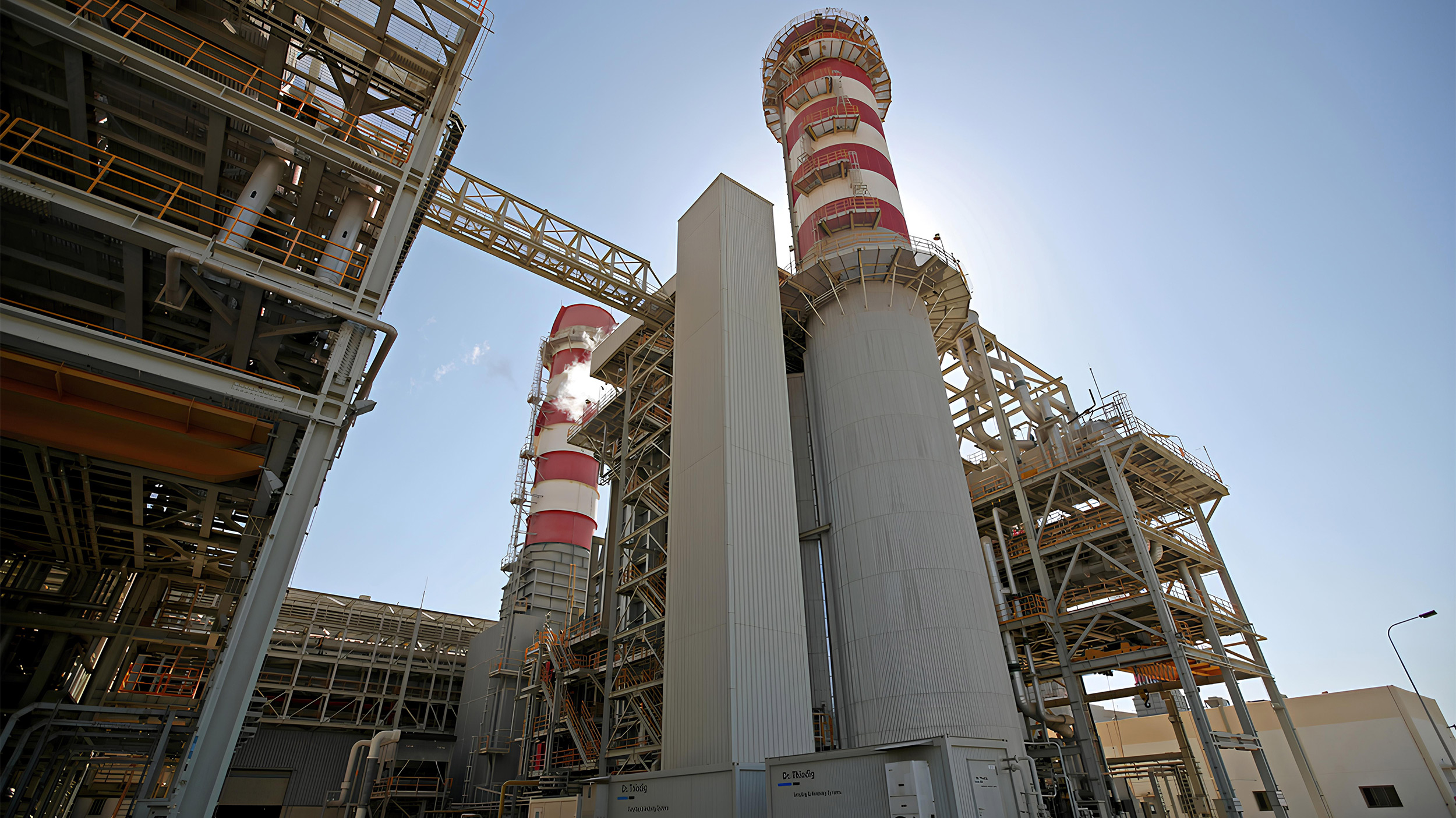
The recent US-Israel-Iran escalation reveals a shift from traditional warfare to cross-domain infrastructural warfare. This paper introduces “desalination deterrence”, a concept wherein water infrastructure is weaponised to achieve strategic paralysis. By analysing the vulnerability of Gulf desalination plants, the paper examines how reciprocal targeting of water infrastructure creates a localised, infrastructural form of mutually assured destruction (MAD), particularly between Iran and Israel; while imposing unacceptable asymmetric costs on external actors like the United States. It assesses how this environmental warfare alters regional security dynamics, potentially driving states toward new frameworks of deterrence to prevent the escalation of conflicts as the ultimate guarantor of sovereignty. Evidently, following the US-Israeli attack on Iran, desalination plants have transformed from technical and engineering facilities into strategic security assets across the Middle East.
1. Introduction
The strategic rivalry between the United States-Israel axis and the Islamic Republic of Iran has historically been framed through the prism of conventional military balancing and nuclear deterrence. However, recent escalations, most notably the direct attack on Iran during negotiations, coupled with intensified covert operations and proxy engagements, have exposed the limitations of traditional deterrence frameworks. As the region navigates a precarious boundary between limited strikes and total war, a critical yet under-analysed form of non-kinetic escalation has emerged: the weaponisation of civilian infrastructure, particularly water resources. Grasping this dynamic requires moving beyond classical deterrence models, such as nuclear deterrence and game-theoretic approaches. At its core, deterrence occurs when actor A convinces Actor B not to take a specific action; regardless of the anticipated gains for B, the likely costs will be substantially higher.
In West Asia, where drought is an existential reality and water scarcity constitutes a security crisis, the ultimate cost is not necessarily the loss of territory or military hardware, but the loss of access to water resources and the degradation of water security, resulting in severe harm to national security. Consequently, a new paradigm is emerging: “Desalination Deterrence”. This concept represents a critical threshold in the US-Israeli attack on Iran within the Gulf, functioning as a form of cross-domain deterrence (CDD). Here, the threat of environmental and infrastructural destruction bypasses the costs associated with traditional military retaliation and shifts the escalation ladder toward more severe confrontations.
2. Deterrence Frameworks: From Conventional to Cross-Domain
Deterrence is fundamentally the practice of restraining or discouraging an individual or actor —in global politics, usually a nation-state —from taking unwanted actions, such as an armed attack. (1) It is an effort to shape the calculus of a potential aggressor, rendering alternative options more attractive than war. When a deterring actor articulates a threat, the effectiveness of deterrence depends on the opposing actor's perception of the probable implications of that threat.
Furthermore, the concept of security has evolved from the straightforward notion of security prevalent during the Cold War into an interconnected construct. National security is no longer confined to the military sphere; beyond the military dimension, security encompasses economic, social, political and environmental facets, including water and climate. Accordingly, contemporary security challenges demand a broader conceptualisation of deterrence—one that extends beyond purely military instruments to encompass non-military actions and critical infrastructure. This evolution has given rise to the concept of CDD. CDD involves “using threats of one type, or some combination of different types, to dissuade a target from taking actions of another type to attempt to alter the status quo”. (2) CDD is particularly relevant in the context of grey-zone strategies and hybrid threats, where states seek to exploit an adversary's vulnerabilities below the threshold of conventional military conflict. The essence of CDD lies in its capacity to synchronise military and non-military instruments to target critical infrastructure, such as power plants, petrochemical facilities and bridges, generating an interconnected web of deterrence signals that transcends traditional geographic and functional domains. (3) In this context, targeting water infrastructure, particularly desalination plants, emerges as a form of CDD, wherein the environmental, cyber and kinetic domains intersect to jeopardise the survival of a state and its sovereignty.
3. Desalination Deterrence
Desalination deterrence is defined as the implicit or explicit threat of destroying, disrupting or denying access to a state’s desalination infrastructure. Consequently, the deprivation of fresh water for drinking, industrial, energy and agricultural purposes is employed as a coercive instrument to persuade an opposing state to abandon or limit a specific action. Inherently, desalination deterrence operates as an extreme form of deterrence by punishment. While striking a desalination facility does not immediately halt an advancing army and military forces (denial), it carries the threat of severe, long-term societal damage (punishment), which serves as the anticipated and projected cost of the undertaken action.
Notably, severe damage and the imposition of heavy costs and losses are not merely economic; they are existential. By threatening to strike desalination facilities and sever the water supply, an aggressor imposes a drastic cost, potentially leading to social collapse, that fundamentally alters the target state’s cost-benefit calculus. The inherent vulnerability of these critical facilities therefore serves as a deterrent, as the prospect of a complete water cutoff imposes unacceptable humanitarian, political and strategic costs on the target state, discouraging it from undertaking actions that could trigger such an attack. By threatening the biological survival of the population, desalination deterrence generates a credible coercive mechanism that achieves strategic effects without requiring nuclear escalation, thereby functioning as a powerful instrument of cross-domain deterrence.
4. The Vulnerability and Deterrence of Desalination Plants in the Gulf Region
The strategic calculus of “desalination deterrence” is fundamentally rooted in the sheer volume and regional concentration of global water infrastructure. According to recent analyses, the global contracted desalination capacity has reached an unprecedented 128 million cubic metres per day (MCM/day), with a current operational capacity of 69.3 MCM/day. (4)
Global desalination capacity more than doubled between 2002 and 2010 (5) and continued to experience a nine percent annual growth rate from 2010 to 2016. Correspondingly, the construction of approximately 15,000 desalination projects across 177 countries, with a total investment of $88 billion, has transformed this industry into one of the most booming markets in the world. (6) (7) The rapid growth of over 60 percent in global desalination capacity indicates that seas are increasingly sharing the burden of supplying drinking water to coastal population hubs. (8) (9) As global reliance on desalination increases, these plants have become a vital component of the water security and national security of states.
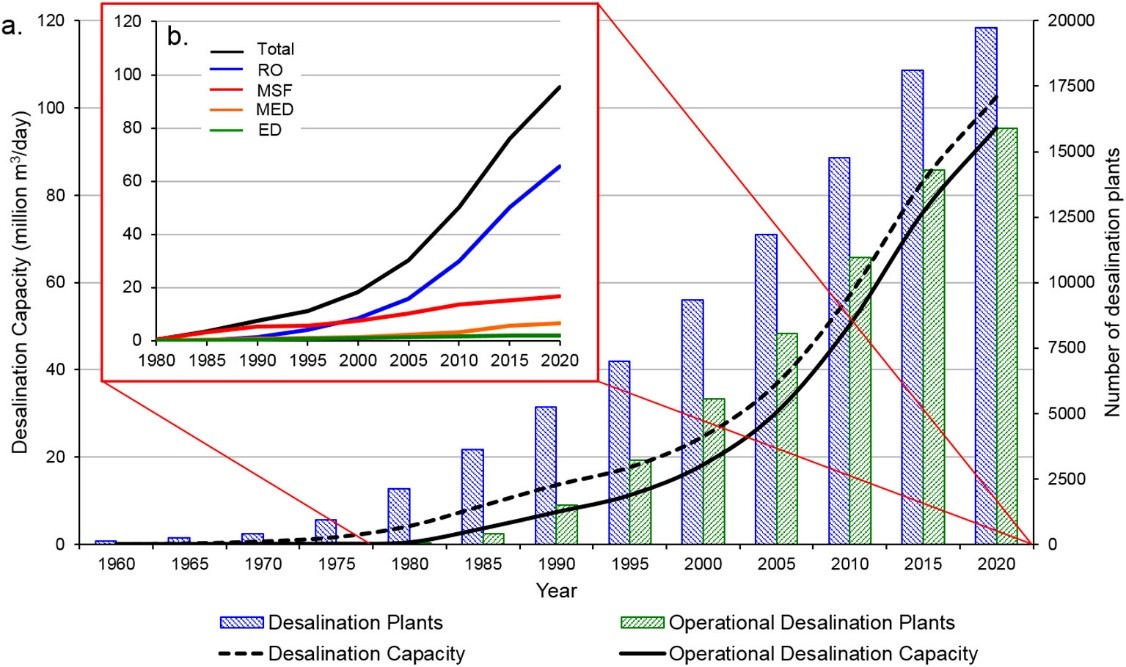
The Middle East is the undisputed epicentre of this infrastructural reliance. Possessing a mere two percent of the world’s renewable water resources while hosting six percent of the global population, the Middle East grapples with highly severe water and climate security challenges. Holding 46.9 percent of global contracted desalination capacity and 41.8 percent of operational capacity (equivalent to 28.96 MCM/day), the region exhibits a massive dependence on desalination plants, elevating water security to the main pillar of national security in the world’s most water-scarce region. Gulf littoral states, particularly Saudi Arabia and the United Arab Emirates, which alone account for 57 percent of regional and 24 percent of global desalination capacity, exist in a state of vital dependence on these facilities, wherein over 70 percent of the water produced by desalination complexes is used directly to supply municipal drinking water and critical industrial needs, such as petrochemical industries. (8) (9)
Operating as centralised and strategic infrastructure with massive, irreplaceable capacities, these facilities are highly vulnerable not only to natural events but also to human-induced threats. This vulnerability is not merely theoretical; environmental phenomena such as algal blooms have previously disrupted or caused the complete shutdown of desalination plants in the UAE and Oman. (10) (11) (12) It demonstrates how even a natural, non-military event can sever the lifelines of cities and severely disrupt the security of states and municipalities.
However, this existential reliance on coastal desalination infrastructure is not exclusive to the Gulf; a parallel paradigm of strategic vulnerability has been engineered in the Eastern Mediterranean. Within this highly concentrated global landscape, Israel maintains a formidable footprint, operating 78 desalination facilities that produce 1.91 MCM/day, accounting for 2.76 percent of global operational capacity. (13) These plants play a vital role in the regime's survival matrix. Following the severe water crises of the late 1990s, Israel fundamentally rewired its water geography, transitioning from a reliance on shared natural aquifers and the Jordan River basin to treating Mediterranean seawater as its primary base flow. (14) Today, desalinated water satisfies nearly 50 percent of the regime's total domestic freshwater consumption, effectively rendering the national grid hostage to the continuous, energy-intensive operation of coastal reverse osmosis (RO) mega plants. By conceptually shifting desalinated water from a natural resource to high-value strategic targets, the state has inadvertently engineered a critical single point of failure. This hyper-centralisation dictates that Israel's internal water security is now inextricably tethered to the physical defence of its coastal corridors, the stability of its power grid, and the uninterrupted supply of specialised membranes.
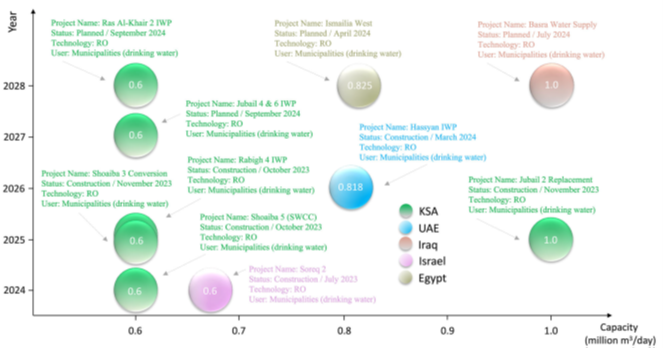
The Middle East’s structural dependence on desalination is deepening rapidly. By 2028, the region will account for 53.1 percent of new global desalination capacity (an additional 20.9 MCM/day), raising operational capacity to 41 MCM/day (+41.6%) and producing 50.68 percent of global brine. (15) Consequently, any disruption to these critical infrastructures poses severe humanitarian and security risks.
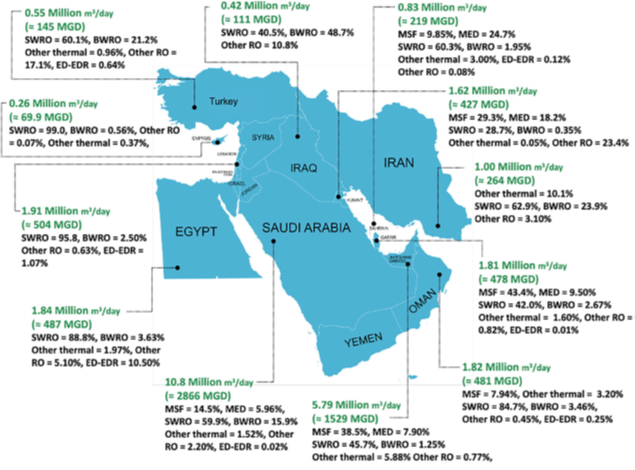
Beyond raw capacity, the physical geography of these assets exacerbates their vulnerability. The vast majority of the Middle East’s operational desalination capacity, particularly in Saudi Arabia, the UAE and Kuwait is concentrated along the coastal zones of the Gulf and the Strait of Hormuz. (16) This narrow, semi-enclosed body of water is already the world’s most critical energy chokepoint. The co-location of mega-scale desalination plants with power generation facilities means that a targeted strike, or even a destructive environmental event (such as an oil spill, radiological fallout from attacks on nuclear facilities or the deliberate release of toxic brine), could simultaneously disrupt the water supply of millions. The infrastructural density is so high that a directed action, or a sophisticated cyberattack against operational technologies, could trigger a cascading failure across interconnected networks, turning a localised attack into a regional humanitarian catastrophe. In such an environment, any disruption to these critical infrastructures, whether through missile strikes, cyber operations, sabotage or even environmental shocks, could lead to the immediate collapse of municipal water supply and security, a public health crisis, and economic paralysis. This reality has transformed desalination plants from an engineering solution into a strategic centre of gravity, redefining regional deterrence calculations, particularly in the Middle East and the Gulf region.
When examined through the lens of advanced deterrence theory, particularly CDD, the existential dependence of countries, especially in the Middle East, on desalinated water transforms these engineering facilities and civilian infrastructures into a vital strategic point of reference. Consequently, any threat to these water facilities is no longer merely an economic or environmental disruption, but a direct challenge to state survival and security. This lowers the threshold of warfare escalation and creates a new form of infrastructural MAD below the nuclear threshold. While external powers like the US face asymmetric retaliatory risks (such as cyberattacks on their own domestic infrastructure), the dynamic between Iran and Israel constitutes a true bilateral MAD; an Israeli strike on Iranian desalination plants mathematically guarantees reciprocal Iranian strikes on Israel's coastal desalination facilities, placing both societies at risk of immediate water collapse.
5. Water Infrastructure Targeting During the 2026 US-Israel-Iran Conflict
The theoretical framework of desalination deterrence was operationalised during the 2026 US-Israel-Iran warfare. The conflict witnessed the systematic targeting of water infrastructure, marking a dangerous escalation in the weaponisation of essential civilian resources and the crossing of a critical non-kinetic threshold. Strategic signalling from Washington—exemplified by explicit threats against Iranian desalination infrastructure coupled with broader warnings targeting the country’s energy grids and transportation networks—indicates a deliberate shift toward the systematic weaponisation of civilian essential services. (17) This rhetorical escalation materialised into kinetic action on 7 March 2026, when US forces conducted airstrikes against a freshwater desalination plant on Qeshm Island in Iran's Hormozgan province, a facility that supplied water to approximately 30 villages. (18) Iranian Foreign Minister Abbas Araghchi immediately condemned the attack as a “blatant and desperate crime”, asserting that it established a dangerous precedent with grave consequences for international humanitarian law. The strike on Qeshm Island was followed by additional US operations targeting water storage buildings and reservoirs in Hormozgan province, which disrupted drinking water access for over 20,000 people.
In response to the degradation of water security, desalination facilities in Kuwait and the United Arab Emirates (UAE) suffered indirect damage from missile and drone strikes early in the conflict. (19) Subsequently, plants in Bahrain and Iran have reportedly been intentionally attacked. These strikes manifested as a direct application of desalination deterrence, targeting the critical infrastructure across the Gulf that provides the majority of drinking water for riparian countries.
Unlike the United States, whose geographic distance shields it from direct hydropolitical retaliation, Israel’s profound reliance on its Mediterranean desalination grid makes it highly vulnerable to reciprocal strikes. Consequently, Israel’s involvement in targeting Iranian water infrastructure triggered a classic MAD dynamic. So, Iran’s immediate counter-threats to strike Israeli desalination facilities transformed the conflict from a unilateral punishment into a mutually assured water collapse.
The conflict's escalation extended into the cyber domain, further solidifying the role of water infrastructure as a primary vector for cross-domain deterrence. On 11 June 2026, the hacker group Hanzala claimed responsibility for breaching water infrastructure systems in California in direct retaliation for US attacks on Iranian water facilities in Minab and Sirik, Iran. (20) The group stated it had gained access to network management interfaces for water facilities in multiple California cities, including Bakersfield, Chico, Salinas and Stockton, but deliberately refrained from disrupting water supplies, characterising the operation as a “warning” to Washington. By holding the biological survival of populations hostage, these infrastructural and cyber-attacks bypassed traditional military retaliation costs, lowering the threshold of conflict escalation and firmly establishing desalination and water infrastructure as central actors in modern geopolitical warfare.
6. Conclusion
Recent US-Israeli strikes against Iran have revealed a paradigm shift in Middle East security dynamics. Desalination deterrence has emerged as a vital non-kinetic escalation threshold, wherein water infrastructure, particularly desalination plants, carries the potential to become a strategic military target. Operating at the intersection of triangular or indirect deterrence, punishment deterrence and CDD, this new form of environmental warfare transcends traditional deterrence models by threatening the survival of a state's water security without crossing the nuclear threshold. Desalination deterrence can be viewed as a form of CDD, wherein capabilities of one threat type or a combination of different types are leveraged to counter threats and prevent unacceptable attacks, particularly those targeting critical infrastructure such as power plants, petrochemical facilities and bridges.
The Middle East’s disproportionate dependence on desalination creates a unique strategic vulnerability, as the region accounts for over 46 percent of global desalination capacity. For Gulf states and Israel, the continuous supply of desalinated water constitutes the foundational status quo of their modern societies. Consequently, the profound concern among Gulf riparian states, including Iran, regarding Israel’s potential use of desalination plants as military targets compels them to operate within a severe ‘damage framework’ in the deterrence domain.
Ultimately, desalination deterrence is no longer solely an environmental issue; it is a novel frontier in geopolitical warfare that demands immediate attention within international and regional security frameworks. Evidently, following the US-Israeli attack on Iran, desalination plants have transformed from technical and engineering facilities into significant security actors across the Middle East.
While Article 54(2) of the 1977 Additional Protocol to the Geneva Conventions expressly classifies attacks on drinking water installations as war crimes, the anarchic nature of the international system offers little comfort to regional policymakers. In the fractured security landscape of West Asia, relying on international legal frameworks or UN declarations to guarantee the safety of critical water infrastructure is a strategic liability. The 2026 conflict demonstrated that normative constraints evaporate under the pressure of cross-domain warfare. Consequently, states must abandon the illusion of legal safeguards and draw explicit hydropolitical red lines that tie any hostile kinetic or cyber action against water infrastructures to automatic retaliation across other domains. Recent conflicts have shown that deterrence in the area of water security can no longer be outsourced to international conventions.
However, military retaliation alone cannot sustain a society under prolonged infrastructural threat. This reality demands a fundamental revision of national and regional water security doctrines, shifting away from the traditional supply-oriented paradigm that treats water as a mere engineering problem solvable through centralised mega-projects. States must instead adopt a framework of “societal water security”, prioritising systemic adaptation and decentralising water networks and policies to eliminate high-value singular targets. By anchoring water security in climatic-social opportunities rather than water supply, governments can build structural resilience directly into the social fabric, ensuring that the weaponisation of water infrastructure no longer guarantees strategic paralysis.
(1) Michael J. Mazarr, “Understanding Deterrence” in F. Osinga and T. Sweijs (eds), NL ARMS Netherlands Annual Review of Military Studies 2020 (The Hague, The Netherlands: T.M.C. Asser Press, 2021), pp. 13–28, https://tinyurl.com/2a4deuv8 (accessed 23 July 2026).
(2) Jon R. Lindsay and Erik Gartzke, “Introduction: Cross-Domain Deterrence, from Practice to Theory” in Jon R. Lindsay and Erik Gartzke (eds), Cross-Domain Deterrence: Strategy in an Era of Complexity, (Oxford: Oxford University Press, 2019), pp. 1–24, https://tinyurl.com/y78khwwp (accessed 23 July 2026).
(3) Tim Sweijs and Samuel Zilincik, “The Essence of Cross-Domain Deterrence,” in F. Osinga and T. Sweijs (eds), NL ARMS Netherlands Annual Review of Military Studies 2020 (The Hague, The Netherlands: T.M.C. Asser Press, 2021), pp. 129–158, https://tinyurl.com/53yf7pke (accessed 23 July 2026).
(4) Noman Khalid Khanzada et al., "Desalination and the Middle East: research, practices, implications, and prospects", npj Clean Water, Vol. 9, No. 1, 12 January 2026, https://tinyurl.com/3fxmpkbu (accessed 23 July 2026).
(5) Desalination of Seawater Manual of Water Supply Practices (Denver: American Water Works Association, 2011), https://tinyurl.com/2nt66udx (accessed 23 July 2026).
(6) Konstantinos Zotalis, Emmanuel G. Dialynas, Nikolaos Mamassis and Andreas N. Angelakis, “Desalination Technologies: Hellenic Experience,” Water, Vol. 6, No. 5, 2014, pp. 1134–1150, https://tinyurl.com/yc2wb9tr (accessed 23 July 2026).
(7) Edward Jones et al., “The state of desalination and brine production: A global outlook”, Science of the Total Environment, Vol. 657, March 2019, pp. 1343–1356, https://tinyurl.com/377snctp (accessed 26 July 2026).
(8) Noman Khalid Khanzada et al., "Desalination and the Middle East: research, practices, implications, and prospects", npj Clean Water, Vol. 9, No. 1, 12 January 2026, https://tinyurl.com/3fxmpkbu (accessed 23 July 2026).
(9) Majid Ghannadi, “A Look at Existing and Future Desalination Markets in the Persian Gulf and MENA Region”, Journal of Water and Sustainable Development, Vol. 4, No. 1, September 2017, pp. 1–8, https://tinyurl.com/ykbrj9jn (accessed 26 July 2026).
(10) B. Heidari, “Identification and prioritization of policy indicators influencing seawater desalination policymaking”, Tarbiat Modares University, 2025.
(11) Afreen Siddiqi and Laura Diaz Anadon, “The water-energy nexus in Middle East and North Africa”, Energy Policy, Vol. 39, No. 8, August 2011, pp. 4529–4540, https://tinyurl.com/3kfsk9sw (accessed 26 July 2026).
(12) Mindy L. Richlen et al., “The catastrophic 2008–2009 red tide in the Arabian gulf region, with observations on the identification and phylogeny of the fish-killing dinoflagellate Cochlodinium polykrikoides”, Harmful Algae, Vol. 9, No. 2, February 2010, pp. 163–172, https://tinyurl.com/ydyurcyh (accessed 26 July 2026).
(13) Noman Khalid Khanzada et al., "Desalination and the Middle East: research, practices, implications, and prospects", npj Clean Water, Vol. 9, No. 1, 12 January 2026, https://tinyurl.com/3fxmpkbu (accessed 23 July 2026).
(14) L. O. Villacorte et al., “Algal blooms: an emerging threat to seawater reverse osmosis desalination”, Desalination and Water Treatment, Vol. 55, No. 10, August 2014, pp. 2601–2611, https://tinyurl.com/mptnezdu (accessed 26 July 2026).
(15) Noman Khalid Khanzada et al., "Desalination and the Middle East: research, practices, implications, and prospects", npj Clean Water, Vol. 9, No. 1, 12 January 2026, https://tinyurl.com/3fxmpkbu (accessed 23 July 2026).
(16) Yazan Ibrahim et al., “The sociopolitical factors impacting the adoption and proliferation of desalination: A critical review,” Desalination, Vol. 498, 15 January 2021, https://tinyurl.com/5n9b8a6r (accessed 26 July 2026).
(17) Eran Feitelson and Gad Rosenthal, “Desalination, space and power: The ramifications of Israel’s changing water geography”, Geoforum, Vol. 43, No. 2, March 2012, pp. 272–284, https://tinyurl.com/7t4tvcec (accessed 26 July 2026).
(18) Joseph Webster and Ginger Matchett, “Why US-Israeli attacks on Iran’s grid and water systems would be counterproductive”, Atlantic Council, 6 April 2026, https://tinyurl.com/mr38sehx (accessed 26 July 2026).
(19) Vivian Nereim, “Vital Desalination Plants in Iran and Bahrain Are Attacked”, The New York Times, 8 March 2026, https://tinyurl.com/2syxt5ke (accessed 26 July 2026).
(20) Christoph Koettl and Christiaan Triebert, “Analysis of Satellite Image and Videos Suggest Precision U.S. Strikes on Iranian Water Facility”, The New York Times, 10 June 2026, https://tinyurl.com/mty86fc2 (accessed 3 July 2026).
(21) Sarah Shamim, “US bombs Iran’s water facilities: Why that’s so significant”, Al Jazeera, 10 June 2026, https://tinyurl.com/5b4jm9fr (accessed 26 July 2026).
(22) David Michel, “Could Iran Disrupt the Gulf Countries’ Desalinated Water Supplies?”, Center for Strategic & International Studies (CSIS), 19 March 2026, https://tinyurl.com/8k9zdd7y (accessed 26 July 2026).
(23) " حنظله: تأسیسات آب کالیفرنیا را هک کردیم + اسناد[Hanzala: We hacked California's water facilities + documents]", Fars News Agency, 12 June 2026, https://tinyurl.com/477wbubu (accessed 26 July 2026).