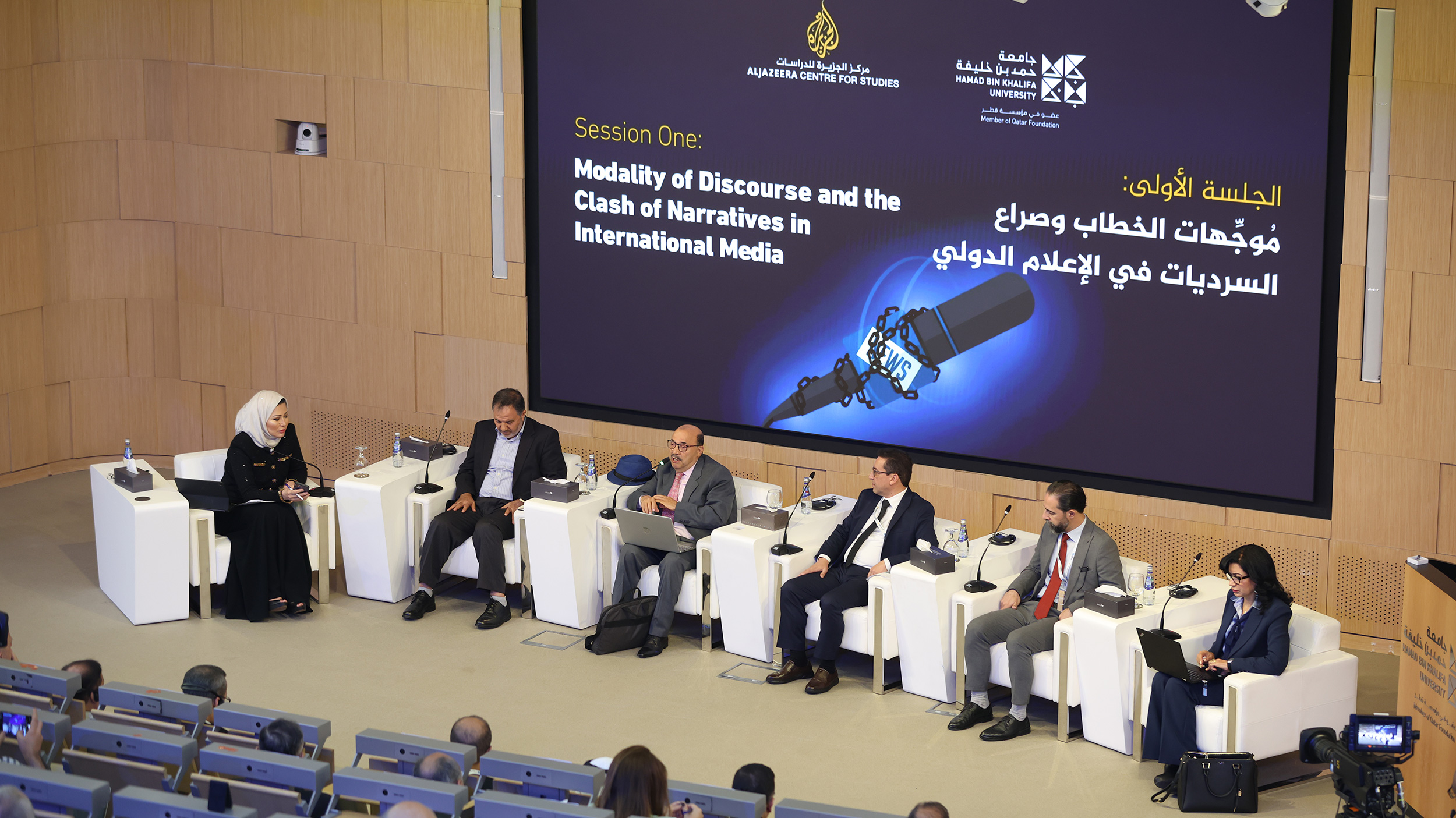
“International Media and the War on Gaza: Modalities of Discourse and the Clash of Narratives” concluded after two days of intensive discussions on 29–30 November 2025. Organised by Al Jazeera Centre for Studies and the College of Humanities and Social Sciences at Hamad Bin Khalifa University, the conference brought together a select group of researchers, experts and academics in the fields of media, communication, social sciences and international law. Over the course of its sessions, the conference offered an in-depth reading of the major shifts that have reshaped media narratives during the war on Gaza and shed light on the mechanisms of media and digital genocide and their relationship to power and knowledge in today’s international order.
Foundational approaches to understanding media genocide
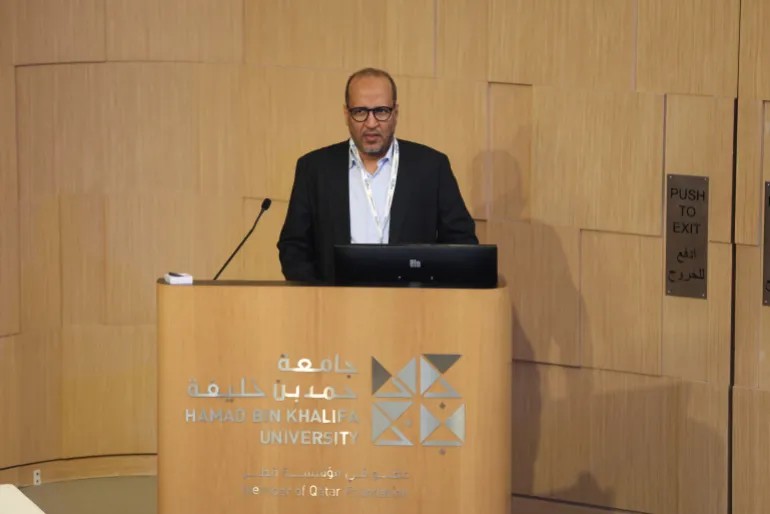
In his opening remarks, Mohammed Mukhtar Al Khalil, Director of Al Jazeera Centre for Studies, explained that the conference aims to produce scholarly knowledge capable of dismantling the dominant colonial gaze embedded in media studies, while developing analytical tools that help researchers, students and academic institutions better understand the workings of discourse and its transformations in conflict environments. He noted that this approach is essential for building a critical awareness that is responsive to current geopolitical and media shifts and for enriching research spaces with insights that deepen debate around the functions of media within systems of domination and the reshaping of public consciousness.
Al Khalil added that Gaza offers a particularly telling example of this dynamic, where military action and media action have been tightly intertwined, and where extensive efforts have been made to reproduce meaning and steer public perception. He emphasised that the killing of large numbers of journalists and the destruction of Gaza’s local media infrastructure reflect the intensity of the struggle over narrative, underscoring the importance of research perspectives that link discourse to the political and geostrategic dimensions of the war. Analysing this case, he argued, broadens academic understanding of modern conflicts, which unfold simultaneously on the ground and in the realm of perception, creating fertile ground for studying transformations in communication and media systems.
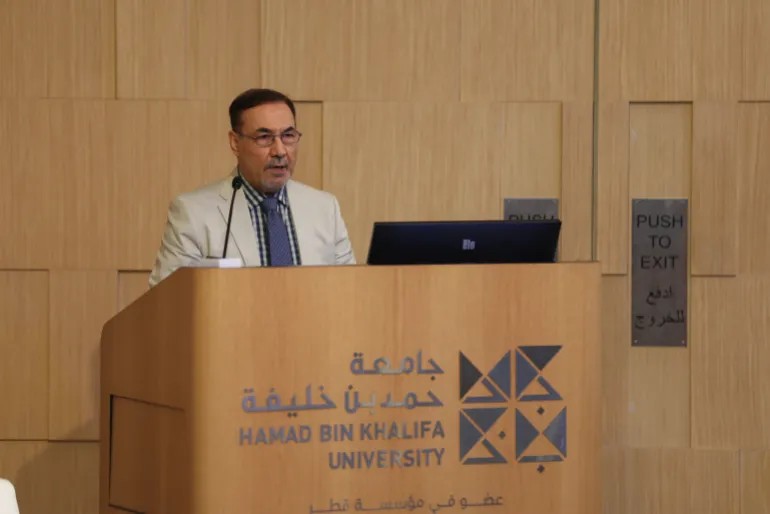
For his part, Mehdi Riazi, Associate Dean for Research at Hamad Bin Khalifa University, stressed that the war is being fought on two inseparable fronts: the battlefield and the media sphere. Narratives, he said, shape public perception and redefine actors, victims and the parties to the conflict. Understanding the circulating discourses around Gaza, he added, is crucial for reading the broader global political and social landscape.
The limits of the Western discursive order and the fracturing of media centrality
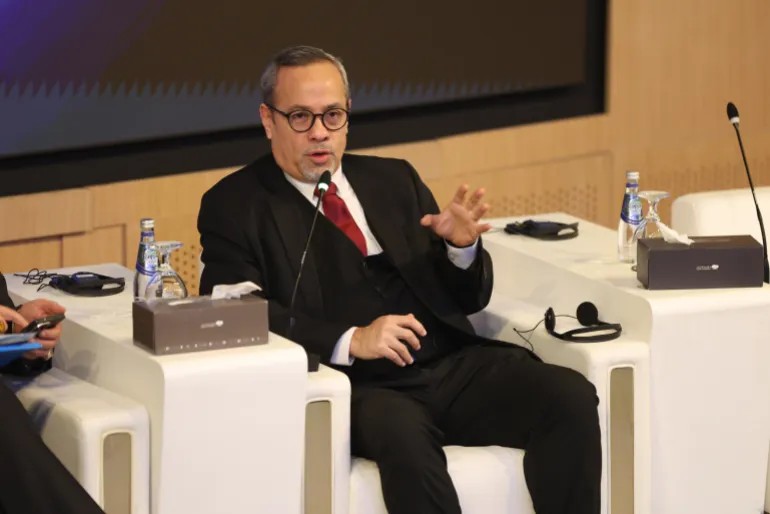
In his keynote address, Jairo Lugo-Ocando, Dean of the College of Communication at the University of Sharjah, offered a precise analysis of the Western “discursive order”, an order that sets boundaries on what can be said or debated. He noted that defending Palestine is often conditioned on first affirming “Israel’s right to exist”, a constraint that reinforces the centrality of the dominant narrative. However, he argued that this order has begun to crack as social media platforms disrupt the monopoly of traditional media and open new spaces for interaction and independence from traditional political and familial environments.
Liberal discourse and the exposure of its ethical foundations
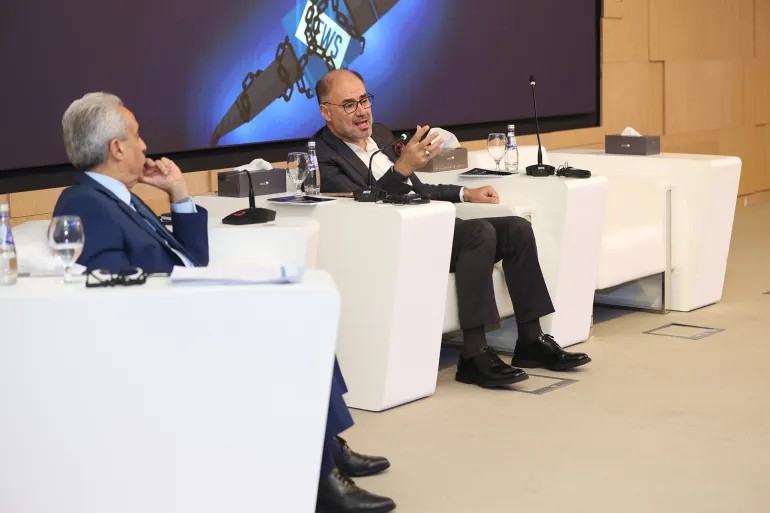
In the second keynote lecture, Wadah Khanfar, President of Al Sharq Forum and former Director General of Al Jazeera, presented a comprehensive account of the deep transformations affecting Western liberal thought when it approaches centres of political and military power. In such contexts, he argued, liberalism becomes a tool for producing hegemony and reshaping the public sphere in ways that serve power rather than the values it professes. This drift, he explained, has enabled approaches that marginalise the human being and strip away moral attributes – approaches that surfaced clearly in the narratives surrounding the war on Gaza, where Palestinians were redefined in ways that legitimate force and exclude them from moral consideration.
Khanfar noted that the past two decades have witnessed a marked decline in the West’s position of power within the international system, exposing deeper layers of liberal discourse tied more to strategic interests than to the civilisational values through which the West has long articulated its self-image. He stressed that granting Israel unprecedented exceptionalism in both political and media arenas has effectively suspended core liberal principles and entrenched a discourse of dehumanisation that has since expanded to other groups worldwide.
Analysing Western media coverage of Israel’s war on Gaza, Khanfar argued that Western media operates within a value structure that reproduces power and steers narratives toward justifying force and granting it discursive legitimacy. The rise of digital media and Palestinian accounts from the ground, however, has helped reveal the widening gap between official narratives and lived reality. Gaza, he said, provided a historic stress test for this structure, exposing global audiences to raw, direct images that cannot easily be interpreted within dominant frameworks and prompting many to reassess their sources of knowledge and revisit assumptions at the heart of liberal discourse.
Khanfar concluded by emphasising that the current crisis raises profound moral questions at the core of the international system, and that transcending it requires building a global coalition grounded in social justice and a broader, more humane moral vision. Gaza, he argued, has reshaped both power balances and consciousness, emerging as a turning point that has expanded the space for alternative narratives and amplified diverse voices in place of a singular dominant narrative.
Language and the construction of the Palestinian actor
Conference sessions highlighted the contours of epistemic domination in Western media studies and the structural transformations that have reshaped the portrayal of Palestinians in international discourse, particularly since 9/11, which shifted their image from victimhood to suspicion and blame. Participants called for constructing a research framework that restores the experiences of the Global South and challenges the Western centrism that continues to guide media research methodologies and interpretive tools.
Discussions also explored the contrasts between mainstream and activist media in Western contexts, analysing discursive foundations that predispose institutional narratives to criminalise Palestinians while framing Israeli policies as “self-defence”. Activist narratives, by contrast, contextualise the war within a long-standing colonial structure. Detailed analyses of lexical and semantic patterns in Gaza coverage showed how shifts between active and passive voice alter the assignment of agency and responsibility.
According to the presented analyses, linguistic constructions of the “Palestinian actor” follow three pathways – dehumanisation, criminalisation and moral degradation – through metaphors that cast Palestinians as inherently dangerous and through vocabulary that associates them with criminality and violence. This linguistic framing conditions audiences to accept excessive force as necessary or justified. Discussions further addressed news coverage models, the role of editorial translation in shaping narratives, comparative approaches involving the Russia–Ukraine war, and how independent media build narratives that challenge the conventional framing of major newsrooms. Another line of inquiry examined how political contexts shape Israeli media coverage and its editorial directions.
In a separate track, participants analysed propaganda discourse and its influence on global public opinion, highlighting the use of dehumanising language in Israeli media and the adoption of misleading narratives by Western institutions that reframed events to serve political and security interests. Sessions presented examples of resistant discourse and attempts to contain or distort it, emphasising the importance of analytical approaches that study how discourse interacts with power networks in moments of protracted conflict.
Digital platforms and the ethical responsibilities of media
One of the conference’s central themes was the role of media in the context of genocide. Presentations examined the experiences of Palestinian journalists, the challenges of professional reporting during war, the dynamics of concealment and exposure, and hate speech in Israeli media. They also showed that dehumanisation is embedded in a deep cultural and cognitive system that presents Palestinians as an existential threat and reshapes public perception in ways that provide narrative justification for extreme force.
Sessions on social media platforms revealed how these platforms have evolved into quasi-legal authorities that legislate, enforce and judge through policies of deletion, suppression and restricted visibility. Presentations showed that the war on Gaza exposed the dangers of this power, particularly after platforms used algorithmic tools to hide content shared by Palestinian journalists and human rights advocates while amplifying opposing official narratives. Several speakers called for an international legal framework to limit platform authority and protect users’ digital rights.
One presentation examined the Facebook page “Israel Speaks Arabic”, showing how the redefinition of actors and the steering of narratives occur through terminology that supports Israeli strategic objectives, systematically erasing words like “Palestine” and “Palestinians” and replacing them with terms such as “Gaza” or “Judea and Samaria”.
In the sessions on media’s social responsibility, researchers discussed the role of media outlets in documenting war crimes, supporting international law, and navigating the ethical boundaries of coverage amid political pressures. Several papers noted that images captured by local journalists in Gaza have become foundational evidence in international investigations – just as they did in Bosnia, Syria and Ukraine – giving media a role that extends beyond witnessing to producing documentation and proof.
Toward a more just global media model
At the conclusion of the conference, participants collectively emphasised the need to rebuild the global media system in ways that ensure pluralism, fairness and the capacity to challenge dominant narratives. They called for new analytical schools grounded in the experiences of the Global South, greater public critical literacy, better protection – both technical and legal – for journalists in conflict zones, and an international framework regulating the power of digital platforms while advancing tools to detect disinformation and protect human rights content.
Participants affirmed that the war on Gaza marks a pivotal moment in the history of global media, exposing the fragility of traditional narratives and widening the space for counter-narratives whose influence grows by the day. They noted that “media genocide” has now emerged as a field of study in its own right and that the coming years will witness significant changes in how the relationship between media, power and knowledge is understood.