
In early 2026, the world watched as a US-Israeli coalition launched a surprise assault on Iran. The campaign was built around manufactured keywords—"an Iran weakened at home and abroad" and a "post-Iranian Middle East"—which alluded to the unravelling of the Iranian-led axis on every front following the 12-day war of June 2025 and the internal upheaval of January 2026. The objective went far beyond behavioural change; it was nothing less than the collapse of the regime or Iran's forced integration into a regional order under American primacy. (1)
After some 40 days of devastating warfare, thousands of casualties, the loss of the Islamic Republic's senior leadership along with its top commanders, and the destruction of a substantial portion of its military hardware, a fragile ceasefire finally took hold. Although Iran absorbed multiple blows, it not only managed to preserve and reconstitute itself—by selecting a new Supreme Leader in Ayatollah Seyyed Mojtaba Khamenei, replacing fallen commanders, and adopting a population-centric strategy of active grassroots mobilisation in the streets as a novel model of internal security—but also achieved asymmetric dominance over the Strait of Hormuz. Retaining its missile and drone strike capabilities, Tehran managed to inflict reciprocal blows on the aggressors. (2) Through this combination of military defence and popular backing, Iran generated a victory narrative both at home and abroad, securing, by way of its command over the Strait, a strategic bargaining chip for future negotiations. In contrast, Trump and Netanyahu, though they delivered some painful tactical strikes, failed to achieve their declared objectives. Their domestic opponents, along with European powers, Russia and China, produced a narrative of their failure, while they themselves had little more than a self-fashioned story of triumph—lacking any tangible assets for serious negotiation. (3) It was under these conditions that the maritime blockade of Iran was imposed in an attempt to generate a concrete strategic gain. While this move added a new layer to the dossier, it has, owing to the enduring Hormuz crisis, produced a multi-layered complexity all its own.
The current ceasefire, which has been extended on continuously changing justifications, represents not a durable stability but merely a shift in the theatre of confrontation—from the battlefield to the diplomatic arena and economic siege. (4) The visible and concealed rounds of negotiations in Islamabad have so far yielded nothing, while the United States, in an escalatory move, has tightened the full maritime blockade of Iran with the aim of crippling its economy and imposing a choice between collapse and capitulation. (5) What confronts us today, however, is not an imminent victory for either side, but rather a "multi-layered complexity"—a paradoxical situation whose essential core can best be described as an "action impasse". In this deadlock, neither side possesses an exit strategy that yields a strategic achievement, nor a victory narrative with which to satisfy their respective publics. This analysis unpacks the interwoven layers of the crisis and argues that for the United States, neither total war nor an imposed peace constitutes an operationally or strategically viable option. This strategic vacuum puts the protagonists in a "strategic, multi-layered predicament" from which there is no escape except through a political initiative or a balanced diplomatic solution.
Military-Logistical Readiness Without a Victory Narrative
To grasp the depth of this deadlock, one must examine its constituent layers. At the military-logistical level, the force posture clearly signals readiness on both sides for new combined operations. The simultaneous reinforcement of offensive and defensive capabilities, the presence of three carrier strike groups—USS Abraham Lincoln, USS George H.W. Bush and USS Gerald R. Ford—in the waters surrounding Iran, alongside Israel's high state of military readiness, all amount to a display of preparedness for what might be called a sledgehammer operation, complete with the capacity for large-scale air strikes and support for amphibious action. The bolstering of surface warfare capabilities also points directly toward the scenario of a "limited occupation of strategic islands or coastal zones". Meanwhile, Israel, as the principal intellectual architect of this war and its ultimate beneficiary, plays a leading role in encouraging further escalation. Tel Aviv, having designed years of intelligence and sabotage operations precisely to drag the United States into a full-scale confrontation with its long-standing adversary, now perceives a golden opportunity to neuter Iran and is pushing for a "rapid and decisive operation". (6) Yet this very deployment is itself part of the impasse. The logistical array provides the capacity for offensive action, but because there is no appetite for sustained surface and ground operations—given the prospect of significant casualties and the requirement to commit to a full-scale war—it cannot produce an acceptable "victory narrative" (i.e. capitulation or regime change in Iran) for the American public. That public still carries the memory of the costly wars in Iraq and Afghanistan and is now feeling the consequences directly at the fuel pump. America can launch an air-centric campaign and limited ground manoeuvres, but it cannot have confidence in a victory story.
The Economic Layer: The Double-Edged Sword of Hormuz
This strategic vacuum reveals itself even more starkly in the economic layer. Brent crude hovering around $110 a barrel is a direct consequence of insecurity in the Strait of Hormuz and the blockade of Iran. (7) This heightened tension is a double-edged sword that pushes the global economy toward the brink. Any new military operation—especially if met with an asymmetric Iranian response, including the closure of the Bab el-Mandeb Strait by Ansar Allah in Yemen and strikes on the energy production infrastructure in Arab countries upon which the world depends—could drive the price of oil considerably higher. Such a spike would spell a global recession, turmoil in financial markets, and severe increases in transportation and food costs, driven by jumps in the price of gasoline and agricultural fertilisers (8)—a scenario that offers no "victory narrative" for any party that escalates the conflict, least of all for the United States and its European and Asian allies. Even if the situation remains short of open war and only the maritime blockade intensifies, the blockade—though an instrument of pressure—has itself become part of the deadlock. Its intensification, whatever tactical gains it might yield, inflicts adverse global economic consequences as long as the Strait of Hormuz remains obstructed.
The Political and Legal Layer: Domestic and International Constraints
The political and legal layers of this deadlock are equally decisive. The November 2026 congressional elections impose a temporal constraint on Trump's calculations, and there is evidence that Democratic rivals are already exploiting this leverage for political gain. Starting a new, high-risk war without a "victory narrative" or a concrete achievement poses an acute political challenge for the Republican Party come November. From a legal standpoint, a "rapid and decisive operation" inherently gives rise to legal difficulties. The 60-day clock under the War Powers Resolution, though the President possesses workaround mechanisms, nevertheless compounds the complexity. On the international stage, the fear of further conflagration—from China and Russia to America's Arab and European allies—creates substantial diplomatic pressure, especially given that the United States is already struggling to build an international, or even regional, consensus against Iran. A world still grappling with the economic and geopolitical aftershocks of the Ukraine war and the war on Gaza is deeply apprehensive about a long-term crisis in the Arab country that would threaten the economic and security futures of all actors. (9)
The Strategic Layer: The Impossibility of Strategic Change
The deepest root of this impasse lies in the strategic layer and in the lessons of the two recent wars. These wars served as a genuine test of the possibility of achieving "strategic change" in Iran; and the result has been, for the invading coalition, both decisive and deeply disappointing. Despite the elimination of senior leaders and commanders and the widespread destruction of infrastructure, the Islamic Republic did not collapse, nor did it capitulate. The reality—that strategic change in Iran has little prospect—means that the US-Israeli coalition lacks a realistic "exit strategy". (10) They can attack, they can destroy, and they can eliminate high-ranking officials, but they cannot define an acceptable endpoint to this war that achieves their stated objectives. This inability to translate "operational victory" into "strategic achievement", and the absence of a "victory narrative" to justify the costs of war before public opinion, lies at the very heart of the strategic complexity confronting Washington and Tel Aviv. (11) On the other side, Iran, while possessing options for an exit strategy with gains beyond mere "survival", finds that any new action would jeopardise its neighbourhood policy and compound its internal economic difficulties. Iran can now lay claim to a defensive success—the survival of the regime and its territorial integrity, secured notably by the backing of the population in the streets. But until this "victory narrative" and the strategic gain it represents are transformed into a hopeful trajectory for the country's future, it will remain a contested and challenging story.
The Diplomatic Layer: The Clash of Red Lines
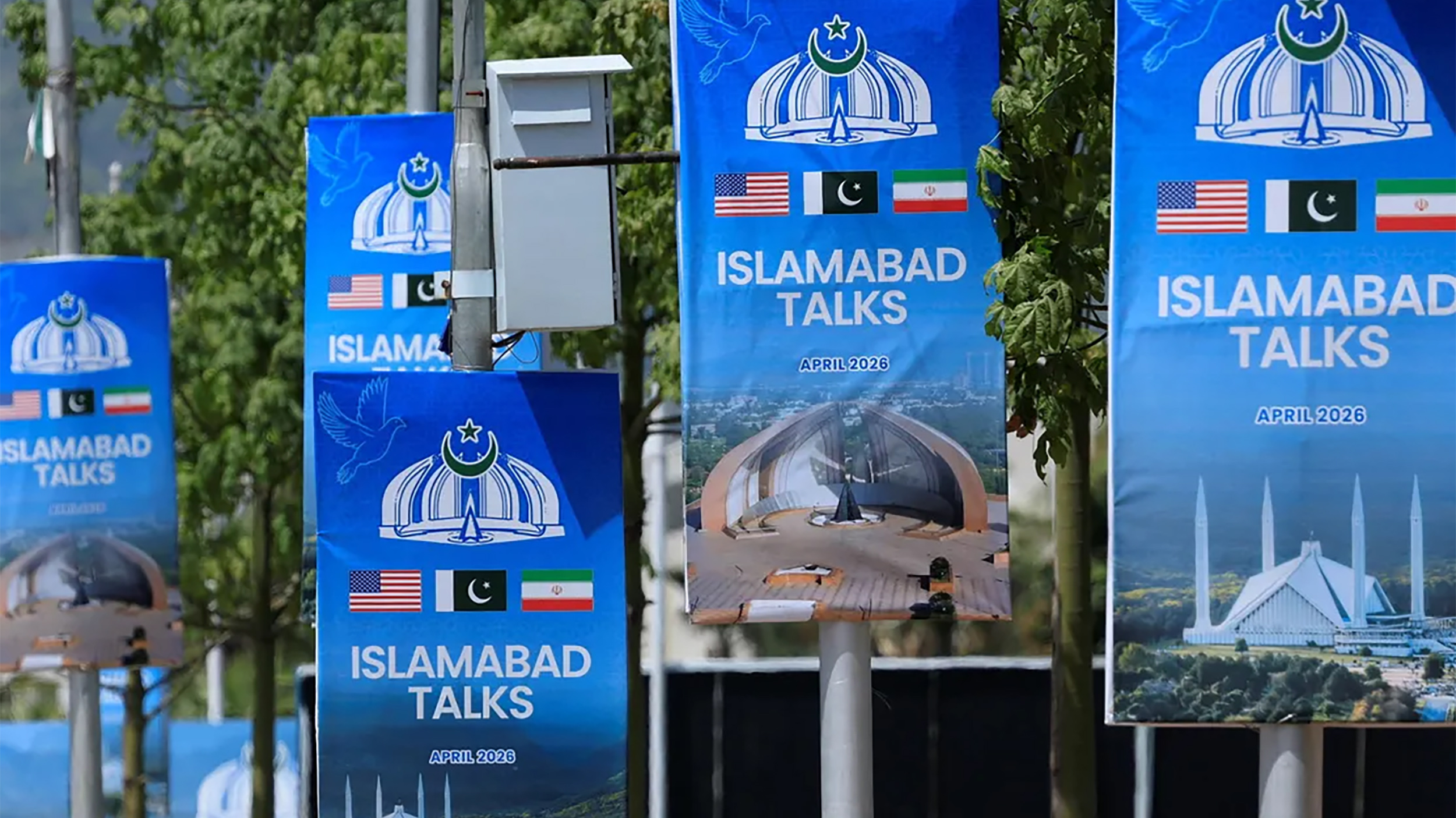
The diplomatic track is meanwhile beset by comparable complexity. Traditionally, the Iran-US file encompassed four areas of contestation: nuclear programme, regional influence, missile capabilities and human rights. Washington's recent actions have now added the Strait of Hormuz and the maritime blockade to the list. The Islamabad negotiations, mediated by Pakistan and featuring a 15-point American plan alongside a 10-point Iranian proposal, have so far yielded no progress. The managed obstruction of the Strait by Iran, coupled with the maritime blockade by the United States, has only deepened the intricacy. The reason for this deadlock is not simply a dispute over technical details; it stems from profound friction between the red lines of the two sides and from America's reluctance to engage in "balanced diplomacy".
Washington continues to pursue an "agreement based on the superiority of its position in the hierarchy of power"—one in which Iran must capitulate on the nuclear issue, curtail its defence programmes, reopen the Strait without extracting concessions, and even integrate into a regional order under American leadership. (12) Iran, in contrast, seeks a "balanced bilateral agreement" that preserves the country's dignity and sovereignty, and in which any limitations on its defences are matched by tangible security guarantees and the complete lifting of sanctions. This chasm, rooted in Iran's ontological security, has brought formal negotiations to a deadlock and makes only "fragile interim agreements" feasible—such as the ceasefire itself or something beyond it, like a deferral of core issues or a freezing of the crisis.
Given the depth of these disagreements, both sides must actively move toward reducing the layers of contention rather than allowing them to multiply further. Iran has demonstrated a strong willingness to resolve these complexities step by step, on the basis of commitment for commitment—a graduated, reciprocal approach that could build confidence incrementally where comprehensive deals have failed. Such an approach would require the active involvement of the states that benefit from the Strait of Hormuz. These countries—whose economic vitality depends on the uninterrupted flow of energy through this chokepoint—must participate in shaping future security mechanisms. Their exclusion from the process would render any agreement fragile and unsustainable. Within this framework, Qatar and Oman in particular should be activated in the diplomatic process, as both countries possess capacities and convening power that can be uniquely effective in bridging gaps between the parties. Oman's historic role as a trusted intermediary and Qatar's extensive diplomatic networks and energy ties position them as natural facilitators of a renewed dialogue.
This picture completes the absence of any clear horizon for the crisis: war, even with heavy blows, leads to no victory; negotiation, likewise, leads to no comprehensive agreement—unless a new diplomatic architecture is constructed on more realistic and inclusive foundations.
The Strategic Impasse and a Way Out
The convergence of these complex layers is what this analysis seeks to elucidate as the "action impasse": a situation in which neither protagonist possesses an exit strategy with a strategic achievement, nor a victory narrative with which to justify the situation to their publics. On the one hand, war—driven by the variable of Israeli pressure—is always an imminent possibility. But its outcome, even in the best-case scenario, would not be a victory that can be presented to public opinion, but rather a deepening of uncertainty. On the other hand, negotiations, because of the starkness of the red lines and America's reluctance to embrace balanced diplomacy, yield nothing beyond fragile temporary deals, with no prospect of a comprehensive accord. This precarious position represents the most dangerous state of affairs in international relations, one in which events can easily deepen the crisis further.
A way out of this strategic multi-layered predicament would appear to require a balanced political initiative that substitutes the logic of "collective security" for a "hegemonic solution". Such an initiative would need to encompass several variables:
First, a new legal framework based on the interests of all regional and international actors, one that takes into account Iran's security concerns and legal entitlements in the Strait of Hormuz and entails a substantial reduction in the operational presence of external powers aimed at containing Iran. Critically, the countries that benefit from the Strait must be included as stakeholders in any future security architecture; their participation is essential to the legitimacy and durability of new arrangements.
Second, a "return to balanced diplomacy" and a halt to America's superiority-driven approach—such that any restrictions on Iran's defensive capabilities are matched seriously with binding security guarantees, the full lifting of sanctions, and a recognition of Iran's role in the regional order. Only under these conditions can a "narrative of dignity" (one of the three foundational pillars of Iranian foreign policy: dignity, wisdom and expediency) be constructed for the Iranian side, and a "narrative of achievement" for the American side. The demonisation of Iran within the region will only lead to further tension. Instead, neighbouring states must come to terms with Iran's current situation and prioritise the principles of good-neighbourliness over transient crises.
Third, "crisis management through intermediary powers", drawing on the capacity of China, Pakistan and Oman—and actively incorporating Qatar—to establish a standing mechanism for the prevention of accidental escalation and for the supervision of the ceasefire. The diplomatic activation of Qatar and Oman, in particular, can leverage the unique capacities of these states to facilitate communication and bridge mistrust between the parties.
Fourth, "urgent attention to the reconstruction of Iran" through facilitative instruments and the weakening of sanctions mechanisms.
Fifth, the "restraining of Israel"—curbing its strategic overreach by Washington before Tel Aviv, itself the architect of this conflagration, drags the region into an uncontrollable catastrophe. The role of Israel as an interventionist actor must not be allowed to expand in the vicinity of the Strait of Hormuz, as such a development would lay the groundwork for future security challenges and perpetuate a cycle of instability.
Conclusion
While the United States and its allies can strike Iran, they cannot erase it from the global and regional equation, nor can they compel its capitulation. The only exit from this impasse is the acceptance of Iran as an unalterable geopolitical reality and a movement toward coming to terms with it so that both sides can step back from the brink with a relative "victory narrative". Regional states, for their part, must recognise that treating Iran as a permanent adversary will only deepen the cycle of tension, and that a good-neighbour policy, pursued consistently and insulated from the vagaries of passing crises, offers the only sustainable foundation for stability. Until then, the dark shadow of this strategic multi-layered predicament will continue to weigh heavily upon the region and the entire international order.
- Emile Hokayem, “The War Against Iran”, International Institute for Strategic Studies, 10 April 2026, https://tinyurl.com/ymc7mxvv (accessed 28 April 2026).
- Ramzy Baroud, “The war Iran prepared for: How Tehran is raising the cost of war”, Middle East Monitor, 9 March 2026, https://tinyurl.com/mafhm23w (accessed 28 April 2026).
- “A war that was supposed to be short, but changed the balance”, Mehr News Agency, 20 April 2026, https://tinyurl.com/3cpjzz5w (accessed 25 April 2026).
- Chase Metcalf and Michael Posey, “From Bargain to Breakdown: Five Strategic Futures for the Iran War”, Small Wars Journal, 6 April 2026, https://tinyurl.com/55e3ut65 (accessed 25 April 2026).
- Ehud Eilam, “Missiles, Miscalculation, and the Next Round with Iran”, IsraelDefense, 27 April 2026, https://tinyurl.com/3juzcjxk (accessed 28 April 2026).
- Ibid.
- Hina Ayra, “A war nobody wanted to own”, The News, 23 April 2026, https://tinyurl.com/astmpnfb (accessed 25 April 2026).
- Ibid.
- Arash Marzbanmehr, “The Strait of Hormuz: Global Economic Shock and the Limits of Military Power”, Al Jazeera Centre for Studies, 17 March 2026, https://tinyurl.com/3p5r6xh5 (accessed 25 April 2026).
- Chase Metcalf and Michael Posey, “From Bargain to Breakdown: Five Strategic Futures for the Iran War”, Small Wars Journal, 6 April 2026, https://tinyurl.com/55e3ut65 (accessed 25 April 2026).
- Emile Hokayem, “The War Against Iran”, International Institute for Strategic Studies, 10 April 2026, https://tinyurl.com/ymc7mxvv (accessed 28 April 2026).
- Lance Gordon, “Iran in the Box: The Coercive Architecture of the 2026 Iran War and Its Strategic Implications”, Small Wars Journal, 30 March 2026, https://tinyurl.com/4shvkupd (accessed 25 April 2026).