
The joint US-Israel military offensive against Iran, which began on 28 February 2026, has turned the Gulf—especially the Strait of Hormuz—into an immediate geopolitical flashpoint. The 33-kilometre-wide waterway is the principal export route for Gulf crude oil and liquified natural gas (LNG); estimates revealed that in 2024, approximately 20 million barrels of oil per day (mb/d) passed through the Gulf via the Strait. (1) It was reported in November 2026 that Brent rose nearly 3 per cent amid fears of disruption, (2) with warnings that a prolonged regional conflict or closure could push prices toward $120 per barrel because missile strikes, tanker rerouting, higher war-risk insurance and threats to shipping would inject a risk premium into crude markets. (3)
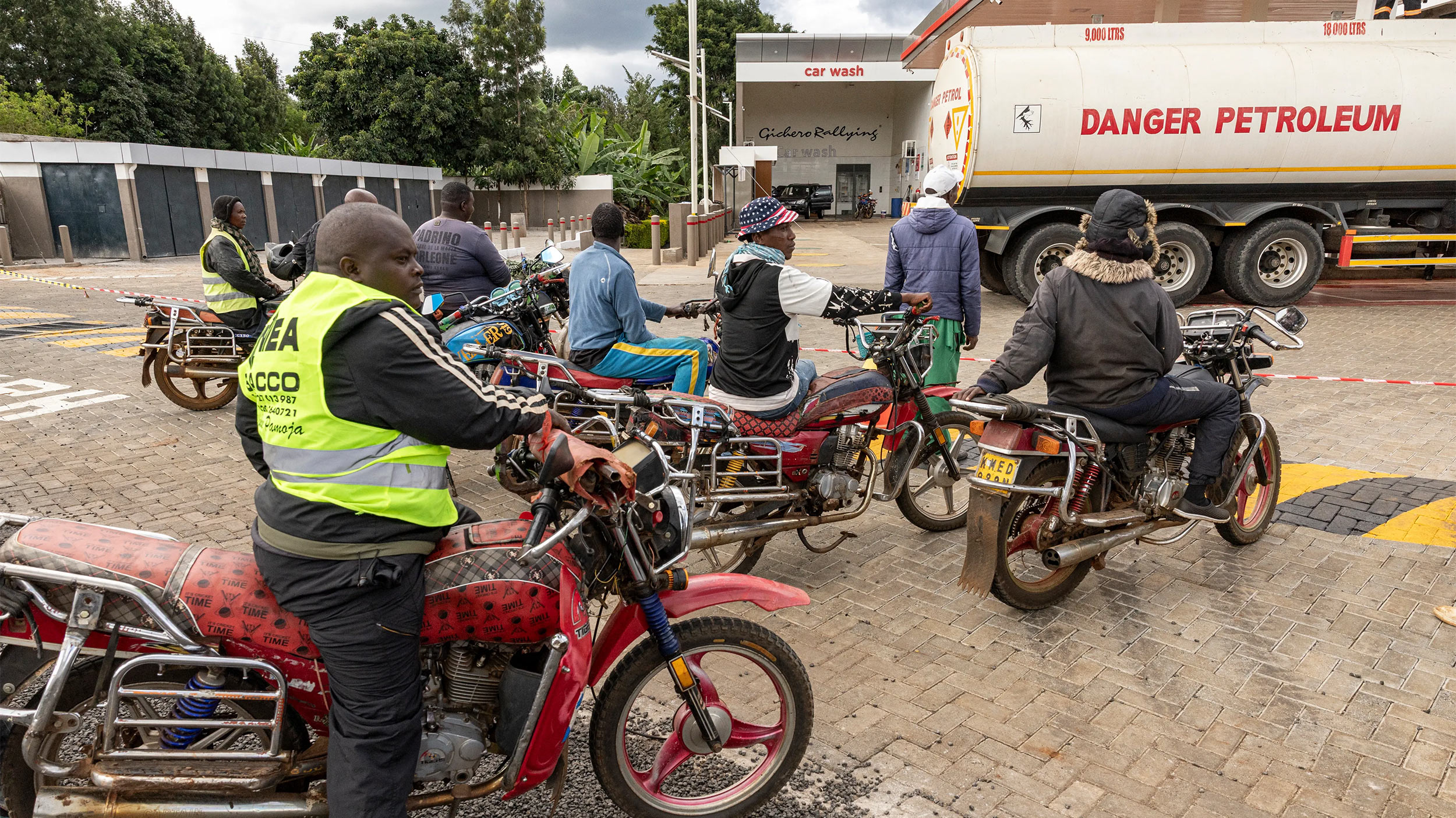
The economic implications and energy shockwaves of this conflict and the Strait of Hormuz blockade are glaring in Sub-Saharan Africa (SSA). The region exports some crude while importing the bulk of its refined petroleum products, making it particularly vulnerable to global price spikes, freight-cost increases, and disruptions in refined-product supply chains. A report published in August 2026 showed that the blockades added $21.9 billion to the fossil fuel import bills of 32 African countries between March and August 2026 (4), with severe fiscal strain on import-dependent nations like South Africa and Tanzania, (5) while others, like South Sudan and Mauritius, by 30 March 2026, were forced to ration electricity due to oil-based power disruptions. (6)
How the Crisis Reached Sub-Saharan Africa
The military offensive on Iran triggered a sudden contraction in the global oil supply. This led the G7 countries to draw upon their strategic reserves, (7) affecting major consumer countries with wider ripple effects in SSA. The rise in shipping costs, maritime insurance premiums and trade disruptions fed into SSA economies, highlighting deep-seated structural vulnerabilities in their regional energy security. (8)
The conflict exposes a stark structural paradox in the region’s economies—particularly among major crude oil exporters like Angola, Gabon and the Republic of the Congo. Despite possessing vast oil reserves, these nations have historically lacked sufficient and efficient domestic refining capacity to meet internal demand. They export crude oil while importing the overwhelming majority of their refined petroleum product requirements, such as gasoline, diesel and jet fuel. While the Dangote Refinery is easing import reliance in Nigeria and West Africa, refining infrastructure across the continent still remains unable to achieve self-sufficiency, leaving many nations beholden to international supply chains for refined products.
This asymmetrical trade structure challenges the conventional assumption that higher global prices automatically benefit exporters in African oil-producing nations. Rising crude oil prices may initially cause export revenues in foreign currencies to appear as an increase. Often this increase is offset by increases in the prices of refined petroleum goods worldwide. Furthermore, a substantial portion of any potential gain is eroded by the increased prices for maritime transport and insurance as a result of risks related to the Strait of Hormuz. This dynamic exerts a dual pressure on the public finances of oil-producing nations because governments are forced either to increase spending on fuel subsidies to quell public discontent, thereby deepening fiscal deficits and depleting cash reserves, or to pass the price hikes on to consumers, which in turn fuels domestic inflation. Take the example of Nigeria: after the price of diesel increased in early 2026, the rate of food inflation was 8.89% in January 2026. By May 2026, it had reached 16.96%. (9)
For the non-oil-producing countries of SSA (such as Kenya, Ethiopia, South Africa, Senegal, etc.), the crisis is purely a negative economic shock. Given their near-total dependence on imported energy, these states absorb the full brunt of higher global prices without any compensating export windfalls. In Ethiopia, where fuel imports account for 15% of total merchandise imports, the government was compelled to implement emergency subsidies while simultaneously raising the prices of diesel, gasoline and kerosene, all amid severe supply shortages. (10) In South Africa, a nation that lacks significant domestic crude oil production and relies on diesel to power electricity-generating plants during peak demand, the crisis manifested immediately as supply shortages. By March 2026, some agricultural cooperatives were forced to ration diesel sales to farmers, capping them at 80 litres per day. This threatened agricultural supply chains and drove up transportation and electricity costs. (11)
Zimbabwe, for example, moved around 30 March 2026 to raise its mandatory ethanol-to-petrol blending ratio from 5% to 20% and waived fuel taxes to stabilise pump prices. (12)
Regional and sectoral impacts in SSA
The regional and sectoral repercussions and impacts of the conflict went beyond the borders of primary energy markets to turn into a complex shock hitting the productive and social sectors in SSA, interrupting the path of economic recovery that the region was witnessing in 2025 with a growth rate of 4%. (13)
The sharp rise in refined fuel prices and marine insurance premiums, as a result of the conflict and blockade of the Strait of Hormuz, doubled land transportation and internal logistics costs, which was directly reflected in the prices of basic commodities and food. The consumer price index in low- and middle-income countries rose an estimated 3.6% since the outbreak of the conflict, pushing average annual inflation to 7.8% by April 2026. (14) It has also forced African central banks to suspend interest rate cut plans or hold rates higher for longer, while tightening monetary policies to curb the erosion of household purchasing power. (15)
At the public finance level, governments have found themselves caught between two bitter options: maintain fuel and fertiliser subsidies or reintroduce them to absorb popular anger, a choice that imposes heavy financial burdens, drains public coffers, exacerbates fiscal deficits in countries already suffering from external debt distress such as Malawi, or undermines internationally supported reform programmes, as illustrated by Ethiopia’s decision to reinstate fuel subsidies despite its financing programme with the IMF. Another option is to pass the price increases entirely to local markets or be satisfied with temporary tax cuts, such as the one that South Africa implemented on fuel in April 2026. All of these situations and paths carry a high risk of the outbreak of social protests and civil unrest as a result of the rapid decline in living standards.
Furthermore, the deeper sectoral threat of this crisis could be seen in the close link between fertiliser supply chains and food security. About a third of global fertiliser trade and about 40% of global urea exports from the Gulf region pass through the Strait of Hormuz. With Gulf exports suspended and natural gas and ammonia prices rising, global urea prices jumped to 59% in a few weeks, from an average of $490 per tonne before the conflict to $780 per metric tonne (16). The seriousness of this situation lies in the fact that the SSA region imports about 80% of its fertiliser needs (17), and the strait blockade coincided with the main growing seasons in East and West Africa between March and June, which led to small farmers reducing the quantities of fertilisers used or reducing the cultivated areas. This decline in agricultural inputs will inevitably lead to lower crop yields and deepen acute food insecurity during late 2026 and early 2027, unless regional financing mechanisms are activated and countries accelerate the localisation of fertiliser industries and diversification of continental supply sources.
SSA’s Strategic Agency & Policy Pathways
The conflict could serve as a critical test of the strategic agency of SSA nations, as an effective response to geopolitical crises requires moving beyond mere temporary adaptation toward the formulation of independent political and economic trajectories.
African capitals are feeling more pressure to take sides in the international and Middle East conflicts. However, the African Union, as well as some of the powerful SSA countries such as South Africa, Nigeria, and Kenya, are practising “active non-alignment” or pragmatic multilateralism. They operate on a realistic understanding that getting drawn into military rivalries or unilateral sanctions would put their core interests at risk—from Gulf-backed investments in ports and infrastructure to vital financial and tech partnerships with Western and Asian powers. This means that African governments prioritise economic survival, the security of supply chains, and internal stability, placing these concerns well above the ideological considerations that often drive external or Western alliances.
In parallel with diplomatic fortification, accelerating the pace of domestic refining in SSA has emerged as one of the most important industrial policy paths to break the dependency on foreign markets. The Strait of Hormuz crisis has proven that possessing crude oil reserves does not achieve energy security unless it is coupled with domestic processing capacity. As a result, the Dangote Petroleum Refinery and Petrochemicals, with a design crude-processing capacity of 700,000 barrels per day (bpd), up from its initial design nameplate capacity of 650,000 bpd following maintenance and optimisation, has emerged as a practical model for reducing the import bill for oil derivatives in West Africa during 2026, (18) despite the logistical challenges associated with securing local crude supplies.
The local refining experience is pushing other producing countries, such as Angola, through modernisation projects at the Lobito and Cabinda refineries, and Uganda and Tanzania through regional refining and pipeline projects, to rearrange their investment priorities to enhance local added value, providing a relative buffer against shipping fluctuations and rising global refining margins.
However, national refining and petrochemical projects remain limited in impact unless integrated into an integrated regional market, which gives the African Continental Free Trade Area (AfCFTA) a pivotal role in building long-term immunity. Activating intraregional trade protocols and removing customs and logistical barriers allow continental energy surpluses to be directed to meet regional deficits rather than being exported as raw materials outside the continent, thus reducing dependence on Middle Eastern imports. Natural gas from the Rovuma basin in Mozambique and Tanzania, as well as from West Africa (such as the Senegal-Mauritania LNG project and the West Africa Pipeline), could feed power plants and fertiliser industries in neighbouring countries.
The conflict and the resulting energy crisis reveal a profound paradox in the transition toward renewable energy. Although record-high fossil fuel prices provide a compelling economic rationale to accelerate renewable energy deployment—particularly given that Africa possesses roughly 60% of the world’s prime solar resources—acute capital shortages and prohibitive borrowing costs continue to stall project execution. Consequently, the continent still attracts less than 3% of global clean energy investment. (19)
Moreover, monetary tightening in response to the global inflation shock of 2026 has increased borrowing costs and reduced fiscal space for governments. As a result, overcoming this paradox requires reforming international climate finance mechanisms and developing investment guarantee instruments to mobilise private capital. This would enable Africa to transform the current energy shock into a springboard toward sustainable, diversified energy sovereignty.
Conclusion
The repercussions and impacts of the US-Israeli military offensive against Iran underline that the energy security dilemma in SSA stems not so much from a scarcity of natural resources as it does from the fragility of value chains and an excessive reliance on foreign markets for refined fuel. Sustaining economic stability in the region requires accelerating investment in local and regional refining capacity and activating intra-African trade. It necessitates, simultaneously, diversifying the energy mix toward renewable sources and developing transport infrastructure, thereby reducing the vulnerability of the agricultural and productive sectors to external geopolitical shocks.
The intertwined repercussions also necessitate strengthening energy security, and managing import dependence in SSA is no longer just an economic option but an existential necessity that requires a balanced interim road map that combines containing immediate shocks and building structural resilience. In the short term, governments can look into replacing costly universal fuel subsidies with digital social safety nets that are precisely targeted at the most vulnerable groups so as to maintain fiscal sustainability and mitigate living inflation without depleting cash reserves.
(1) “Amid regional conflict, the Strait of Hormuz remains critical oil chokepoint”, U.S. Energy Information Administration, 16 June 2025, https://tinyurl.com/4fnmayah(accessed 26 November 2026).
(2) Charles Kennedy, “Brent Jumps Nearly 3% as Iran Denies Any Talks With Washington”, OilPrice, 11 November 2026, https://tinyurl.com/5dtrmbnb (accessed 26 November 2026).
(3) Spencer Kimball, “How high can oil and gas prices go because of the Iran war? Here are the scenarios.”, CNBC, 2 March 2026, https://tinyurl.com/3mv6ea66 (accessed 26 November 2026).
(4) Luke Wickenden and Lauri Myllyvirta, “What the Hormuz crisis has cost fossil fuel importers — March to August 2026”, Centre for Research on Energy and Clean Air (CREA), 26 August 2026, https://tinyurl.com/3ad7wxz2 (accessed 26 November 2026).
(5) Ibid.
(6) Basillioh Rukanga, Shingai Nyoka, Hafsa Khalil and Makuochi Okafor, “Rationing power and diluting petrol - how African countries are coping with effects of Iran war”, BBC, 30 March 2026, https://tinyurl.com/5n6pb49v (accessed 26 November 2026).
(7) “G7 countries agree to release 100 mbl from emergency oil reserves”, Enerdata, 6 October 2026, https://tinyurl.com/mapdxper (accessed 26 November 2026).
(8) Rene Awambeng, “Africa & the Iran War: What the Oil Price Shock and Shipping Disruptions Mean for Economies”, African Energy Chamber, 11 March 2026, https://tinyurl.com/ycxurj9s(accessed 26 November 2026).
(9) “May 2026 Inflation Report”, Credit Direct, 19 June 2026, https://tinyurl.com/yvavezjv(accessed 26 November 2026).
(10) Stephen Onyeiwu, Ibrahima Thiam, Rod Crompton, Tsegay Tekleselassie, and XN Iraki, “Oil price surge is hurting African economies: scholars in Ethiopia, Kenya, Nigeria, Senegal and South Africa take stock”, The Conversation, 19 March 2026, https://tinyurl.com/5cxhztwd (accessed 26 November 2026).
(11) “Middle East tensions trigger diesel rationing in South Africa”, APA News, 13 March 2026, https://tinyurl.com/3xvxwcsh (accessed 26 November 2026).
(12) Godfrey Marawanyika, “Zimbabwe Starts Trials to Blend Ethanol and Diesel to Cut Costs”, Bloomberg, 5 May 2026, https://tinyurl.com/4t4kcvzd (accessed 26 November 2026).
(13) “Sub-Saharan Africa”, World Bank, January 2026, https://tinyurl.com/3eak55xa(accessed 26 November 2026).
(14) Rob Vos, “Iran war: From fertilizer to food crisis?”, International Food Policy Research Institute (IFPRI), 2 July 2026, https://tinyurl.com/yh5v7z8h (accessed 26 November 2026).
(15) Monique Vanek, “Key African Central Banks Set to Keep High Rates as Buffer Against Shocks”, Bloomberg, 21 September 2026, https://tinyurl.com/3y6tu27v(accessed 26 November 2026).
(16) Oliver Kiptoo Kirui et al., “Nigeria’s fuel, fertilizer, and food prices feel the strain of the Iran conflict”, IFPRI Africa, 22 June 2026, https://tinyurl.com/mwjmedyf (accessed 26 November 2026).
(17) Chakib Jenane and Martin Fregene, “African governments need to take urgent action on fertiliser shortages”, African Development Bank Group, 28 April 2026, https://tinyurl.com/2yf2rsd7 (accessed 26 November 2026).
(18) Dare Olawin, “Dangote refinery cuts West Africa fuel import volumes”, Punch, 15 June 2026, https://tinyurl.com/7bmx8a2s (accessed 26 November 2026).
(19) “Africa Holds 60% of the World’s Best Solar Resources but Gets Under 3% of Clean Energy Investment: What Development Financiers Must Fix”, Africa Training Institute, 14 July 2026, https://tinyurl.com/embexm66 (accessed 26 November 2026).