As the world follows closely for a diplomatic breakthrough between the United States and Iran, Pakistan continues to position itself as a balanced, proactive mediator. This is in stark contrast for a country which, less than a decade ago, was accused of “lies and deceit” by the same US President during his first term in 2018. (1)
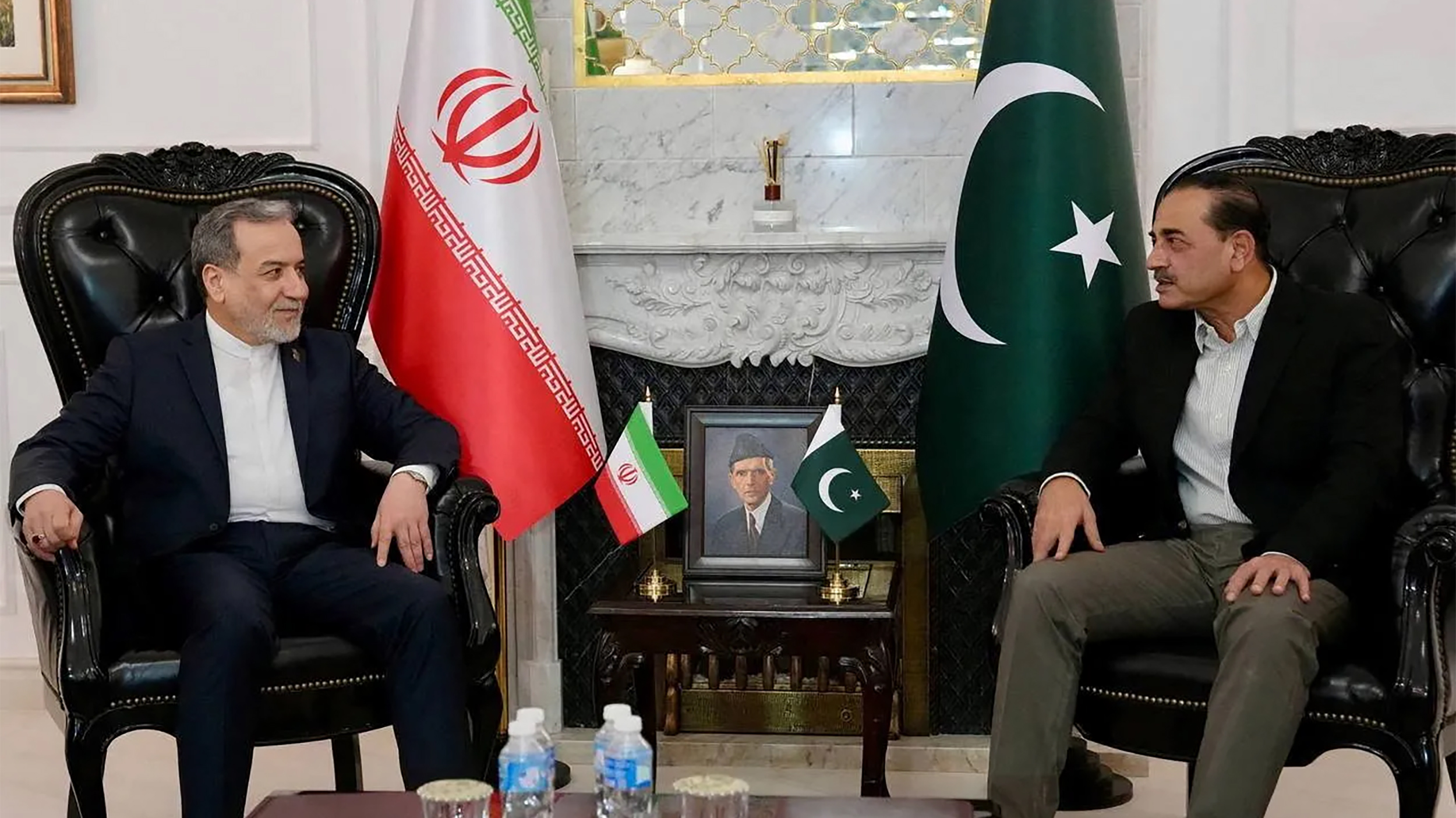
On 11 April 2026, senior delegations from the United States and Iran converged in Islamabad for the first time since 1979. Even though talks ended on 13 April without a breakthrough, a process which many had thought near impossible had begun. Simultaneously, it reinforced Pakistan’s position as a global middle power and a key geopolitical actor—a remarkable turnaround for a country that not too long ago was on the brink of diplomatic isolation. Moreover, these efforts gain credibility because Islamabad is not acting in isolation but is instead engaged in sustained consultations with regional players, including Saudi Arabia, Türkiye, Qatar, and Egypt, as well as in close coordination with China. This demonstrates parallel efforts to build consolidated regional and international support for de-escalation.
This current diplomatic standing is one which Pakistan has not enjoyed for almost 54 years. In 1971, it facilitated Kissinger's secret visit to China, which later paved the way for the establishment of US-China relations. Now, Islamabad has once again played a critical role by helping create conditions which paused an almost 40-day war that has had far-reaching global consequences. The decision by both Washington and Tehran to send high-level delegations during the first round further showcased the confidence both sides had in Pakistan as a credible channel. While the future of an already fragile ceasefire remains uncertain, the leadership in Islamabad continues to pursue an approach which is shaped by both diplomatic principles and strategic necessity.
Key Drivers Behind Pakistan’s Mediation
The rapidly escalating events in the aftermath of the US-Israeli attack on Iran had left Pakistan in a very sensitive position. While Iran is a neighbour with which Pakistan has strong historical and cultural linkages, Islamabad maintains close economic and strategic ties with Gulf countries, primarily Saudi Arabia, with which it has recently signed the Strategic Defence and Military Agreement (SDMA) in 2025. (2) At the same time, the United States is Pakistan’s key global partner. Hence, the sensitivity of the situation required a careful and disciplined diplomatic approach from the Pakistani leadership.
There are many who believe that Islamabad is simply taking advantage of a diplomatic opportunity. After all, the country is no stranger when it comes to geopolitical volatility. However, simply being positioned near a conflict zone does not automatically make a country a credible negotiator. Although Pakistan’s mediation efforts contribute to increasing its diplomatic footprint, Islamabad is still acutely aware of the potential fallouts if the current conflict persists, particularly when it comes to economic disruptions or security pressures.
Like the rest of the world, Pakistan has also been impacted by the disruptions to maritime traffic in the Strait of Hormuz. The country imports nearly 90 percent of its crude oil from Saudi Arabia and the United Arab Emirates and almost 99 percent of its liquified natural gas (LNG) from Qatar. (3) Even though Islamabad managed to secure continuous oil supplies despite the closure, it still had to purchase them at significantly higher prices. At the start of the conflict, in early March, the country’s Finance Minister Muhammad Aurangzeb said Pakistan’s monthly oil import bill could climb to $600 million. (4) The fallout was soon visible when fuel prices increased by almost 20 percent in a single week. Important to note is that before the war broke out, Pakistan’s economy had only recently begun to regain momentum. With oil prices continuing to fluctuate and fears of a second wave of inflation mounting, the government announced strict austerity measures, including a four-day work week for public employees, daily loadshedding and a shift to online classes to conserve energy. A higher oil import bill would further intensify pressure on Pakistan’s foreign exchange market by increasing dollar outflows when reserves are already strained due to debt repayments.
Another sector that is very vulnerable to the conflict is agriculture, which is the fifth-largest contributor to Pakistan’s GDP, and the primary source of livelihood of almost 40 percent of the population. (5) Approximately 46 percent of the world’s urea supply is dependent on Gulf trade routes. Urea is the world's most widely used nitrogen fertiliser, accounting for over 50 percent of global nitrogen fertiliser applications. As a result of the maritime disruption, the price of urea has increased by around 50 percent. (6) At the moment, Pakistan is not facing an immediate urea shortage, largely because domestic production has so far insulated the market from global price shocks. However, if this conflict persists and natural gas supply dwindles, the gap will have to be covered by imports; and since LNG imports remain under strain, the cost of gas used in fertiliser production could rise, creating additional price pressure on Pakistan’s farmers particularly when it is almost peak harvest season.
Another economic pressure point for Pakistan is remittances, which are a critical pillar of the economy. In the fiscal year 2025-2026, Pakistan received an estimated $30 billion in remittances of which nearly 54 percent were from the Gulf. (7) At present, roughly 800,000 Pakistanis migrate to the Middle East every year. However, if the war continues, the resulting fiscal fallout could result in Pakistani workers already present in the region returning home. This scenario poses multi-layered threats in the form of falling remittance flows, rising unemployment, and the economic burden of reintegrating returning workers. The risk is further compounded by the World Bank’s downgrade of Middle East real GDP growth to just 1.8 percent in 2026, a decline of 2.4 percentage points. (8) A slowdown in Gulf economies could reduce demand for migrant labour and place downward pressure on remittance flows to Pakistan. Conversely, if the war were to stop, there would be a significant increase in demand for Pakistani workers, particularly in sectors like construction and health care. Therefore, for Islamabad, de-escalation is not simply a diplomatic objective but an economic necessity.
Beyond the economic fallout, Islamabad is equally concerned about the broader security consequences of prolonged instability in Iran. Pakistan shares borders with four countries, two of which it has hostile relations with at the moment. Hence, in such an environment, Islamabad would not want war and conflict in Iran because any instability in the latter will automatically spill over into Pakistan. Iran shares a 900-kilometre-long border with Pakistan’s Balochistan province, which is already vulnerable to militant violence and cross-border instability.
Balochistan is also central to Pakistan’s economic future. Gwadar is considered the lynchpin in the China-Pakistan Economic Corridor (CPEC), making it a key node in Pakistan’s connectivity ambitions. Furthermore, the province is home to the Reko Diq mine, a massive project holding immense gold and copper deposits estimated at over $60 billion. (9) Furthermore, prospective Gulf-linked energy investments, such as the $10 billion Saudi Aramco-backed refinery project in Gwadar, raises stakes for Pakistan. (10) The strategic value of Balochistan has been further reinforced by Pakistan’s recent decision to allow third-country goods to transit through its territory to Iran. Under the new transit arrangement, goods entering through Gwadar, Karachi and Port Qasim can move along designated routes through Balochistan toward Iran, including inland corridors via Khuzdar and Dalbandin, before crossing at border points such as Gabd and Taftan. (11) Hence, destabilisation in Iran is not only a threat to Pakistan’s internal security but also to the country’s wider economic plan.
Moreover, prolonged instability in Iran would not only risk refugee movements across the Pakistan-Iran border but could also heighten sectarian tensions within Pakistan. Pakistan has a significant Shia population of around 20–36 million people, the second-largest Shia population after Iran. (12) A recent example of the extent to which developments in Iran can resonate domestically in Pakistan is how the death of Ayatollah Ali Khamenei sparked nationwide demonstrations which resulted in 21 deaths. (13)
What Pakistan Brings to the Table
Pakistan’s geography is both a vulnerability and a diplomatic asset. It is uniquely positioned between South Asia, West Asia, China and the Arabian Sea, making it a connector between multiple strategic theatres. This does not automatically make Pakistan a mediator, but it means Pakistan is too exposed to ignore the conflict and too relevant to be overlooked. Added to this is the fact that Islamabad has a reputation of being a mediator without coercive baggage. While it is influential enough to be heard, it does not possess the coercive power to impose terms on either Washington or Tehran, making it acceptable as a venue. Moreover, it is imperative to note that Islamabad’s significance also stems from a rare advantage: accessibility. Pakistan has simultaneous working channels with not only Washington and Tehran, but also Beijing and the Gulf capitals.
With Iran, despite periodic tensions, Pakistan has maintained working channels with the Iranian leadership. These were strengthened in 2025, during the 12-day war when Islamabad publicly supported its western neighbour, something which Iranian President Masoud Pezeshkian acknowledged on his visit to Pakistan. (14) This helped reinforce Pakistan’s credibility in Tehran and made it an acceptable mediator to the Iranian leadership. This acceptability was also strengthened by the fact that despite having functional channels with Washington, Pakistan does not host any US military bases in its territory. Moreover, after the US and Israeli military campaign against Iran on 28 February, Pakistan was the only state in the region to condemn the attacks against Iran – and that did not go unnoticed in Tehran. (15)
Pakistan’s renewed importance to Washington stems from two events. The first is the arrest and transfer of Mohammad Sharifullah, who was allegedly involved in planning the deadly August 2021 bombing at Kabul airport. US President Trump’s public praise of Pakistan’s assistance allowed Islamabad to re-enter Washington’s security calculations as a useful partner. (16) The second turning point that contributed to changing perceptions in Washington came in the aftermath of the conflict between Pakistan and India in May 2025. While displaying military preparedness, Pakistan emerged as a responsible actor capable of restraint from a position of strength, helping de-escalate a crisis that had the potential to escalate significantly. The shifts in perception became visible during the high-level engagement between the two sides, including a historic White House lunch between Field Marshal Asim Munir and Trump. (17) If anything, the fact that Pakistan helped facilitate a ceasefire between the United States and Iran after Trump’s threat to destroy Iran’s whole civilisation is emblematic of the personal relationship that Trump seems to have forged with the Pakistani leadership, namely Prime Minister Shehbaz Sharif and Field Marshal General Munir.
A third card Pakistan has held in this conflict is regional acceptance. Pakistan’s mediation efforts have not unfolded in isolation but have had a wider regional cover as reflected by the foreign ministers’ meetings in Islamabad on 29 March involving Saudi Arabia, Türkiye and Egypt, followed by a senior officials’ meeting on 14 April. (18) The meetings showcased that Pakistan was working within a coordinated regional framework. Since these countries have direct stakes in the conflict — particularly in relation to energy exports and maritime access — their participation adds both substance and legitimacy to Pakistan's mediation efforts. This is essential because while Islamabad is engaged with both Washington and Tehran, it is also aligned with the wider regional demand for de-escalation.
The fourth card Pakistan holds is China’s support. China is not a peripheral actor in this crisis. Over half of Chinese energy imports come from the Middle East, and thus it is directly impacted by any destabilisation in the Gulf and disruptions to maritime flows through the Strait of Hormuz. (19) Following the March foreign ministers’ meeting in Islamabad, Pakistan’s Deputy Prime Minister and Foreign Minister Ishaq Dar travelled to Beijing to brief his Chinese counterpart, Wang Yi, on regional developments and coordinate positions. The result was a joint Pakistan-China five-point initiative for restoring peace and stability in the Gulf and the broader Middle East, calling for an immediate cessation of hostilities, early peace talks and respect for sovereignty and international law. (20) Beijing’s public endorsement has added considerable strategic depth to Islamabad’s mediation efforts and provided additional international legitimacy. Not only does it showcase that Pakistan is not working within an exclusively Western framework, but it also adds further legitimacy with Tehran. This is particularly important because Iran is more likely to trust a process backed by China than one shaped solely by Washington. In fact, Trump has claimed that China got Iran to negotiate a ceasefire, which further underscores Beijing's strategic relevance in the entire process. (21)
Facilitator, Not Guarantor
Nevertheless, Pakistan’s leverage should not be overstated. While it can keep communication channels active, give reassurance where needed, and help prevent the entire process from collapsing—all factors significant in their own right—it cannot impose a settlement between the two sides. The present conflict has many facets, which include sanctions, the question of nuclear enrichment, de-escalation guarantees, and restraining Israel. Moreover, it should not be forgotten that the present conflict is unfolding in a very fragile ceasefire environment. Even if talks resume, severe distrust remains, and any negotiations could be derailed at any point by simmering regional flashpoints, including Lebanon and the Strait of Hormuz. Hence, in such circumstances, while Pakistan’s efforts can help preserve channels, it cannot remove the structural causes of the conflict.
Therefore, Islamabad’s role, while significant, is that of a facilitator, not a guarantor. Immediately after the first round of talks in Islamabad, Prime Minister Sharif flew to Riyadh, Doha and Ankara while, in parallel, Field Marshal Munir spent three days in Tehran engaging with all levels of Iranian leadership. (22) These efforts underscored Pakistan’s central objective, which is to preserve diplomatic momentum and prevent renewed escalation at a time when the regional environment, including the fragile ceasefire in Lebanon, remains highly volatile.
The leadership in Pakistan has been working actively towards aligning the country’s policies with its role as a ‘net regional stabiliser’. (23) The real test now is whether Islamabad can convert its current diplomatic leverage into sustained economic linkages. A US-Iran resolution involving sanctions relief could open economic opportunities for Pakistan, including renewed momentum on energy projects such as the Iran-Pakistan gas pipeline. Peace in the Gulf would help safeguard Pakistani migrant workers and remittances and open new opportunities for them. Moreover, with the Gulf, Pakistan could move beyond a relationship defined mainly by remittances, energy dependence and financial support, and instead present itself as a contributor to regional stability, labour mobility, food security, connectivity and investment. With the United States, a successful settlement would further improve Islamabad’s standing in Washington and create space for collaboration in all spheres. All in all, for Pakistan, the ongoing war presents both a danger and an opening. The danger lies in spillovers, economic shock, internal instability and diplomatic overreach. The opening lies in proving that Pakistan can convert vulnerability into relevance, and relevance into strategic space.
However, one thing is clear: regardless of the final outcome, Pakistan has emerged from this crisis with greater diplomatic weight and cemented its position as a responsible middle power country.
- Haroon Janjua, “'Nothing but lies and deceit': Trump launches Twitter attack on Pakistan”, The Guardian, 1 January 2018, https://tinyurl.com/4ubfaj2y (accessed 30 April 2026).
- Usaid Siddiqui and Reuters, “Saudi Arabia signs mutual defence pact with nuclear-armed Pakistan”, Al Jazeera, 17 September 2025, https://tinyurl.com/5t3pck2m (accessed 30 April 2026).
- Abid Hussain, “How war on Iran turned Pakistan’s LNG surplus into a looming shortage”, Al Jazeera, 3 April 2026, https://tinyurl.com/mw8ptwca (accessed 30 April 2026).
- “Pakistan’s monthly oil import bill could skyrocket to $600 million, says Finance Minister”, The Statesman, 9 March 2026, https://tinyurl.com/5n6276su (accessed 30 April 2026).
- Imran Shauket, “Pakistan’s Triple Exposure: What the Iran War Really Means for Islamabad”, Daily Times, 7 April 2026, https://tinyurl.com/5xnxbxp5 (accessed 30 April 2026).
- “Fertilizer Price in Pakistan 2026 (Urea, DAP, NPK) and Profit Impact on Farmers”, Times of Agriculture, 29 March 2026, https://tinyurl.com/34sdefz7 (accessed 30 April 2026).
- Shujaat Farooq, “Gulf instability and remittances’ risk”, Dawn, 30 March 2026, https://tinyurl.com/y9swb8an (accessed 30 April 2026).
- “World Bank cuts Middle East growth forecast after energy sector turmoil”, Dawn, 9 April 2026, https://tinyurl.com/5fh34rmb (accessed 30 April 2026).
- Khaleeq Kiani, “Study confirms over $60bn copper and gold reserves at Reko Diq”, Dawn, 26 March 2025, https://tinyurl.com/2s2vka6r (accessed 30 April 2026).
- Zafar Bhutta, “$10b deal forged with Saudi Arabia”, The Express Tribune, 27 July 2023, https://tinyurl.com/5afzret9 (accessed 30 April 2026).
- Usama Iqbal, “Islamabad allows transit trade to Iran”, The Express Tribune, 27 April 2026, https://tinyurl.com/ybpmkxty (accessed 30 April 2026).
- “Shia Population by Country 2026”, World Population Review, https://tinyurl.com/4ee3vsum (accessed 26 April 2026).
- William Christou and Shah Meer Baloch, “At least 22 people dead after pro-Iran protests in Pakistan and Iraq”, The Guardian, 1 March 2026, https://tinyurl.com/ms6fv5as (accessed 30 April 2026).
- Umair Jamal, “Iranian President’s Visit to Pakistan Signals Islamabad’s Growing Role in Global Politics”, The Diplomat, 6 August 2025, https://tinyurl.com/mx5jjmwj (accessed 30 April 2026).
- “Pakistan Condemns Attacks on Iran & Gulf Nations, Calls for Halt to Violations, United Nations Security Council”, Permanent Mission of Pakistan to the United Nations, 28 February 2026, https://tinyurl.com/2sftbr2s (accessed 30 April 2026).
- Abid Hussain, “Kabul bombing suspect arrested: What it means for US-Pakistan relations”, Al Jazeera, 5 March 2025, https://tinyurl.com/nhjy22j7 (accessed 30 April 2026).
- Anwar Iqbal, “Army chief joins Trump for ‘historic’ White House lunch”, Dawn, 19 June 2025, https://tinyurl.com/4bsyawfm (accessed 30 April 2026).
- Aamir Latif, “Senior diplomats from Türkiye, Saudi Arabia, Egypt, Pakistan meet in Islamabad”, Anadolu Agency, 14 April 2026, https://tinyurl.com/hkj2tn96 (accessed 30 April 2026).
- Yun Sun, “How Does the Iran War Affect China’s Energy Security?”, War on the Rocks, 17 March 2026, https://tinyurl.com/5dfbwd2y (accessed 30 April 2026).
- “Five-Point Initiative of China and Pakistan For Restoring Peace and Stability in the Gulf and Middle East Region (Beijing, 31 March 2026)”, Ministry of Foreign Affairs of Pakistan, 31 March 2026, https://tinyurl.com/kexyzzmj (accessed 30 April 2026).
- “Trump says he believes China got Iran to negotiate, AFP reports”, Reuters, 8 April 2026, https://tinyurl.com/ynjuzvsp (accessed 30 April 2026).
- “Field Marshal Munir urges de-escalation, dialogue as he concludes three-day Iran visit”, The News International, 18 April 2026, https://tinyurl.com/2smreffs (accessed 30 April 2026).
- “Pakistan a ‘net region stabiliser’ following Indian aggression: army chief”, Dawn, 28 June 2025, https://tinyurl.com/4eaavpj3 (accessed 30 April 2026).