
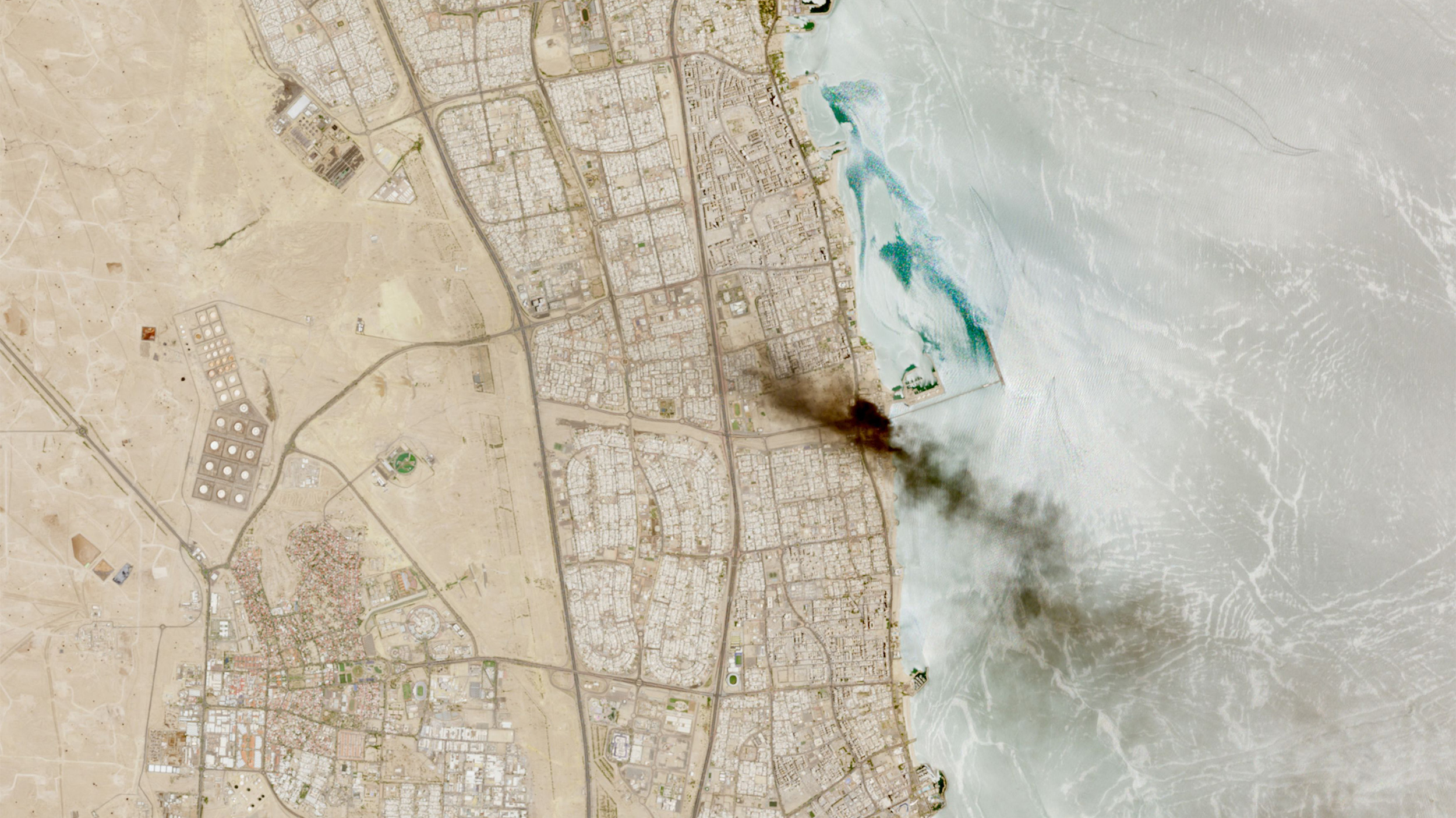
The security dilemma of small states stands as one of the most intricate challenges in contemporary international politics. Small states, constrained by structural limitations in demographics, geography, economy and military capacity, have always been more vulnerable to security threats than larger states. This intrinsic vulnerability places their political survival and territorial integrity in constant jeopardy from regional rivals or interventionist external powers. (1) Unlike great powers, which can rely on internal capabilities to secure themselves, small states are compelled to seek external solutions to compensate for their power asymmetry. This reality drives them toward strategies such as alliance-making, balancing or bandwagoning with great powers, each of which carries its own distinct costs and risks. (2)
In the literature of international relations, particularly within the framework of balance of power theory, one of the classical strategies consistently recommended to small states is entering into a strategic alliance or coalition with a great power. Rooted in structural realism, this strategy is predicated on the assumption that states with limited capacities have no alternative but to rely on a comprehensive power to ensure their security and survival against regional competitors. (3) Smaller Arab states have precisely followed this logic, defining their security within the framework of an alliance with the United States. This approach proved highly effective during the 1991 War, preserving the survival of these states against the threats posed by larger countries. However, the dynamics of the recent Iran-US war have raised a fundamental question: why has the same alliance that once served as a security shield now placed these states under direct threat? (4) Furthermore, states like Bahrain and Kuwait experienced greater pressure and damage compared to states like Qatar and Oman, which pursued more dynamic and proactive foreign and security policies.
To find an answer, one must recognise that an alliance with a great power is a double-edged sword, the effectiveness of which depends entirely on the structural context of the international system. In a clear and defined bipolar or unipolar security order, where great powers possess multiple instruments, clear red lines, and a definitive will to defend their allies, this strategy functions as a security shield. (5) In the unipolar era following the Cold War, the United States, with its high cost-tolerance and unambiguous commitments, was willing to bear significant costs to defend its allies, allowing small states to confidently entrust their security to this alliance. However, when the international order transitions into a phase of ambiguity in the security order and multipolarity, where the great power is not only confused about global and regional order-building but also prioritises its own national interests over alliance commitments, this security shield transforms into a strategic trap. (6) In the recent war, the United States demonstrated that when its national interests and the costs of war become decisive, it not only refrains from robustly defending its allies but also turns their military presence into operational bases for its own strikes, placing these countries on the front lines of fire, prioritising its own political, security and economic interests over those of its allies. The smaller Arab states, who once believed they were safe under the American security umbrella, suddenly found themselves in a position where, due to this very alliance, they became direct targets of Iranian strikes, and their economic and security infrastructures suffered severe damage. (7)
Alongside this structural transformation, several other factors have exacerbated the vulnerability of small states in alliance with a great power. First is the change in the nature of threats from conventional and classical forms to hybrid and asymmetric threats. During Operation Desert Storm, the threat came from a neighbouring country with a conventional army and defined borders; and the United States, with its classical military instruments, was able to easily defend its allies. However, in the recent war, Iran, utilising asymmetric instruments including ballistic missiles, suicide drones, allied forces across the region, and the closure of the Strait of Hormuz, fundamentally altered the security equation. Arab states whose defence systems were designed to counter conventional threats found themselves defenceless against these new threats; and the United States, despite its military superiority, failed to provide a decisive response to these asymmetric threats. This shift in the nature of threats demonstrated that sole reliance on a great power with classical instruments against adversaries employing asymmetric tactics is not only ineffective but also exposes small states to new vulnerabilities that were previously unforeseeable.
The second factor turning this alliance into a trap is the great power's inability to manage the political and economic costs of defending its allies during protracted crises. In the recent war, the United States clearly showed that when a war becomes attritional and costly, its primary priority becomes reducing its own costs and exiting the crisis, even if this exit comes at the expense of weakening the security of its regional allies. The smaller Arab states, who assumed the United States would remain by their side until the end, suddenly found themselves in a situation where the great power was seeking a deal with their regional adversary, leaving them alone in a complex bargaining game. This experience demonstrated that alliance commitments quickly fade during costly crises, and smaller states should not rely solely on the loyalty of a great power for their survival, as the national interests of the great power always take precedence over alliance commitments—a constant rule in international relations.
The third factor is the lack of a hedging strategy and flexibility in the foreign policies of these states. Small states, although unable to make fundamental and sudden changes in their foreign policy due to structural constraints, always have the option to adopt a mixed and balanced policy to avoid complete dependence on a single great power and to increase their manoeuvring space by maintaining relations with rival powers. (8) However, most of these Arab states, particularly after Desert Storm, gradually placed all their security eggs in the American basket and distanced themselves from any effective engagement with America's regional and extra-regional rivals, especially Iran, Russia and China. This one-sided dependence placed them in a position where they not only lacked leverage over the United States but also, during the crisis, despite their willingness to mediate and de-escalate, had no cards to play. In contrast to states like Bahrain and Kuwait, countries like Oman and Qatar, which consistently pursued a hedging policy and maintained balanced relations with both Iran and the United States, were able to play a mediating role in this crisis and avoid serious damage. This experience shows that the hedging policy, defined in international relations literature as maintaining relations with rival powers to reduce risk and increase strategic options, is not a luxury choice but a vital necessity for small states.
The fourth factor is strategic dynamism and the continuous updating of foreign policy options in response to changes in the security environment. The small Arab states, over the past decades, defined their foreign policy based on a static situation and a specific threat, namely Iran, and ignored any changes in regional and global equations. This static approach placed them in a position where, when the international order underwent profound transformation, they neither had the ability to anticipate developments nor alternative options to cope with new conditions. Strategic dynamism means that small states must constantly anticipate various scenarios, update their options in response to changes in the international environment, and never allow an alliance with a great power to prevent them from engaging with other actors. In conditions of strategic ambiguity, having diverse options can be their saving grace.
The fifth and most important factor that can reduce the vulnerability of small states in an alliance with a great power is the conclusion of strong legal and diplomatic agreements based on international law, while preserving independence and the right to choose the type of cooperation and engagement. Many small Arab states have defined their security based on unilateral memoranda of understanding that neither have a firm standing in international law nor the binding power to limit the greater power's freedom of action. In the recent war, these states learned firsthand that when America's national interests conflict with those of its allies, no legal document or diplomatic commitment can prevent Washington from undertaking unilateral and escalatory actions. In contrast, if small states had, before entering into an alliance, negotiated stronger security pacts, mutual defence treaties, and legal mechanisms designed to preserve their decision-making autonomy during crises, they might have been better positioned to manage this situation. Strong legal agreements could include clauses prohibiting the use of allied territory for offensive operations without the host state's consent, requiring prior consultation before military action, and establishing clear parameters for mutual defence, thereby helping to ensure that the alliance does not compromise the small state's sovereignty or independent decision-making during crises.
In conclusion, the recent Iran-US war serves as a serious wake-up call for the small Arab states and all small states that have tied their security solely to an alliance with a greater power. This experience demonstrated that the strategy of alliance with a greater power—under conditions of an ambiguous and multipolar international order, a shift in the nature of threats toward asymmetric instruments, the greater power's inability to manage the costs of attritional crises, the absence of a hedging strategy and flexibility, and the lack of strong and transparent legal agreements—is not a security shield but can become a strategic trap that places the smaller state on the front lines of fire, without the greater power having any serious commitment to defend it. Small states must learn from this bitter lesson and, by adopting a hedging policy, maintaining relations with rival powers, increasing their strategic options, and concluding strong and transparent legal agreements, avoid complete dependence on a single great power and preserve their right to independent decision-making during crises. The Middle East region needs a new and balanced security architecture in which regional states, without one-sided dependence on an external power, can provide their collective security based on shared interests and mutual respect. The future belongs to those states that can, by maintaining strategic independence and diplomatic flexibility, free themselves from the trap of one-sided alliances and define an independent and influential position for themselves in the changing global order.
- Kenneth Waltz, Theory of International Politics (New York: McGraw-Hill, 1979).
- Suzanne Nossel, “Hedging Is the New Normal”, Foreign Policy, 29 April 2026, https://tinyurl.com/yc74rzmb (accessed 21 July 2026).
- John J Mearsheimer, The Tragedy of Great Power Politics (New York: W.W. Norton, 2001).
- Emile Hokayem, “The War Against Iran”, International Institute for Strategic Studies, 10 April 2026, https://tinyurl.com/mr3wypzw (accessed 21 July 2026).
- G. John Ikenberry, Liberal Leviathan: The Origins, Crisis, and Transformation of the American World Order (Princeton: Princeton University Press, 2011).
- Chase Metcalf and Michael Posey, “From Bargain to Breakdown: Five Strategic Futures for the Iran War”, Small Wars Journal, 6 April 2026, https://tinyurl.com/ynt4fd2p (accessed 21 July 2026).
- Arash Marzbanmehr, “The Strait of Hormuz: Global Economic Shock and the Limits of Military Power”, Al Jazeera Centre for Studies, 17 March 2026, https://tinyurl.com/k95mtex7 (accessed 21 July 2026).
- Lance Gordon, “Iran in the Box: The Coercive Architecture of the 2026 Iran War and Its Strategic Implications”, Small Wars Journal, 30 March 2026, https://tinyurl.com/ywzedmtn (accessed 21 July 2026).