Against the backdrop of three years of war in the Arab-Islamic Mashreq, significant progress has been made toward resolving the Kurdish conflict in Turkey and Syria, which has threatened the stability and unity of both states for decades. Despite continuing reservations, the developments have raised hopes that a settlement could help address some of the consequences of the post-World War I regional order.
In Turkey, the process began in October 2024, when Nationalist Movement Party leader Devlet Bahçeli called for the release of Abdullah Öcalan, founder of the Kurdistan Workers’ Party (PKK), and for the organisation to dissolve and abandon armed struggle. President Recep Tayyip Erdoğan endorsed the initiative, while the Peoples’ Equality and Democracy Party facilitated contacts between the main political parties and Öcalan. In February 2025, Öcalan called on the PKK to dissolve and lay down its arms, arguing that the historical circumstances surrounding its creation in the 1980s had changed.
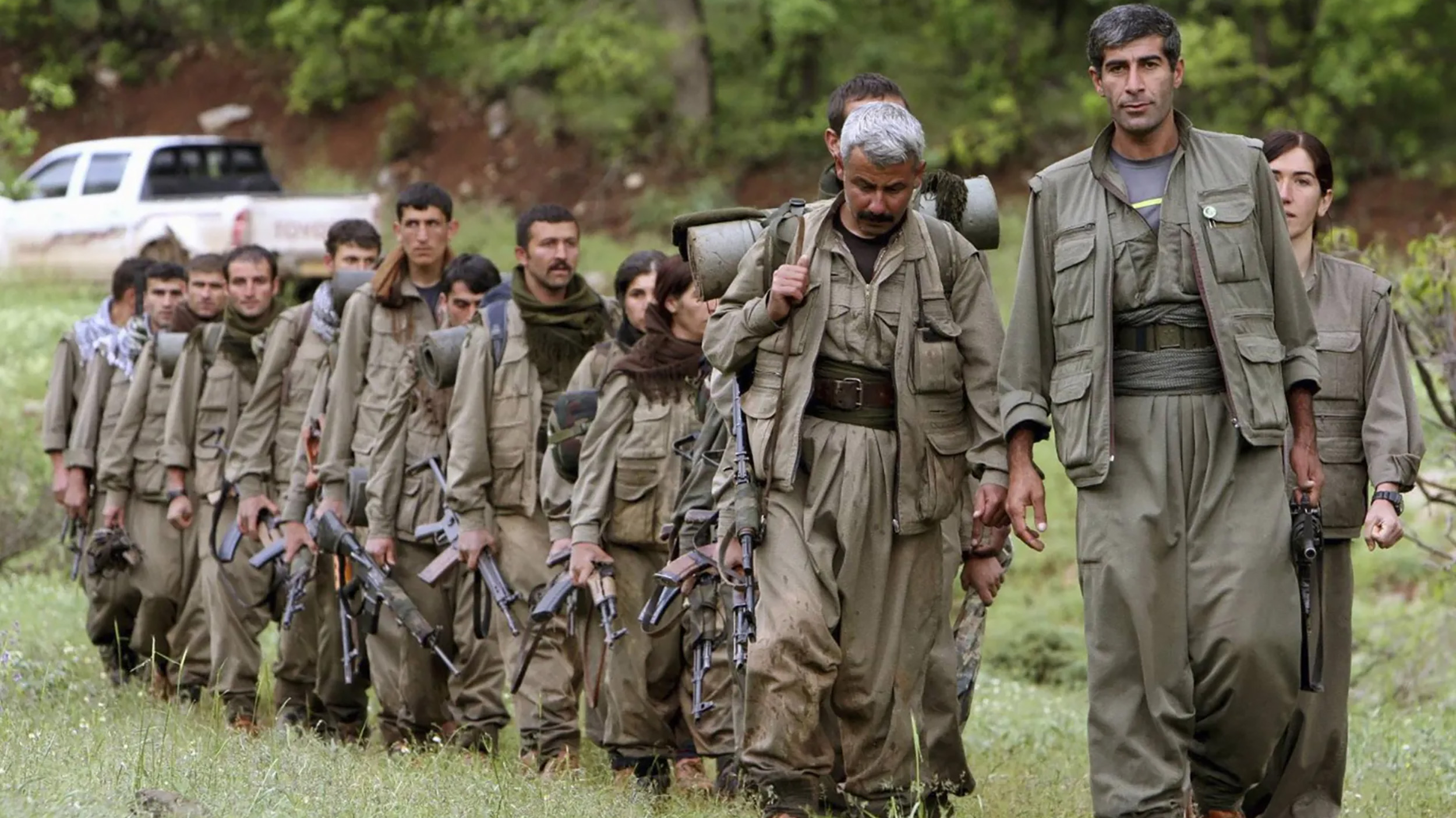
The PKK held a congress in May 2025 and decided to dissolve and abandon armed struggle. In July, 30 fighters symbolically burned their weapons in northern Iraq. Progress subsequently slowed. A Turkish parliamentary committee established in August 2025 to develop a framework for reconciliation had not produced a clear roadmap by early 2026. Concerns remained over the PKK’s commitment, the interests of victims’ families, and whether the organisation would surrender its weapons in both Turkey and Syria.
The process regained momentum in 2026. After Bahçeli demanded a clearer roadmap and Erdoğan became more directly involved, parliament approved in August, by 468 votes to 88, the “Law on Strengthening National Solidarity and Social Integration”. It provides for the safe return of PKK members not accused of murder and establishes a legal pathway for others accused of non-lethal offences. Questions concerning senior PKK figures in northern Iraq and Öcalan’s future status remained unresolved. A government monitoring body was also established to supervise disarmament and reintegration. Parliament Speaker Numan Kurtulmuş subsequently predicted that PKK forces in northern Iraq would surrender their weapons to Iraqi authorities in October, although it remained unclear whether this reflected a concrete agreement.
The Syrian process followed the Turkish developments and was also enabled by a change in US policy. In March 2025, Washington informed the Syrian Democratic Forces (SDF) that it intended to end its military presence in Syria and encouraged them to reach an agreement with Damascus. SDF commander Mazloum Abdi and President Ahmed al-Sharaa agreed to restore state authority over northeastern Syria, including border crossings and oil and gas fields, and to integrate SDF forces and autonomous institutions into the state.
Implementation initially stalled as the SDF continued demanding autonomy and decentralisation. Fighting broke out in January 2026, after which Syrian forces expanded their control across the northeast, while Arab tribal forces within the SDF shifted toward Damascus. Al-Sharaa subsequently issued a decree restoring citizenship to Kurds affected by the 1962 census, recognising Kurdish linguistic and cultural rights, and declaring Nowruz a national holiday. A subsequent agreement established a clearer path toward ending the autonomous administration and integrating SDF forces.
Integration then accelerated. SDF commander Sipan Hamo was appointed deputy defence minister for the eastern region, three SDF-based brigades began forming within the Syrian army, and the government opened offices to restore citizenship to stateless Kurds. By August 2026, the SDF had transferred border crossings and oil and gas fields to the Syrian state, while state institutions had expanded across the northeast. Abdi was appointed presidential adviser, and former SDF official Ilham Ahmed became a member of parliament. On 20 August, Abdi announced that the integration of Kurdish civilian and military institutions had been completed.
Nevertheless, major challenges remain. In Turkey, it is uncertain whether all PKK factions will accept dissolution, how many fighters will be permitted to return, and how those remaining abroad or in prison will be treated. In Syria, thousands of former SDF personnel may remain without employment, while integrating the region’s education system is particularly difficult because the autonomous administration controlled both personnel and curricula. The future space for Kurdish political activity in Syria also remains unclear.
The Kurdish question cannot ultimately be resolved through Turkish -Syrian arrangements alone. Kurdish nationalist movements are also significant in Iraq and Iran, making a durable regional settlement dependent on developments there as well. More fundamentally, Turkey, Syria and Iran continue to define themselves as centralised nation-states with specific national identities, raising the question of how Kurdish populations shaped by decades of separatist nationalism can find a place within these states. No serious discussion of fundamentally reconsidering this state structure has yet emerged in Ankara, Damascus or Tehran.
Despite these limitations, the developments have generated considerable optimism. As in the Northern Ireland peace process, a settlement may face resistance from factions that reject compromise, but such opposition need not prevent the broader process from continuing. Public support and political momentum in Turkey and Syria have strengthened the drive toward implementation.
If the process continues, its effects could extend beyond the Kurdish question, facilitating development, resource exploitation, transportation, trade and movement across borders. A settlement in Turkey, Syria and Iraq could begin reversing decades of fragmentation created by the post-World War I regional order. Although the process remains incomplete and potentially reversible, the “train” of settlement has already begun moving, and the momentum behind it may make a return to the previous situation increasingly difficult.
*This is a summary of a policy brief published in Arabic here.