
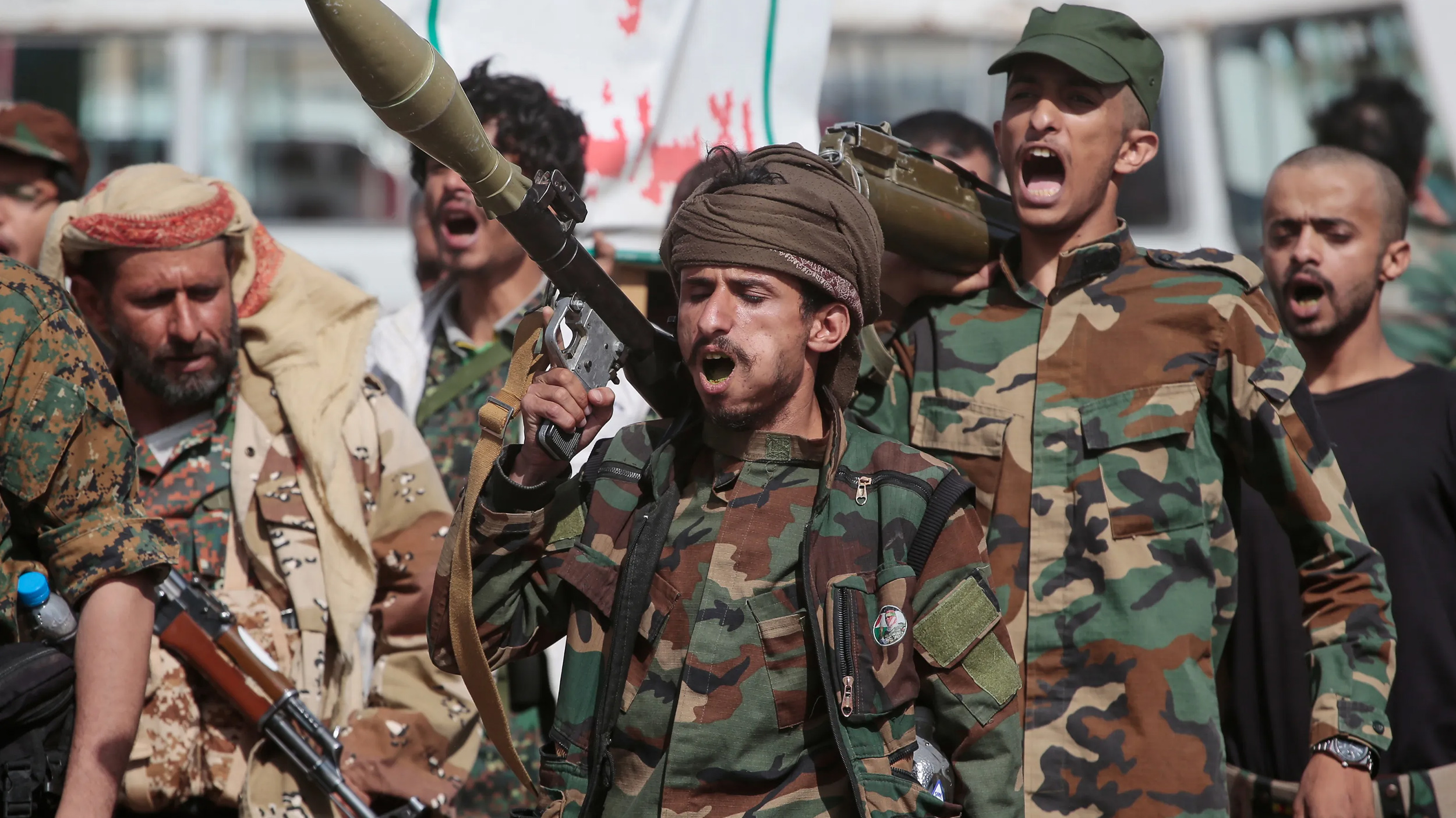
In September 2026, Ansar Allah, commonly known as the Houthi movement, rapidly expanded its control over Yemen’s western coast. After capturing the port of Mocha on 10 September, the Houthis extended their control the following day to Mayyun (or Perim Island), Dhubab, the Hanish Islands, and six districts in Taiz and Hodeidah governorates, covering approximately 5,400 square kilometres. The operation began on 3 September with diversionary attacks against government forces advancing toward Sana’a. After government forces captured Hais on 5 September, the Houthis advanced south along the coast, forcing a withdrawal to avoid encirclement.
This expansion strengthens the Houthis’ ability to influence maritime traffic through Bab al-Mandeb and potentially use it to pressure Yemen’s internationally recognised government and Saudi Arabia. They could seek the removal of restrictions on air traffic at Sana’a airport and maritime movement through Hodeidah, as well as an end to Saudi support for government forces. Control of the coast also strengthens the Houthis’ position within Iran’s Axis of Resistance, since the territory provides greater protection for Iranian maritime deliveries of weapons, equipment and military expertise.
However, the coastal advance may ultimately prove to be a tactical gain but a strategic trap. The Houthis have traditionally relied on mountainous terrain, concealment, mobility, hit-and-run tactics and mobile weapons platforms. Defending fixed positions along the flat and exposed Tihama coast requires a different strategy and leaves their forces more vulnerable. They may therefore eventually face a choice between maintaining their coastal possessions and protecting their position around Sana’a. A precedent exists: the 2017 Operation Golden Arrow, supported by the United Arab Emirates, removed the Houthis from Mocha.
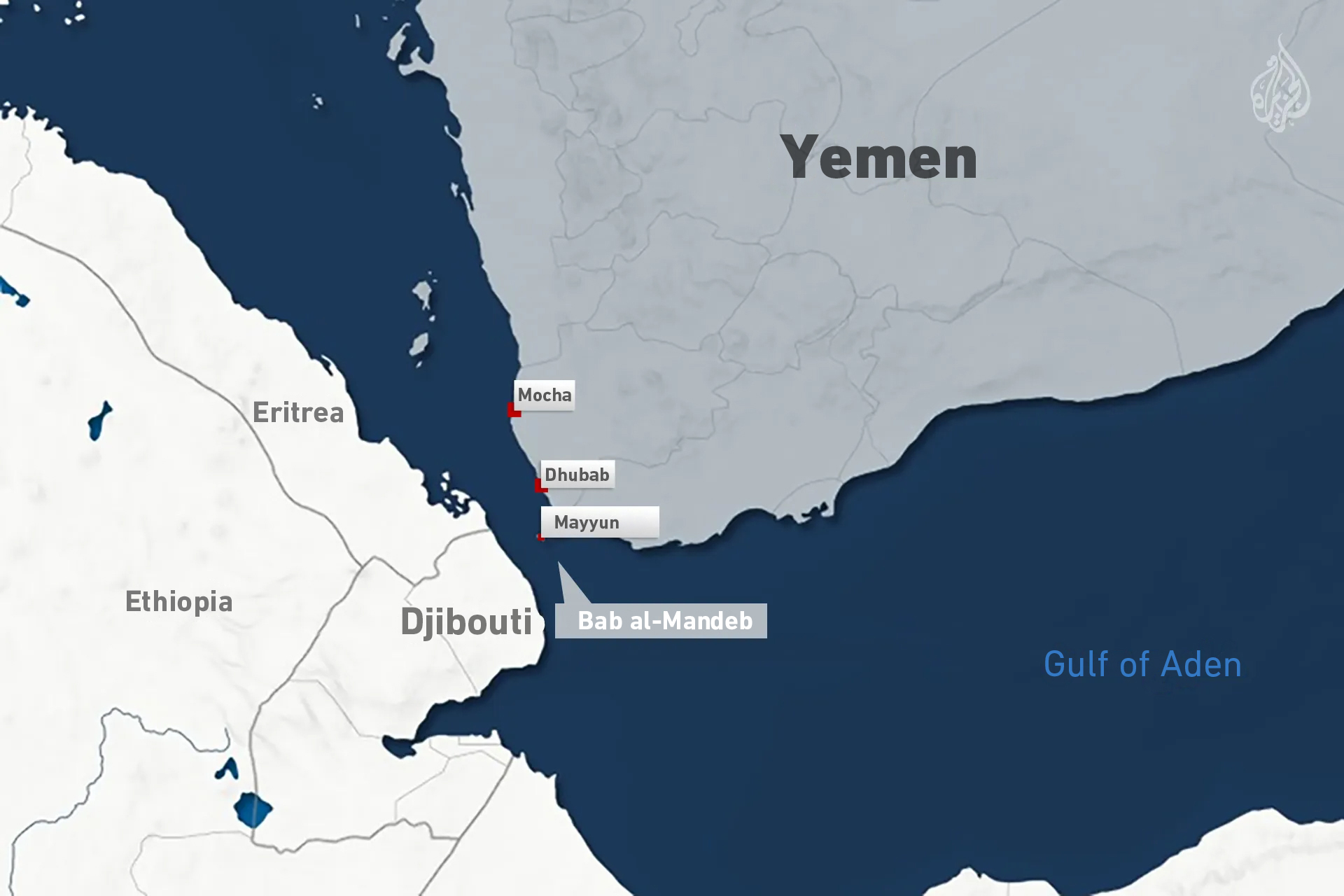
Bab al-Mandeb’s strategic importance derives from its role in global trade and security. The strait carries approximately 8% of global oil trade and 15% of global trade and is an important route for commercial and military vessels travelling between the Mediterranean, the Suez Canal, the Gulf and Asia. Saudi Arabia particularly values it as an alternative route for exporting oil and receiving imports from Asian countries, especially given restrictions affecting the Strait of Hormuz.
For the United States, Houthi control could complicate the movement of American warships between the United States, Europe, the Gulf and Asia and raise doubts about Washington’s ability to fulfil its security commitments. Saudi Crown Prince Mohammed bin Salman reportedly urged US President Donald Trump to strike the Houthis, but Trump declined because the Houthis were not targeting US vessels.
Israel also has a significant interest in Bab al-Mandeb because the route connects it with Asian partners, particularly India and China. Houthi attacks on shipping to and from Israel have almost halted activity at the port of Eilat. The ability to control Bab al-Mandeb could therefore become an important consideration for both Israel and the United States in dealing with the greater Axis of Resistance.
The development is also important for Iran. Tehran has suggested that Bab al-Mandeb could be closed during the US-Israeli war against Iran, with the Houthis potentially controlling the strait while Iran controls the Strait of Hormuz. Combined control would give Iran considerable leverage over global trade and oil and strengthen its bargaining position.
Maintaining the new territory nevertheless presents major logistical difficulties. The supply route from Hodeidah through Mocha to Mayyun is around 300 kilometres long and crosses exposed terrain. Mayyun is a small island with limited resources and depends on continuous supplies through Dhubab; disruption between Mocha and Dhubab could therefore isolate it. They also lack a substantial navy to protect and supply the coastline. Mocha is not a traditional Houthi support base, and control of the eastern side of Bab al-Mandeb does not mean control of the western side near Djibouti and Eritrea.
Government forces remain capable of challenging the Houthi advance. They avoided major losses and retain positions around Taiz and Aden, as well as Marib and al-Jawf near Sana’a; al-Jawf also provides geographical access to Saudi Arabia. However, they suffer from fragmented leadership, limited naval capabilities, competing regional sponsors, and the absence of direct US air and naval support.
The next phase is therefore likely to become a race against time. Four scenarios are possible. Consolidation is currently the most likely, with the Houthis fortifying the coastal corridor while Saudi Arabia and the United States remain focused on other priorities. Attrition could leave the Houthis in control while imposing heavy military and economic costs, potentially forcing them either to expand their front or retreat to their previous reliance on missiles and drones. Recapture would require unified government leadership, agreement among regional sponsors, and foreign air and naval support, though the Houthis could still disrupt Bab al-Mandeb with missiles, drones and maritime attacks. Finally, a comprehensive settlement between Saudi Arabia and Iran, supported by the United States, could produce a unified Yemeni authority and military capable of securing the coast. This remains unlikely in the near term because of the complex political and military arrangements required.
*This is a summary of a policy brief originally written in Arabic available here.