Mali’s military leadership is currently facing a profound and multifaceted crisis that undermines both its political legitimacy and its capacity to sustain essential economic functions. The country has been governed by successive military juntas, but recent developments reveal that the regime is increasingly unable to provide basic services, manage economic flows or maintain political authority. The result is a convergence of pressures that threaten the junta’s grip on power from multiple directions.
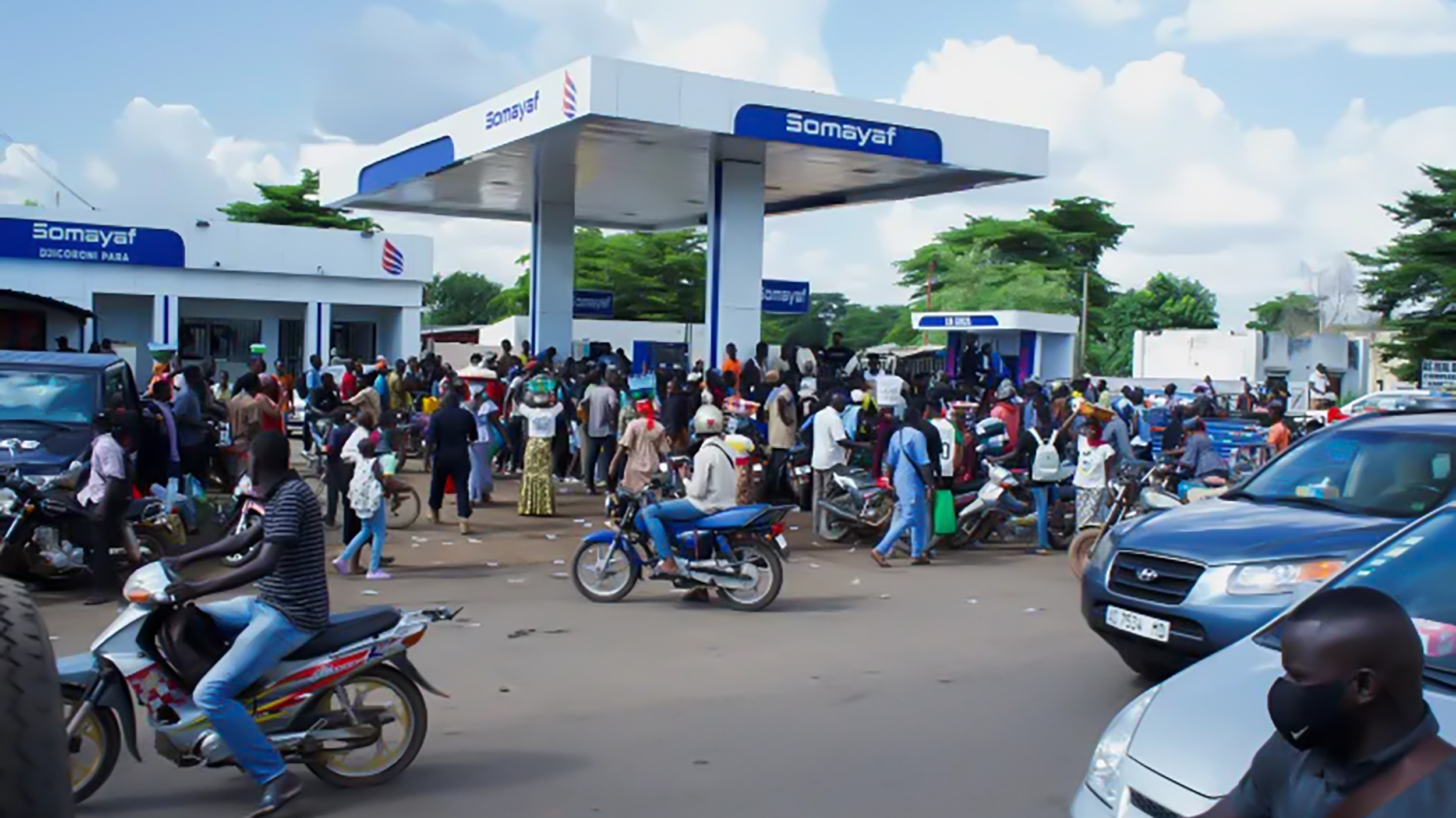
Economically, the state’s control over critical supply chains has weakened significantly. Attacks on fuel and food convoys, often conducted by Islamist armed groups, have disrupted transport networks and caused severe shortages in urban areas. The scarcity of basic goods has led to long queues at petrol stations, rising prices and a sharp decline in daily living conditions. These disruptions have exposed the government’s inability to guarantee essential services, eroding public confidence in its capacity to maintain stability. Economic hardship has thus become a powerful tool of pressure, further undermining the regime’s credibility.
At the same time, political authority is under intense strain. The military leadership has relied heavily on emergency powers, suspending political parties, restricting civic organisations and suppressing dissent. These measures aim to consolidate power by eliminating opposition and controlling public discourse. However, the strategy of coercion has also alienated large segments of the population, creating fertile ground for alternative political movements to gain traction. Discontent among citizens facing economic hardship reinforces the perception that the junta cannot deliver on its promises of stability and security.
Emerging political forces present a growing challenge to the regime. Movements advocating a return to constitutional governance have attracted support from civil society, religious networks and citizens disillusioned with military rule. These groups offer structured alternatives and promote organised, peaceful resistance. Their influence demonstrates that political legitimacy in Mali is increasingly contested, and that public support can shift quickly when existing authorities fail to meet the population’s needs. The combination of economic disruption and rising political alternatives constitutes a dual pressure scenario, which threatens to destabilise the current power structure.
The interplay between economic and political pressures is mutually reinforcing. Shortages and rising prices intensify public frustration, which strengthens support for opposition movements and protests. Conversely, the growth of alternative political voices amplifies economic anxiety by highlighting governmental failures. The inability to manage both axes simultaneously undermines the junta’s claim to effective governance, while its reliance on coercive tactics to maintain control risks deepening social divisions and escalating tensions.
Responses from the military leadership have prioritised security over systemic reform. Efforts to reinforce control through alliances with external military partners and local security forces have yielded limited short-term results. These measures address immediate threats but do not resolve structural weaknesses in governance or economic management. Overreliance on force risks further alienating citizens, heightening opposition activity, and increasing international scrutiny, which together create a precarious environment for the regime.
The current situation presents multiple potential trajectories. One possibility is continued repression, which could temporarily stabilise control but likely at the cost of growing public resentment and intensified economic disruption. Another scenario involves opening political space and negotiating with alternative movements, which could restore some legitimacy but would require the military to relinquish elements of its authority. A third, more destabilising possibility is that economic hardship and political fragmentation converge to trigger widespread unrest, creating conditions for a more dramatic shift in governance.
Mali’s position at this inflection point underscores the limits of military rule in contexts marked by economic vulnerability and active political contestation. Without reforms that simultaneously address economic hardship and expand political inclusion, the current regime faces an increasingly unsustainable situation. The interaction between material shortages, public dissatisfaction, and emerging political alternatives illustrates how governance crises can escalate when a ruling authority loses the capacity to meet citizens’ basic needs while suppressing legitimate political expression.
In conclusion, Mali’s military leadership is navigating a dual dilemma in which economic disruption and political opposition mutually reinforce one another, eroding both legitimacy and governance capacity. The country’s trajectory will depend on whether the regime can reconcile these pressures by instituting meaningful reforms or whether continued reliance on coercion will accelerate instability. The combination of rising economic stress, public frustration and organised political alternatives creates a volatile environment that may redefine Mali’s political and social landscape in the near future.
*This is a summary of a policy brief originally written in Arabic available here.