
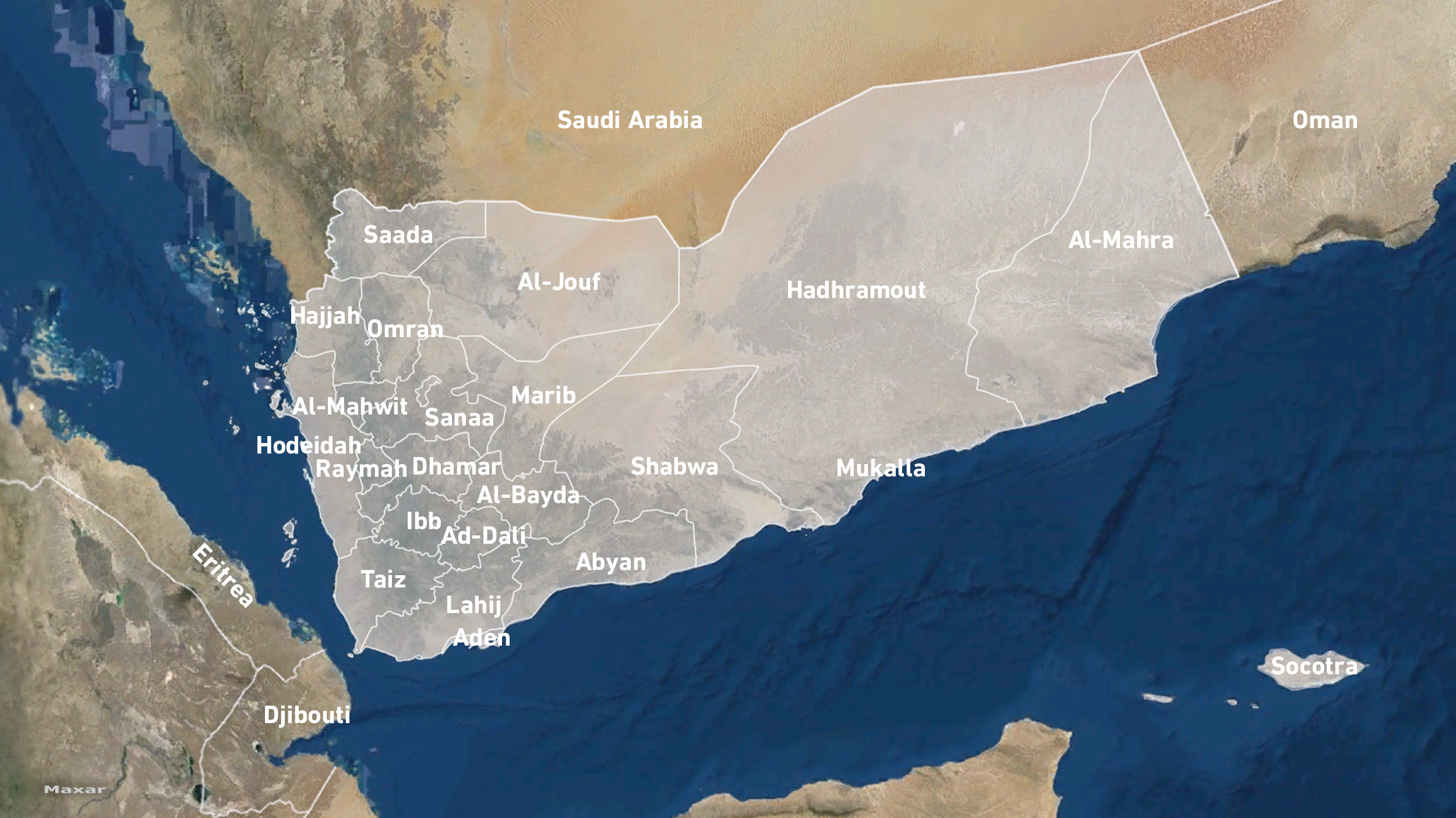
Escalating tensions in eastern Yemen, particularly in the governorates of Hadramout and Al-Mahra, have exposed deep strategic divergences within the Saudi-Emirati partnership and revealed broader regional implications that extend far beyond the Yemeni theatre. What appears on the surface as a localised security escalation is, in reality, a manifestation of competing geopolitical visions, conflicting security doctrines, and rival approaches to state authority and regional influence.
The immediate trigger for this escalation was a series of developments in late December 2025, most notably Saudi airstrikes targeting Mukalla port and extraordinary decisions issued by Yemen’s Presidential Leadership Council. Saudi Arabia framed these actions as necessary to counter destabilising moves near its southern border, accusing forces linked to the Southern Transitional Council (STC) of operating outside legitimate command structures and threatening national security. Riyadh emphasised the importance of preserving Yemen’s unity and reinforcing state institutions as the only viable path toward stability and a political settlement.
The United Arab Emirates rejected Saudi accusations, denying involvement in provoking military escalation and disputing claims that targeted shipments contained weapons. Abu Dhabi insisted that its activities in Yemen were coordinated, security-oriented and respectful of Yemeni sovereignty. The public nature of these exchanges marked a significant departure from earlier efforts to manage differences behind closed doors and underscored the extent to which bilateral trust has eroded.
At the core of the dispute lie divergent strategic priorities. Saudi Arabia’s approach to Yemen is rooted in a traditional security framework that prioritises border stability, centralised state authority, and a unified Yemeni polity capable of preventing hostile actors from exploiting geographic proximity. Yemen’s territorial integrity is thus seen as inseparable from Saudi national security. By contrast, the UAE has pursued a more decentralised strategy centred on maritime security, control of ports and influence over strategic corridors along the Arabian Sea, the Gulf of Aden and the Red Sea. This approach relies heavily on partnerships with local armed groups, including the STC, which function as instruments of influence beyond formal state institutions.
These differing visions have produced structural tensions within the anti-Houthi camp. While Saudi Arabia views the empowerment of non-state actors as a direct threat to political cohesion and peace efforts, the UAE sees such alliances as pragmatic tools for securing long-term strategic interests. The resulting fragmentation weakens the Yemeni state, complicates negotiations and entrenches competing centres of power that are difficult to reconcile within a single national framework.
The implications of this rivalry extend well beyond Yemen. The eastern Yemeni coastline occupies a critical position in regional maritime dynamics, linking the Arabian Peninsula to the Horn of Africa and global trade routes. Growing competition in this space coincides with increasing involvement by non-Arab actors, including Israel, particularly in the Horn of Africa. The recognition of Somaliland by Israel signals a potential realignment of influence in the Red Sea basin and raises concerns among regional powers about the militarisation and internationalisation of strategic waterways.
For Saudi Arabia, instability in eastern Yemen undermines ambitions to secure direct access to the Arabian Sea and reduce reliance on vulnerable chokepoints such as the Strait of Hormuz. For Oman, developments along its western border heighten security anxieties and threaten its carefully balanced foreign policy posture. Egypt, meanwhile, views any disruption in the Bab al-Mandeb strait as a direct risk to the Suez Canal, a cornerstone of its economic and strategic interests. In this sense, eastern Yemen has become a nodal point where local conflicts intersect with regional and global security concerns.
Several future trajectories emerge from the current situation. The most likely scenario is the continuation of a low-intensity conflict characterised by intermittent escalations, political paralysis, and the sustained manipulation of local armed groups by external actors. This outcome would prolong instability without producing decisive gains for any party. A second, less probable scenario involves political containment through negotiated de-escalation, withdrawal of rival forces from contested areas, and renewed commitment to centralised governance. While this path would be the least costly, it requires a fundamental realignment of regional incentives that currently appears unlikely. The most destabilising scenario would be an explicit move toward southern secession, formalising Yemen’s fragmentation and triggering far-reaching regional repercussions.
Overall, the escalation in eastern Yemen reflects a broader crisis of regional order marked by competing security doctrines, fragmented sovereignty and the erosion of consensus among former allies. As long as strategic rivalries remain unresolved and local actors continue to serve as proxies for external agendas, Yemen is likely to remain a stage for regional contestation rather than a candidate for sustainable peace.
*This is a summary of a policy brief originally written in Arabic available here.