Economic Dimensions of the Conflict
Among the advantages often cited for Russia in connection with the Middle Eastern conflict is the rise in oil prices. At its peak, Brent crude oil price exceeded $118 per barrel. In the short term, rising oil prices typically increase oil revenues in the state budget, part of which, under favourable market conditions, can be directed toward replenishing reserves or financing expenditures.
In March 2026, Russia's revenues from oil and petroleum product exports nearly doubled compared to February of the same year, reaching $19 billion. (1)
The United States has partially eased sanctions pressure on Russian oil. The US Treasury's Office of Foreign Assets Control (OFAC) issued a license permitting the purchase, until 16 May, of Russian oil and petroleum products loaded onto tankers before 17 April. (2) Prior to this, a license had been granted for oil loaded before 12 March, valid until 11 April. (3) Earlier still, OFAC issued a license allowing India to purchase Russian oil loaded onto tankers before 5 March, valid until 4 April. (4) In this way, the United States sought to reduce tensions in the global market amid the conflict with Iran. In this sense, the situation creates conditions in which the conflict indirectly generates more favourable circumstances for Russia in the energy market.
However, when shifting to the medium- and long-term perspective, a number of additional challenges emerge.
Alongside rising oil prices, volatility in the global energy market is increasing, making long-term planning less predictable.
At the same time, the partial easing of certain US restrictions, aimed at stabilising the market in the context of the conflict with Iran, is situational in nature and does not indicate a structural change in the sanctions regime.
Thus, the economic advantages are largely short-term in character.
The conflict in the region increases overall business risks both in the countries of the Gulf and in Iran, as well as in the broader Middle East. This directly affects the willingness to participate in long-term projects. Freight costs are rising significantly, and in some cases insurance companies refuse to assume risks associated with potential escalation. OPEC+ continues to function and provides a degree of predictability in the oil market, which is particularly important for Russia. However, the deterioration of overall regional stability potentially affects the sustainability of this mechanism.
This is especially important for Russia given its economic presence in the region. As a result, even with trade flows preserved, a slowdown effect emerges declining investment activity, rising logistics costs, increasing transaction costs, and so forth. All of this creates long-term pressure on Russia's economic cooperation with regional states.
Regional Structure of Interests
Russia has traditionally pursued a diversified approach to the Middle East, maintaining constructive relations with Arab states as well as with Iran, Turkey and Israel. In the context of the current conflict, it is particularly relevant to examine the Arab vector in greater detail, especially the Gulf states.
Arab countries, including those of the Gulf, rank among Russia's key priorities in the Middle East. This is reflected, among other things, in the high level of political engagement. In recent years, numerous high-level meetings have taken place with the leaders of Arab monarchies, including Saudi Arabia, Qatar, Bahrain, Oman and particularly frequently the United Arab Emirates (UAE).
Beyond bilateral formats, multilateral mechanisms are also important. There exists the “Russia–Gulf Cooperation Council” format, within which ministerial meetings are held, allowing the parties to coordinate positions on key political and economic issues. There is also important interaction within BRICS, of which the UAE is a member. Among Gulf states, Bahrain, Kuwait, Qatar, Saudi Arabia and the UAE are partners of the Shanghai Cooperation Organisation (SCO). Egypt, although located in another subregion, is a member of BRICS and a partner of the SCO.
Economic ties with the Arab world are particularly significant and visible.
For example, in terms of trade and economic cooperation, Russia's trade turnover with the UAE exceeded $12 billion in 2025, (5) making the UAE the leading Arab country in terms of trade with Russia and the second largest partner in the Middle East after Turkey. Nevertheless, trade is only one element of a much broader system of interaction. A substantial role is played by coordination in the oil market within the framework of OPEC+, which is of strategic importance for Russia. Media reports have also pointed to interactions related to the so-called “shadow fleet” and parallel imports.
Investment cooperation occupies a significant place as well. There is active collaboration between the Russian Direct Investment Fund and its partners in Saudi Arabia, while in 2025 Russia and Qatar signed an agreement to establish a new investment platform. Cooperation also extends to other countries in the region.
At the same time, in the military-political sphere, cooperation with Arab states remains more limited. Although Russia conducts certain joint activities (for example, exercises with Egypt), the scale and depth of this interaction are significantly less developed than in the Russia–Iran track. This is largely due to sanctions-related risks that constrain Arab states from deepening military-technical cooperation with Moscow.
The Iranian Dimension
Against this backdrop, relations with Iran take on a different character. Trade turnover here is more modest. In 2025, it amounted to over $4.8 billion. (6)
This represents an increase, but still relatively limited. A number of key projects face constraints. For example, the International North–South Transport Corridor has yet to be fully implemented due to engineering limitations, including the inability to complete a relatively small but critically important railway section. Under conditions of escalating tensions, the prospects for this project are becoming even less clear.
However, despite the comparatively modest level of economic relations, Iran remains an extremely important partner for Russia in the military and political spheres.
This primarily concerns military-technical cooperation. According to media reports, Iran supplied Russia with drones prior to the war in Ukraine. (7) Congruently, Russia, according to sources, has supplied combat aircraft to Iran. (8) Agreements have reportedly also been reached on the transfer of shoulder-fired missiles from Russia to Iran. (9) In addition, Russia and Iran conduct joint military exercises, including in the Caspian Sea, as well as naval manoeuvres involving China.
Iran is integrated into the same multilateral structures as Russia, being a member of both BRICS and the SCO.
Anti-American sentiment, which characterises part of the Iranian political elite to a greater extent than in the Arab states, is perceived in Moscow as a potential basis for coalition-building in opposition to the United States.
Thus, both Iran and the Arab states, including the Gulf states, are priorities for Moscow. While Arab countries are particularly important from an economic perspective, Iran holds significance for Russia in terms of security cooperation. Although Russia has conducted exercises with countries such as Egypt, the level of security cooperation with Iran is considerably higher.
At a more informal level, Iran is sometimes perceived as a full-fledged ally of Russia, comparable in terms of commitments to the alliance between the United States and Israel. However, the actual structure of relations is fundamentally different. By comparison, the US–Israeli alliance includes direct security guarantees and systemic military support. Relations between Russia and Iran are far more pragmatic in nature.
Military cooperation in this case is based not on gratuitous assistance, but rather on arms trade and technological cooperation, without mutual defence obligations. In this sense, it is not an alliance in the classical understanding, but rather a strategic partnership encompassing both political and economic dimensions. In January 2025, Russia and Iran signed a Comprehensive Strategic Partnership Treaty, formalising the close ties between Moscow and Tehran and, as expected, potentially serving as a driver for further development of bilateral relations. (10)
In this context, a noteworthy comparison is with the strategic partnership agreement between Russia and Democratic People's Republic of Korea (DPRK). (11) Unlike the agreement with Iran, it contains explicit provisions on mutual military obligations, which, in particular, served as a basis for the deployment of DPRK troops to the Kursk region in the the conflict with Ukraine.
No such provisions exist in the Russian–Iranian agreement. This means that Russia has neither legal nor political obligations to participate in the conflict on Iran's side.
The Practice of Balancing
Russia's regional strategy is inevitably constrained not only by the need to balance between Iran and the Arab states, but also by a number of other critically important factors, above all, relations with Israel and the United States.
Relations with Israel, despite their complexity, remain constructive, as they include a certain level of economic interaction. It is also important to examine Israel's position towards the conflict with Ukraine. Moscow takes into account that Israel does not cross certain "red lines" in terms of military cooperation with Ukraine. An additional factor is the dense network of societal ties, given that a significant portion of Israel's population consists of immigrants from the former Soviet Union.
In parallel, there is a Russian–American track that also shapes Moscow's behaviour. Russia has long maintained a negotiation process with the United States and, to some extent, counts on the possibility of Washington's involvement in a settlement of the conflict in Ukraine on terms acceptable to Moscow. Within this logic, a sharp deterioration in relations with the United States due to the Iranian crisis would be undesirable for Russia.
The current conflict acts as a catalyst, intensifying all existing contradictions. In this situation, Russia is attempting to manoeuvre and avoid becoming a direct party to the conflict.
Under these conditions, Russia's relations with Arab and Gulf states require careful calibration. Moscow seeks to maintain a balance that becomes increasingly difficult to sustain during periods of crisis.
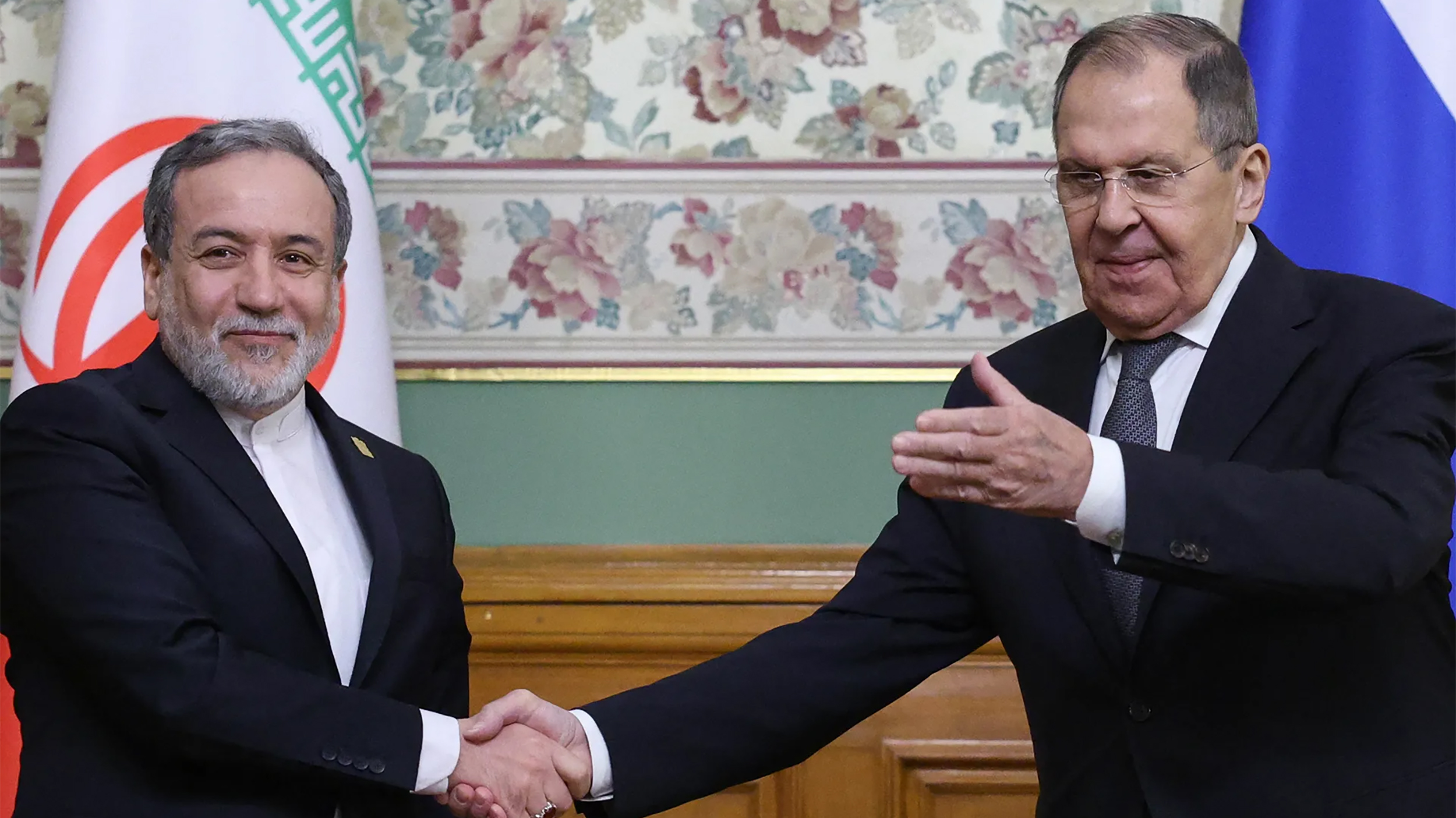
Russia cannot afford a serious rupture with either Iran, the Arab states, the United States or Israel. Rhetoric in certain cases may be quite harsh (for example, in response to US and Israeli strikes on Iran); but in practice, Russia seeks to prevent escalation into a full-scale crisis.
Since the outbreak of the conflict, Russia has maintained extensive contact with Arab countries through high-level telephone conversations and diplomatic visits, including that of Egypt’s foreign minister to Moscow. This reflects an ongoing process of coordination with the Arab world regarding the evolving situation. Such engagement does not imply full alignment of positions, but rather an exchange of assessments aimed at clarifying mutual interests.
Moreover, Russian President Vladimir Putin and US President Donald Trump held a telephone conversation in which the situation surrounding Iran was discussed. There are grounds to assume that possible “red lines” and acceptable frameworks of behaviour were also addressed. Although the content of the conversation has not been disclosed, subsequent developments suggest that certain signals may have been conveyed. After this, media reports emerged claiming that Moscow was providing Tehran with intelligence data on the location of US forces deployed in the Gulf region that might be targeted, (12) although this information was officially denied. (13)
Another important dimension of Russia’s policy concerns its conduct in the United Nations Security Council. Moscow has consistently condemned the actions of the United States and Israel in connection with the strikes against Iran, while refraining from issuing similarly harsh assessments of Iranian strikes against Arab states.
Russia introduced a draft resolution in the UN Security Council condemning the strikes against Iran. However, the initiative was blocked by a US veto, preventing the Council from formally censuring the military operation conducted by the United States and Israel.
Bahrain introduced a resolution condemning Iran for strikes against Arab states. Russia and China did not exercise their vetoes in this case, allowing the resolution to pass. (14) This sent an important political signal to the Gulf states, suggesting that Russia does not endorse attacks on their territory. At the same time, Moscow characterised the adopted text as one-sided, arguing that it does not adequately reflect the root causes and the broader dynamics of the conflict in a balanced manner.
Thus, the initiators of the conflict were not explicitly condemned, whereas Iran’s retaliatory actions—directed not so much at the initiators as at Arab states, particularly in the Gulf—were subject to formal condemnation through the UN mechanism. This configuration also diverges from the position of the UN Secretary-General, who condemned all parties to the conflict—the United States, Israel and Iran alike. (15)
A separate episode concerns a Bahraini resolution introduced in April on the reopening of the Strait of Hormuz. The discussion took place in a highly sensitive context, marked on the one hand by reports of a possible suspension of hostilities and, on the other, by ultimatum-like statements by President Trump to Iran, including warnings that “a whole civilization will die.” (16)
In this situation, Russia exercised its veto power. This decision can be explained by a combination of factors.
First, Moscow likely proceeded from the assumption that the adoption of the resolution would have deepened the existing imbalance. In a context where pressure on Iran was already mounting, the introduction of an additional condemnatory or restrictive document could have created a situation in which the state subjected to the initial strike would come under further institutional pressure.
Second, the wording of the resolution itself was significant. It was open-ended, allowing for multiple interpretations, including with regard to the use of force to reopen the strait. (17) In the absence of clear limitations, this created scope for expansive interpretation, potentially extending to the legitimisation of military action. This, in turn, could have enabled the United States and its allies to justify further escalation.
As a result, Russia blocked the resolution; and a ceasefire was reached shortly thereafter. This to some extent reinforced the argument that diplomatic instruments, at least in the short term, play a stabilising role.
Risks and Strategic Approaches
Despite certain short-term gains associated with rising oil prices, the current conflict generates a complex set of risks for Russia, some of which are long-term in nature. Beyond the previously described challenge of maintaining balance and avoiding deterioration in relations with key partners, several additional risks emerge.
First, there is the risk of Iran weakening as a partner. According to an AP report citing US official assessments, approximately 80% of Iran's air defence systems have been destroyed, more than 90% of its fleet has been sunk, and around 90% of weapons production facilities have been attacked. (18)
Second, there is a risk of internal destabilisation in Iran, potentially leading to conditions resembling those of a “failed state”. In such a scenario, Russia would risk losing one of its key regional partners. While this outcome does not currently appear very probable, it remains a significant concern, including because of the broader destabilising effects it could generate across the region.
Finally, uncertainty remains as to whether the current dynamics will lead to a genuine strengthening of Russia–Iran relations. On the one hand, the intensification of anti-American sentiment within Iranian elites and the growing influence of the Islamic Revolutionary Guard Corps may foster a closer alignment with Russia. On the other hand, criticism of Moscow may also intensify within Iranian expert and political circles, particularly regarding the perceived insufficiency of Russian support.
Under these conditions, Russia’s strategy can be characterised as predominantly reactive and cautious. It is aimed at outlasting the most acute phase of the conflict while avoiding direct alignment with either side, preserving diplomatic influence, and, where possible, maintaining a balance of power without producing additional imbalances.
One element of this policy is the attempt to act as a channel of communication between the parties. In particular, there have been reports that Russia previously facilitated the exchange of signals between Iran and Israel regarding their unwillingness to be the first to initiate hostilities. (19) This, at a minimum, allowed for a delay in the outbreak of fighting. Such a role, if further developed, could become one of the key instruments of Russia's regional policy.
At the same time, Moscow’s support for Iran remains strictly limited and is largely confined to the political and diplomatic level, particularly in the context of condemning US and Israeli actions. Support for Iranian strikes against Arab states is not part of this approach.
At the strategic level, Russia traditionally proceeds from the need to build a more sustainable security architecture in the region. Accordingly, it had previously proposed the Collective Security Concept for the Gulf, which implies the creation of confidence-building mechanisms and escalation prevention among key regional actors. (20)
The current conflict is more likely to lead not to the abandonment of this idea, but to its revision. The concept is likely to be adapted to new realities, above all the growing level of mistrust between Iran and Arab states, as well as the intensification of external involvement.
At the same time, Russia continues to emphasise the need for a comprehensive settlement of the Iranian issue. In this respect, its approach differs significantly from that of the United States, which is more focused on managing the immediate phase of the conflict and pursuing de-escalation without addressing its structural causes. For Moscow, the systemic level remains central, particularly the nuclear programme and the sanctions regime. In this regard, its position partially converges with that of Iran.
Many of these issues were, to a large extent, addressed within the framework of the Joint Comprehensive Plan of Action (JCPOA), concluded in 2015, from which the United States withdrew in 2018 under the Trump administration. Following this, Iran gradually increased its level of uranium enrichment, intensifying suspicions regarding a potential pursuit of nuclear weapons. These suspicions subsequently became one of the key justifications for military strikes – both during the 12-day war in June 2025 and in the current escalation.
Key Implications
Overall, Russia views the current crisis negatively. It complicates efforts to build relations with regional actors and forces Moscow to make difficult choices, which it frames as attempts to restore the regional balance of power.
At the same time, the situation does not fundamentally alter Russia’s overall role in the Middle East. The region is not limited to conflict and security imbalances, encompassing a wide range of economic activities, including nuclear energy projects in countries such as Egypt, Iran (Bushehr) and Turkey (Akkuyu), as well as cooperation in agriculture, food security and other sectors.
Russia continues to maintain its presence in the Middle East, including in the security domain. For example, there are currently no strong indications of a shift in Russia's position towards Syria, which remains one of Moscow's key priorities in the region. Syrian authorities have expressed interest in the resumption of Russian military police patrols in southern Syria, which could contribute to strengthening security in some areas. (21)
Finally, the current crisis creates not only risks but also opportunities for diversifying external ties, strengthening political cooperation and expanding military interaction. Despite the constraints imposed by US sanctions, there is still room for consultations and for aligning positions on regional developments.
Moreover, the current crisis provides Russia with an opportunity to position itself as a mediator and facilitator of negotiation processes, or at least as a party capable of helping actors exchange signals.
The concept of collective security proposed in 2021 has become outdated in its original form; but the underlying idea creating confidence-building mechanisms and improving the regional security architecture, including with the participation of external actors, remains relevant. The Middle East is a critically important region, and the Gulf is a critically important subregion, the stability of which has far-reaching implications.
Russia is likely to seek to contribute to the stabilisation of the region, although its efforts to maintain a balance may at times be perceived by other actors as taking sides in the conflict. In reality, however, Moscow’s objective remains the preservation of a balance of power—a task that becomes considerably more difficult under conditions of crisis.

(1) “Russia's oil and fuel export revenues rebound in March, IEA says”, Reuters, 14 April 2026, https://tinyurl.com/mvyfkv5m (accessed 10 May 2026).
(2) “Issuance of Russia-related General License”, U.S. Department of the Treasury, Office of Foreign Assets Control, 17 April 2026, https://tinyurl.com/yp8beweu (accessed 10 May 2026).
(3) “Issuance of Russia-related General License”, U.S. Department of the Treasury, Office of Foreign Assets Control, 12 March 2026, https://tinyurl.com/4zmtfenu (accessed 10 May 2026).
(4) “Issuance of Russia-related General License; Issuance of Amended Venezuela-related Frequently Asked Question”, U.S. Department of the Treasury, Office of Foreign Assets Control, 5 March 2026, https://tinyurl.com/yc84pach (accessed 10 May 2026).
(5) “Trade between Russia and the UAE”, TAdviser, https://tinyurl.com/2utfu96k (accessed 10 May 2026).
(6) “Russia-Iran trade turnover up 13.1% in 11M 2025”, TASS, 18 February 2026, https://tinyurl.com/4ndbjjc6 (accessed 10 May 2026).
(7) Reuters, “Iran says it supplied drones to Russia before Ukraine war began”, The Guardian, 5 November 2022, https://tinyurl.com/42y7543y (accessed 10 May 2026).
(8)”Iran confirms acquisition of Russian Mi-28, Su-35, Yak-130 aircraft”, TASS, 28 November 2023, https://tinyurl.com/2ff238um (accessed 10 May 2026).
(9) “Iran agreed secret shoulder-fired missile deal with Russia, FT reports”, Reuters, 22 February 2026, https://tinyurl.com/22su6rks (accessed 10 May 2026).
(10) “Foreign Ministry statement in connection with the entry into force of the Treaty on Comprehensive Strategic Partnership between the Russian Federation and the Islamic Republic of Iran”, The Ministry of Foreign Affairs of the Russian Federation, 2 October 2025, https://tinyurl.com/mr2vjen7 (accessed 10 May 2026).
(11) Vadim Kushnikov, “Russia ratifies strategic partnership agreement with the DPRK”, Militarnyi, 10 November 2024, https://tinyurl.com/mvfzj9b9 (accessed 10 May 2026).
(12) Noah Robertson, Ellen Nakashima and Warren P. Strobel, “Russia is providing Iran intelligence to target U.S. forces, officials say”, The Washington Post, 6 March 2026, https://tinyurl.com/4rt2snf2 (accessed 10 May 2026).
(13) “Foreign Minister Sergey Lavrov’s interview with France Télévisions public television broadcaster, Moscow, March 26, 2026”, The Ministry of Foreign Affairs of the Russian Federation, 26 March 2026, https://tinyurl.com/mwkee93h (accessed 10 May 2026).
(14) “Security Council Adopts Resolution on Iran and Gulf States”, United Nations, 11 March 2026, https://tinyurl.com/38d65yt7 (accessed 10 May 2026).
(15) António Guterres, “Statement by the Secretary-General on Iran”, United Nations, 28 February 2026, https://tinyurl.com/3x9rt683 (accessed 10 May 2026).
(16) “Trump says 'a whole civilization will die tonight' if Iran does not make a deal”, Reuters, 7 April 2026, https://tinyurl.com/yjmjnumx (accessed 10 May 2026).
(17) “Security Council: Russia and China veto resolution on Strait of Hormuz”, United Nations, 7 April 2026, https://tinyurl.com/4juhuf42 (accessed 10 May 2026).
(18) Konstantin Toropin, “By the numbers: US thrashed military targets in Iran, but some capabilities remain”, Associated Press, 10 April 2026, https://tinyurl.com/mryntxne (accessed 10 May 2026).
(19) Gerry Shih et al., “With tensions high, Israel and Iran secretly reassured each other via Russia”, The Washington Post, 14 January 2026, https://tinyurl.com/28erty2t (accessed 10 May 2926).
(20) “Russia's Collective Security Concept for the Persian Gulf”, The Ministry of Foreign Affairs of the Russian Federation, 24 August 2021, https://tinyurl.com/y24c885p (accessed 10 May 2026).
(21) “Damascus Reportedly Seeks Return of Russian Patrols to Southern Syria”, The Syrian Observer, 13 August 2025, https://tinyurl.com/2znmp69 (accessed 10 May 2026).