
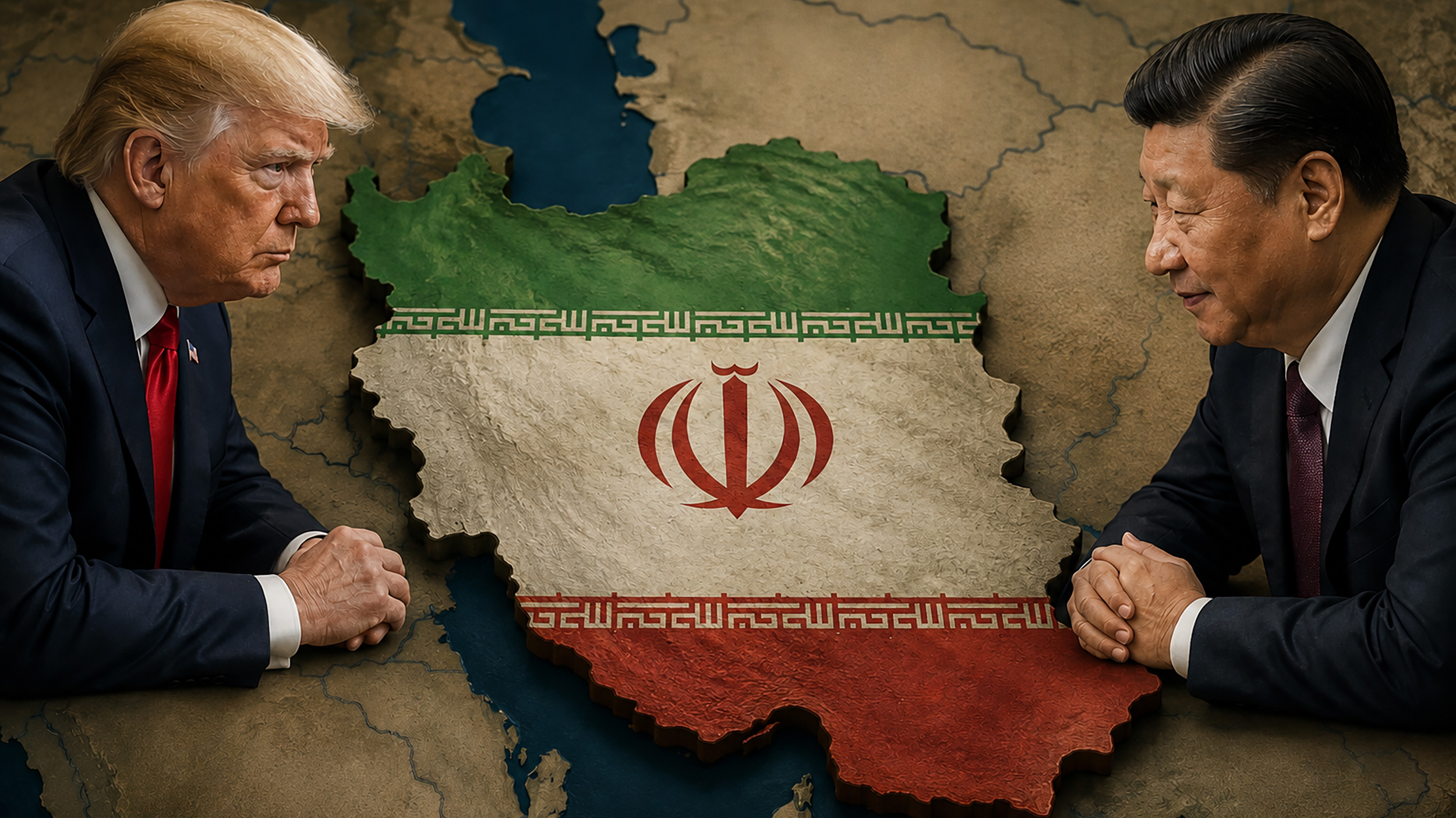
The editorial stance of The Washington Post toward US President Donald Trump’s recent visit to China (13–15 May 2026) is treated as a useful reference point for assessing the broader diplomatic moment. Although the newspaper cannot be strictly defined as an opposition outlet under its current ownership, it continues to express occasional criticism consistent with its liberal tradition. In its assessment of the Beijing summit, it argued that Chinese President Xi Jinping showed clear diplomatic non-deference toward Trump while reinforcing China’s claim to parity with the United States. The summit was described as an “underwhelming summit”, producing little beyond maintaining the status quo and ending without a joint statement.
A wider analytical debate situates the visit within disruptions caused by the ongoing war against Iran, which delayed the trip and complicated preparation. In this view, the Iran war is not a localised conflict but a factor reshaping global power relations. Some analysts interpret its consequences as a potential “Suez moment”, invoking Britain’s 1956 crisis as a metaphor for imperial decline and strategic overreach.
The argument for US strategic failure in Iran rests on three main claims. First, Washington has repeatedly misjudged the limits of military power, particularly its reliance on air strikes as a primary tool of coercion. Second, it has failed to achieve core objectives, whether regime change or the later, narrower goals of constraining Iran’s nuclear and missile capabilities. Third, the war’s effects have extended beyond the Middle East, influencing global energy routes, alliance stability, and the wider balance of power.
The military campaign itself involved extensive force, including three US carrier strike groups and coordinated Israeli participation. Over roughly 40 days, strikes targeted senior Iranian officials, military infrastructure, nuclear facilities, and energy and civilian-linked sites. However, intelligence-based assessments indicate that Iran retained most of its missile capabilities, rapidly restored key bases near the Strait of Hormuz, and reactivated much of its launch infrastructure. The gap between the scale of force and the limited strategic effect is central to the interpretation of failure.
Three explanations are offered. The first is the overestimation of what air power can achieve against a large, resilient state. The second is a flawed understanding of Iran’s internal political structure and opposition dynamics, shaped by overreliance on external intelligence assessments. The third is the effectiveness of Iran’s response, which reportedly inflicted damage on US and allied positions in the region while increasing pressure on Gulf maritime routes, particularly the Strait of Hormuz.
The US–China summit is read against this backdrop as a parallel expression of shifting power conditions. It reflects three assumptions: that China is now treated as a peer competitor, that confrontation is being replaced by competitive coexistence, and that unresolved crises such as Iran form part of the wider strategic environment.
Economically, the summit focused on persistent trade imbalances and issues such as artificial intelligence, rare earths and technology access. Some limited understandings emerged, including Chinese purchases of Boeing aircraft and increased agricultural imports, but no binding agreements were reached on core strategic technologies.
On geopolitical issues, outcomes were largely symbolic. China showed limited willingness to engage in nuclear arms discussions and avoided any operational role in Ukraine. On Iran, it emphasised maritime stability without condemning Tehran. On Taiwan, Beijing reaffirmed its red line, while Washington maintained ambiguity and delayed a major arms decision.
Xi Jinping’s reference to the “Thucydides Trap” framed the relationship as one requiring managed coexistence, yet China’s overall posture remained cautious. This restraint is explained by its relatively weaker global military position, its enduring anti-imperialist ideological legacy, and its reluctance to assume the burdens of active geopolitical intervention.
The broader regional context suggests that US and allied efforts to reshape the Middle East have not achieved decisive outcomes, with conflicts in Iran and neighbouring states still unresolved. Although debates continue over possible American retrenchment, the United States retains clear advantages in military, technological and financial power, while China’s rise remains gradual.
For these reasons, the situation does not amount to a definitive “Suez moment” for the United States. Instead, it reflects a period of strategic adjustment in which US dominance is under pressure but not displaced, and in which no immediate power is positioned to fill emerging gaps in global order.
*This is a summary of a policy brief originally written in Arabic available here.