
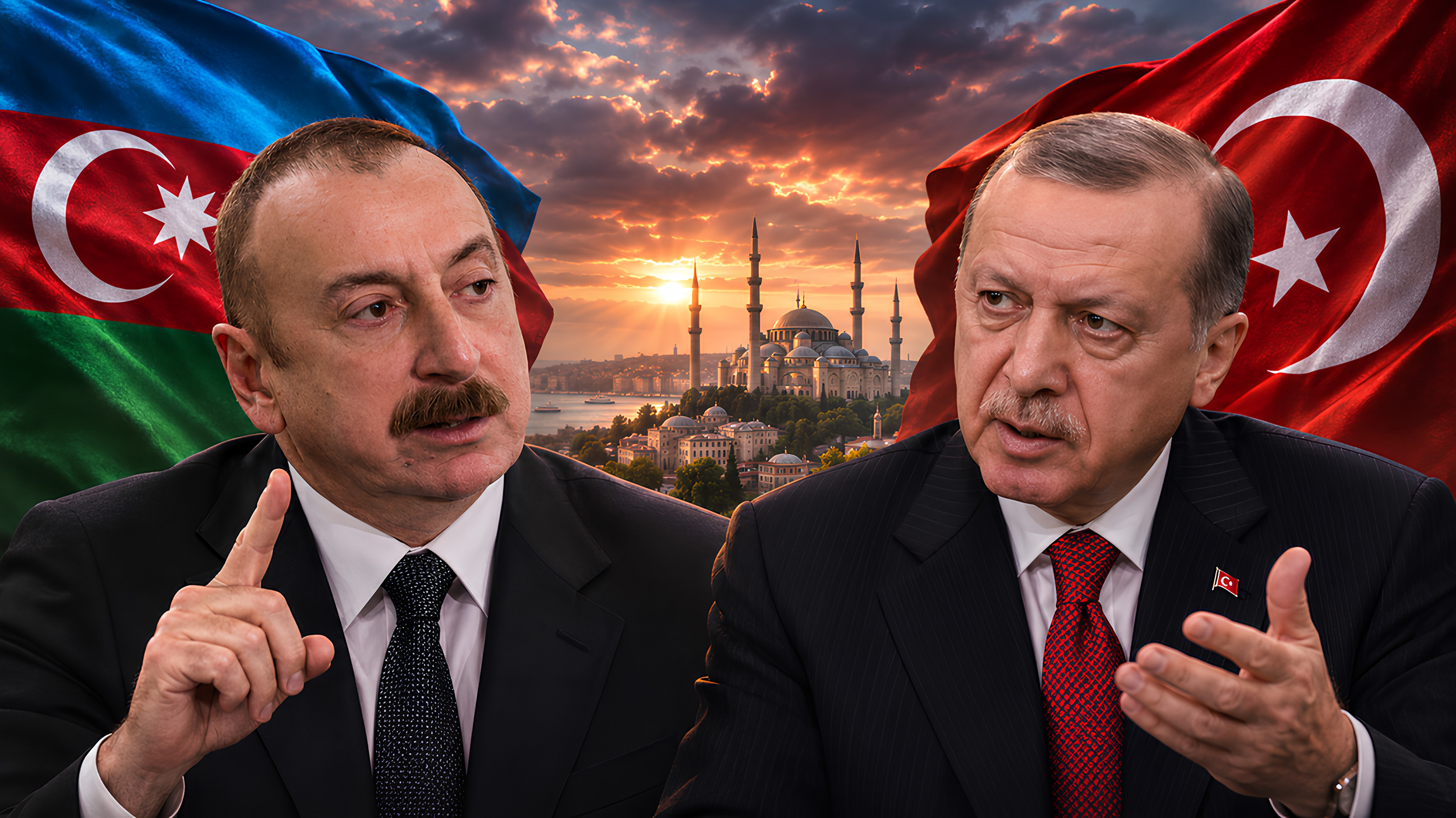
Relations between Turkey and Azerbaijan faced unprecedented tensions between late September and early November 2026, testing their strategic partnership. The crisis began with Azerbaijani restrictions on wearing the hijab in schools, provoking strong reactions in Turkey, especially among conservatives recalling 1990s restrictions. The dispute soon acquired wider implications for the South Caucasus and the Turkic world.
Since independence following the Soviet Union’s collapse, Azerbaijan has shaped its foreign policy around security concerns and regional competition. Under President Ilham Aliyev, who succeeded his father in 2003, the country consolidated political authority and maintained a firmly secular orientation. Distrust of Russia’s position in its conflict with Armenia, alongside concerns about Iranian influence among Azerbaijan’s predominantly Shia population, encouraged Baku to build close ties with Turkey. Despite ideological differences, both prioritised strategic interests.
Over two decades, their relationship developed into an alliance spanning defence, energy and trade. Infrastructure projects connected Azerbaijani energy resources to Turkey and European markets, while Ankara supported Azerbaijan’s military modernisation with weapons and expertise. Turkish advisers also helped organise its armed forces and plan and conduct the 2020 war against Armenia, which restored Azerbaijani sovereignty over Nagorno-Karabakh.
The June 2021 Shusha Declaration formalised the partnership, establishing a framework approaching a mutual defence agreement and outlining cooperation in defence industries, energy, transportation and humanitarian issues. The countries also coordinated regional policies, including support for the proposed Zangezur Corridor, which would connect mainland Azerbaijan to Nakhchivan and Turkey and provide Ankara a shorter route to Central Asia.
The crisis stemmed from Azerbaijani measures introduced between July and October 2026 to reinforce secular education. Although they did not explicitly prohibit the hijab, their implementation effectively barred female students and teachers from wearing it. Some students were denied entry, while teachers were pressured to remove their headscarves or leave their jobs, prompting anger and protests.
In Turkey, the measures revived memories of 1990s restrictions on religious dress in schools and state offices. Tensions grew when Aliyev declared that Azerbaijan had won its war against Armenia independently and purchased its military equipment without outside assistance. On 12 October, an adviser to President Erdoğan criticised the restrictions, arguing that ideological considerations could not justify denying girls education. Azerbaijan’s ruling New Azerbaijan Party defended ties with Israel and warned against foreign interference.
Israel became a further source of friction. Azerbaijan invited Israeli President Isaac Herzog to a regional summit in Baku, arranged official transportation, and gave him a warm reception. Erdoğan did not attend, sending Foreign Minister Hakan Fidan, who left when Herzog began speaking. Turkish commentators interpreted Baku’s hospitality towards Israel, amid the Gaza war and deteriorating Turkish-Israeli relations, as a signal to Ankara. Azerbaijani media criticised Erdoğan’s absence and accused Fidan of encouraging opposition to Aliyev’s government.
Turkish politicians linked the hijab restrictions to Azerbaijan’s ties with Israel. Baku launched legal proceedings against seven people living in Turkey, accusing them of inciting religious hatred and advocating the violent overthrow of the constitutional order. It also barred 31 Turkish citizens, including politicians and journalists, from entering Azerbaijan. Aliyev skipped the 30 October Organisation of Turkic States summit in Ankara, sending his foreign minister instead. Erdoğan avoided a public confrontation, while the adviser who had criticised the restrictions resigned before the summit, reportedly at the presidency’s request to appease Baku.
Tensions appeared to ease on 8 November, when Erdoğan visited Shusha for Azerbaijan’s Victory Day celebrations at Aliyev’s invitation. The presidents exchanged warm statements reaffirming their alliance, but the meeting did not resolve the dispute’s causes.
Two explanations have emerged. The first attributes the crisis to pro-Israeli elements within Azerbaijan’s ruling establishment seeking to weaken ties with Turkey and move Baku closer to Israel’s geopolitical camp. Supporters cite Azerbaijan’s defence of its relationship with Israel, calls to reconsider its position on Cyprus, and claims that it no longer needs Turkish guidance. The countries have maintained diplomatic relations since 1992, developing extensive energy, defence and technology cooperation. Israel supplies a substantial share of Azerbaijan’s advanced military imports, while Azerbaijani oil meets a significant portion of Israeli demand. Some Turkish observers suggest the Shusha reconciliation was facilitated by Netanyahu’s electoral defeat and the prospect of a new Israeli government seeking better relations with Turkey.
The alternative explanation sees the crisis as rooted in Azerbaijan’s domestic concerns. Under this interpretation, the hijab restrictions sought to curb the influence of religious figures connected to Iranian seminaries, rather than alienate Turkey or accommodate Israel. Baku’s response to Turkish criticism reflected nationalist sensitivities and its determination to assert independence.
Whatever the motives, the confrontation exposed the difficulty of reconciling Turkish and Israeli strategic interests in Azerbaijan. As developments in Syria revealed competing ambitions, the crisis suggested that these interests may also be increasingly incompatible in the South Caucasus. How Ankara will address this challenge remains uncertain.
*This is a summary of a policy brief published in Arabic here.